
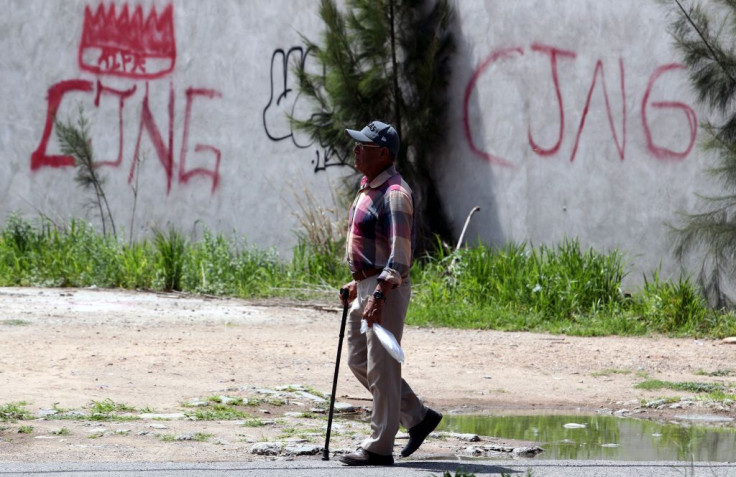
The death of Nemesio Oseguera Cervantes, longtime leader of the Jalisco New Generation Cartel (CJNG), has pushed Mexico's most powerful criminal organization into a transitional period.
According to organized crime experts, the feeling of uncertainty inside the group could trigger a reshuffling within the Jalisco cartel on three key fronts, including verifying whether it still has allies, confronting rival groups seeking to seize its territory and preparing for a possible counterattack.
According to security analyst David Saucedo, the CJNG's new leaders have already begun a kind of internal review to determine which groups remain loyal to the organization after the death of "El Mencho," including allies such as mayors, police chiefs and other public officials.


In an interview, Saucedo said that as the CJNG regroups, rival organizations such as the Santa Rosa de Lima cartel in Guanajuato, Cárteles Unidos in Michoacán, and La Mayiza in the country's northwest, have increased their presence in territories controlled by the Jalisco cartel, taking advantage of the apparent instability following El Mencho's death.
On the other hand, Saucedo warns there is a risk that previously allied groups, such as Los Chapitos could seek autonomy, which could translate into new outbreaks of violence in several regions.
Almost a month since the military operation that took down El Mencho, Saucedo says there are indications that the CJNG is stockpiling weapons and ammunition and concentrating forces in several regions of the country, suggesting the criminal group could be preparing to launch a counterattack against its rivals and even the government.
"It appears there are movements that suggest the CJNG will carry out a counterattack in some regions of Mexico," Saucedo said, as noted by Infobae México.
Although the Jalisco cartel is focused on confronting its rivals, it also cannot ignore threats from the Trump administration that missiles could be used against Mexican cartels.
As reported by The New York Times, members of the Sinaloa cartel are also stocking up on heavy weapons to prepare for potential U.S. strikes, including grenade launchers and anti-drone equipment. The outlet detailed that cartels are also deploying scouts who scan the skies to spot drones.
Trump appeared to hint at the possibility that the U.S. could conduct attacks against cartels in Mexico earlier this month, telling Latin American counterparts that the U.S. government "will do whatever is necessary to defend our national security."
"The epicenter of cartel violence is Mexico. The Mexican cartels are fueling and orchestrating much of the bloodshed and chaos in this hemisphere," Trump said during the Shield of the Americas Summit.
So far, however, the administration of Claudia Sheinbaum has flatly rejected any kind of U.S. intervention in the country. Last week, Sheinbaum highlighted that the two countries cooperate on security matters, but only Mexican forces carry out operations in the country.
"It's good that President Trump says publicly that when he proposed for the U.S. army to come into Mexico we said no. Because that's the truth. We said no and we proudly continue saying no," she added.
© 2025 Latin Times. All rights reserved. Do not reproduce without permission.


