
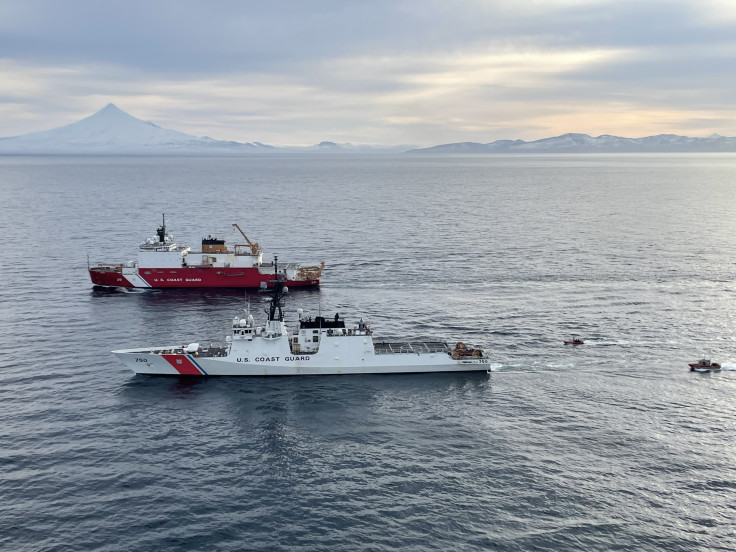
The U.S. Coast Guard is facing a growing financial crisis, carrying a debt burden of roughly $300 million that is now forcing officials to consider service cuts across operations at home and abroad, according to multiple reports and internal discussions cited by defense officials.
The shortfall, driven by rising operational costs, aging infrastructure, and increased mission demands, has put pressure on a branch of the military that plays a critical role in maritime security, search and rescue, drug interdiction, and national defense support, according to CBS News.
Officials say the strain is already being felt across the service. Coast Guard units have been quietly preparing for possible reductions in patrol hours, delayed maintenance, and scaled-back training exercises as leadership works to manage limited resources.
Coast Guard Commandant Adm. Kevin Lunday told CBS News in an exclusive interview that they have been "begging" utility providers to keep the power and water on during a partial government shutdown that has hampered the service's ability to pay its bills. The Coast Guard oversees 6,000 units of family housing.
"It seems like a horror movie, but it's actually happening. It's almost unbelievable," Coast Guard Commandant Adm. Kevin Lunday told CBS News in an exclusive interview.
The potential impact extends far beyond U.S. shores, Military Times reported. The Coast Guard operates in key regions around the world, including the Caribbean, the Pacific, and the Middle East, where it supports anti-narcotics operations, migration enforcement, and joint missions with the Navy. Any reduction in presence could affect both national security priorities and international partnerships.


"We are making difficult decisions to ensure we can continue to meet our most critical missions," a defense official familiar with the situation said, describing the current environment as one of "significant financial stress."
The Coast Guard has long operated with a smaller budget compared to other branches of the military, but its workload has expanded in recent years. Migration surges in the Caribbean, increased drug trafficking routes, and heightened geopolitical tensions have all added to operational demands.
At the same time, the service is dealing with aging ships and aircraft that require costly maintenance or replacement. Delays in modernization programs have compounded the problem, leaving crews operating equipment that is more expensive to maintain.
Lawmakers have begun raising concerns about the long-term implications of the funding gap. Some members of Congress have warned that without additional appropriations, the Coast Guard could be forced to prioritize certain missions over others, potentially leaving gaps in maritime enforcement and emergency response.
The issue comes as the broader U.S. military faces competing financial pressures, including ongoing overseas commitments and the need to replenish munitions stockpiles. Within that context, smaller branches like the Coast Guard often face difficult trade-offs.
Advocates for the service argue that cutting Coast Guard operations could have immediate consequences for public safety. The branch responds to thousands of emergencies each year, including vessel accidents, hurricanes, and environmental disasters.
"Every dollar cut has a real-world impact," said one former Coast Guard officer. "This isn't just about budgets. It's about lives."
The White House and Department of Homeland Security, which oversees the Coast Guard during peacetime, have not announced formal cuts. However, internal planning documents indicate that contingency measures are being considered if funding levels fail to improve.
© 2025 Latin Times. All rights reserved. Do not reproduce without permission.


