
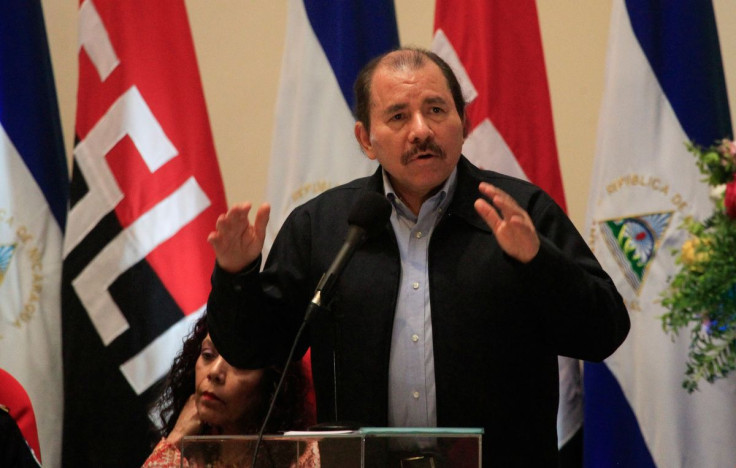
Secretary of State Marco Rubio has opened a new front in the Trump administration's escalating pressure campaign across Latin America, announcing fresh sanctions against a senior official in the government of Daniel Ortega and Rosario Murillo. The move signals that Nicaragua is no longer a secondary concern but part of a broader regional strategy targeting authoritarian leftist regimes.
On April 18, Rubio designated Vice Minister of the Interior Luis Roberto Cañas Novoa under Section 7031(c), a State Department authority used against foreign officials accused of gross human rights violations. The sanction bars him from entering the United States and was timed to coincide with the anniversary of Nicaragua's April 2018 protests, one of the most violent chapters in the country's recent history.
"Nearly eight years ago, the Rosario Murillo and Daniel Ortega dictatorship unleashed a brutal wave of repression against Nicaraguans," the State Department said in its announcement, referencing the protests that left more than 325 people dead, according to U.S. figures.
The decision is not happening in isolation.
-
'Cuba After Castro': A Bold Documentary that Shows Díaz Canel's Positions Before the Current U.S. Crisis and Why Things Could Be Different - INTERVIEW

-
U.S. Lifts Sanctions on Venezuela's Delcy Rodríguez: What It Means for Washington, Caracas and Oil

-
Rubio Congratulates Mexico's New Foreign Minister, Stresses Bilateral Cooperation in First Call


Just days earlier, the U.S. Treasury Department imposed sanctions on multiple Nicaraguan individuals and entities tied to the country's gold sector, including members of the ruling family. U.S. officials said the network helped sustain the government's finances while tightening its grip on power.
Together, the measures reflect a coordinated effort to pressure Managua both politically and economically while reinforcing Washington's message that human rights abuses will continue to carry consequences.
Rubio's role in this strategy has been increasingly visible. As one of the administration's leading voices on Latin America, he has helped shape a policy that links Nicaragua to broader efforts already underway against Venezuela and Cuba. While Venezuela has faced years of sanctions and diplomatic isolation, Cuba is now under renewed scrutiny as the administration explores additional pressure measures, according to recent reporting.
That framing places Nicaragua as the third country in what analysts describe as a tightening U.S. posture toward governments seen as hostile or resistant to Washington's influence.
The April 2018 protests that triggered the latest sanction began over proposed social security reforms but quickly evolved into a nationwide movement against Ortega's rule. The government's response was swift and forceful. Security forces and allied groups cracked down on demonstrators, leading to hundreds of deaths, thousands of injuries and widespread detentions.
Since then, Nicaragua has undergone a dramatic political shift. Opposition figures have been jailed or forced into exile, independent media outlets have been shut down, and civil society organizations, including universities and religious groups, have faced increasing restrictions.
International organizations and U.S. officials have repeatedly described the situation as a sustained campaign of repression.
The sanction against Cañas Novoa is relatively limited in scope, focusing on visa restrictions rather than broader economic penalties. But its symbolic weight is significant. By linking the measure to the anniversary of the protests, the administration is reinforcing its narrative of accountability while keeping international attention on Nicaragua's human rights record.
More importantly, it signals that Nicaragua is now fully integrated into a wider U.S. strategy that spans the region.
As pressure continues on Venezuela and policy discussions around Cuba intensify, the latest move suggests the administration is building a consistent framework for dealing with governments it views as entrenched and adversarial.
For Nicaragua's leadership, the message is clear: Washington is not easing off.
© 2025 Latin Times. All rights reserved. Do not reproduce without permission.


