
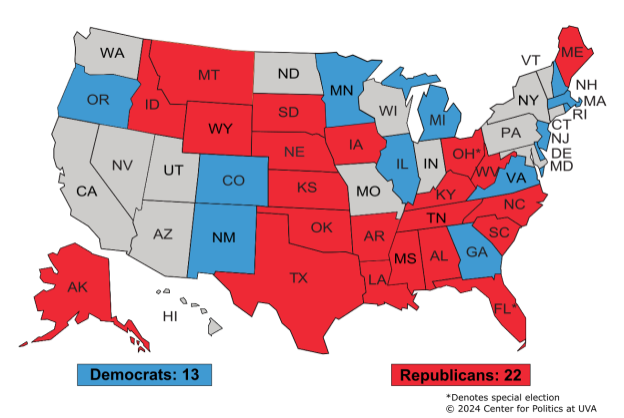
As Republicans maintain a 53–47 majority in the U.S. Senate, Democrats are confronting a narrow and volatile path to regaining control in the November 3 midterm elections. Democrats need a net gain of four seats to seize the majority, and the dynamics in a handful of competitive states will likely determine that outcome.
On the current map, races in Georgia, North Carolina, Maine, Michigan, and Ohio stand out as the most critical contests of the cycle, states where control of the Senate majority could realistically be won or lost.
In Maine, a pivotal contest took shape this week as Graham Platner, a Marine veteran and political newcomer, clinched the Democratic nomination and will face longtime Republican incumbent Sen. Susan Collins in November. Platner's victory in the June 9 primary sets up what many analysts already view as one of the cycle's most closely watched Senate races.
Georgia remains another top target for both parties. Sen. Jon Ossoff, the Democratic incumbent who flipped the seat in a 2021 runoff, is seeking reelection against a crowded Republican field. Georgia's swing state status, with razor‑thin margins in recent presidential contests, makes this matchup a must‑watch race.
North Carolina is similarly high-stakes: with retiring Republican Sen. Thom Tillis opening up the seat, Democrats are hoping former governor Roy Cooper can flip it. Early tracking shows North Carolina among the most competitive races nationwide.


Michigan, another battleground, features a Democratic defense as the party tries to hold a seat in a state that narrowly backed Donald Trump in 2024 but has a history of electing Democrats statewide.
In Ohio, Democratic former senator Sherrod Brown is mounting a comeback campaign after his 2024 loss, challenging Republican incumbent Jon Husted in a state that has trended Republican but remains competitive in polls and forecasts.
Across these contests, national conditions, including Republican figures' approval ratings and Democratic fundraising gains. are shaping the narrative of a Senate battle that remains too close to call. Recent polls show a Democratic advantage on the generic ballot, yet Republicans are still favored to hold the Senate on structural grounds.
Political strategists from both parties describe the 2026 Senate campaign as a series of simultaneous trench wars: Democrats must both defend vulnerable seats and find pickup opportunities in competitive Republican territory. Winning at least four of these marquee races will be essential for Democrats to flip the upper chamber, while Republicans are intent on holding their ground and blunting Democratic momentum.
© 2025 Latin Times. All rights reserved. Do not reproduce without permission.


