
The numbers dismantle the main argument behind the massive deportation campaign of the Trump administration.
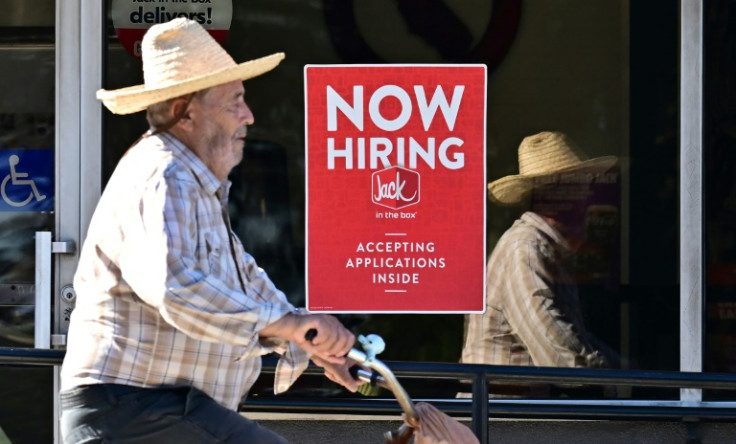
For years, the political promise was blunt enough to fit on a rally sign: deport undocumented immigrants, free up jobs for Americans, raise wages, and restore economic order. It was a powerful message because it sounded intuitive. If fewer immigrants are working, more jobs should open for U.S. citizens. But as of today, the latest labor, inflation, and enforcement data point to a much messier reality, one that undercuts the central economic argument behind President Donald Trump's mass deportation drive.
Start with the labor market. The latest Bureau of Labor Statistics report, released in May 2026, shows the unemployment rate has remained in a narrow range since mid-2025, suggesting a labor market that hasn't sharply deteriorated or recovered, for that matter. Actually, from January to May of this year, it went from 4.3 to 4.6%, which shows that even after mass deportations, the unemployment rate went up. For production and nonsupervisory workers, average hourly earnings reached $32.07. Those are real numbers, but they do not show the kind of dramatic wage surge that hard-line immigration advocates long predicted would follow a broad labor crackdown.
Gus Faucher, chief economist at PNC Financial Services, told Reuters, "The labor force is structurally tighter now than it was before COVID," adding that the decline in participation reflects an aging workforce and "more recently the crackdown on immigration." That is not the language of an economy suddenly flooded with newly available jobs for native-born workers. It is the language of a workforce getting smaller.
-
Defiant Border Czar Rejects Claims Trump Is Going Soft on Immigration, Says 'Mass Deportations Are Coming'

-
Critics Warn ICE Incentives Could Become 'Lifeline' for Cash-Strapped Police, Result in 'Dragnet' Enforcement

-
White Nationalist Networks Are Using Fake Aid Efforts to Recruit Audiences After Natural Disasters: Report


Then there is the more specific question: when immigrant labor falls, do Americans step in and prosper? The newest research suggests the answer is often no.
A February 2026 paper from the San Francisco Fed found that the recent drop in unauthorized immigration has slowed employment growth, especially in construction and manufacturing. Places with the biggest slowdowns in unauthorized immigrant worker flows also saw the biggest slowdowns in employment growth. The economists wrote that "U.S. employment growth is likely to face continued downward pressure" as those immigrant flows continue to fall. In other words, when immigrant labor shrinks, the economy does not simply reshuffle jobs neatly toward U.S.-born workers. Sometimes the whole machine slows down.
That finding lines up with a growing body of economic literature. Before the surge of deportations in the second Trump administration, Brookings said in a 2024 analysis that research "consistently points to deportations hurting the U.S. labor market and leading to worse labor market outcomes for U.S.-born workers." The think tank cited studies showing that when deportation programs intensify, employment among U.S.-born workers can fall too. One reason is that immigrants and native-born workers are often not direct substitutes. Another is that immigrants are not only workers. They are also renters, shoppers, diners, commuters and taxpayers, people whose spending supports other jobs. Remove them in large numbers and demand falls alongside labor supply.
A May 2026 Brookings study added:
- The enforcement surge cost 668,000 jobs. Across the cities with the sharpest rise in ICE arrests, employment fell 0.73% below what they would have seen absent the surge, and 1.48% in the 51 cities observed at least six months out.
- Job losses far exceeded the number of people arrested. Across 86 surge cities, ICE made roughly 52,000 excess arrests, yet each excess arrest, as a proxy for the broader enforcement shock, is associated with 13 jobs lost overall. Of the 668,000 jobs lost, an estimated 51,000-297,000 would have been held by American-born workers.
- Losses concentrated in immigrant-intensive sectors but spread well beyond them. The deepest direct hits fell on construction and on accommodation and food services, but industries with very few immigrant workers—such as arts and entertainment—also contracted sharply.
If anything, the economy is showing strain in other places. Inflation, measured by the Consumer Price Index, rose 3.3% over the 12 months through March, while energy prices jumped 12.5% and food prices increased 2.7%, all before the Iran War started to put even more pressure on the economy. The Federal Reserve's Beige Book, reported by Reuters in March, even noted labor supply and demand disruptions tied to the immigration crackdown in Minneapolis.
None of this means immigration has no labor-market effects. Economists have long found that some groups of workers can feel localized or sector-specific wage pressure, particularly those without college degrees who compete in the same segments of the labor market. But that is a far cry from the sweeping claim that immigrants were "stealing" American jobs. The latest evidence suggests the story was always too simple and politically too convenient. Jobs are shaped by demand, demographics, productivity, geography, industry needs, and consumer spending, not just by who gets removed.
The numbers dismantle the idea that mass deportation was an easy economic fix. It has produced more arrests, more fear, and a much harsher enforcement climate. It has not produced a broad wage boom for U.S. citizens. If anything, it has exposed how deeply immigrants were woven into the country's labor engine all along.
© 2025 Latin Times. All rights reserved. Do not reproduce without permission.


