
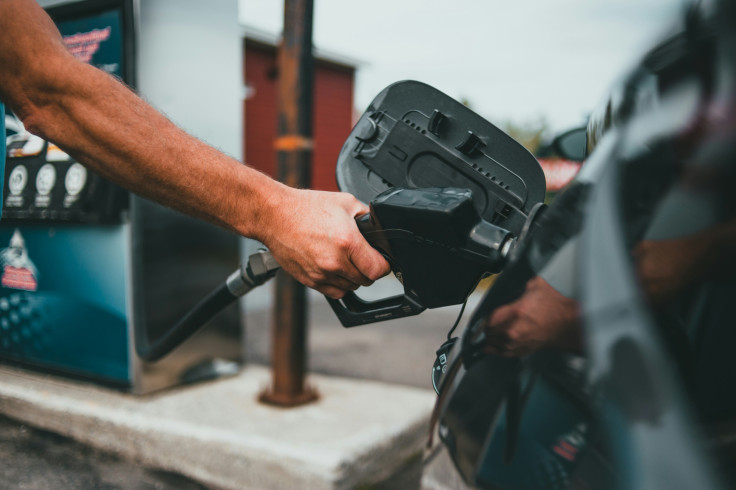
The price of crude oil continues to rise following the United States and Israel's attack on Iran, pushing gasoline prices higher.
Amid these rising prices, Sen. Ruben Gallego, a Democrat from Arizona, is pressing the Energy Department to release details on how the government plans to provide oil from the Strategic Petroleum Reserve to counter rising costs.
In a letter addressed to the Department of Energy this week and reported by Axios, Gallego requested clarification about the planned release of 172 million barrels from the Strategic Petroleum Reserve, saying Arizonans, as well as Americans across the country, deserve "additional insight" into the decision.
"No detail was provided in the SPR release announcement about where the fuel will be sent, or how allocations will be determined. I therefore request that you provide answers," Gallego wrote.


The Strategic Petroleum Reserve was established primarily to reduce the impact of disruptions in supplies of petroleum products. The federally owned oil stocks are stored in massive underground salt caverns at four sites along the Gulf of Mexico coast, with a capacity to hold up to 714 million barrels.
Last week, the DOE announced a plan to release 172 million barrels of oil as part of a broader planned release of 400 million barrels from various member governments of the International Energy Agency, as noted by Axios.
The department confirmed on March 13 that the U.S. action will be an "exchange," under which companies will return borrowed oil with additional barrels as a "premium," adding that this move will strengthen the SPR "while stabilizing markets at no cost to American taxpayers," the department said.
As these measures unfold, the ongoing armed conflict between the United States and Iran continues to strain global oil supplies, which are experiencing their worst disruption in decades. This has caused a significant decrease in ship traffic through the Strait of Hormuz, a crucial maritime route between the United Arab Emirates and Iran, where about 20% of the world's oil typically passes, as reported by NPR.
Although gas and diesel prices are high, experts note that prices remain lower than in 2022, when Russia invaded Ukraine, but they could continue to rise as tensions persist.
"Until we see a meaningful resumption of oil flows through the Strait of Hormuz, upward pressure on fuel prices is likely to persist," Patrick De Haan, head of petroleum analysis at GasBuddy said, as reported by NPR. "At the same time, seasonal forces are beginning to intensify as several regions complete the transition to summer gasoline, creating a double headwind that could continue driving pump prices higher in the weeks ahead."
In the meantime, the Trump administration is seeking to ease concerns about rising gas prices as the conflict continues. On March 13, President Donald Trump said gasoline prices "are going to come tumbling down" once the conflict ends.
"I think it's going to be — you're gonna see a very big decrease in the price of gasoline, gas, anything having to do with energy as soon as this has ended," Trump said.

© 2025 Latin Times. All rights reserved. Do not reproduce without permission.


