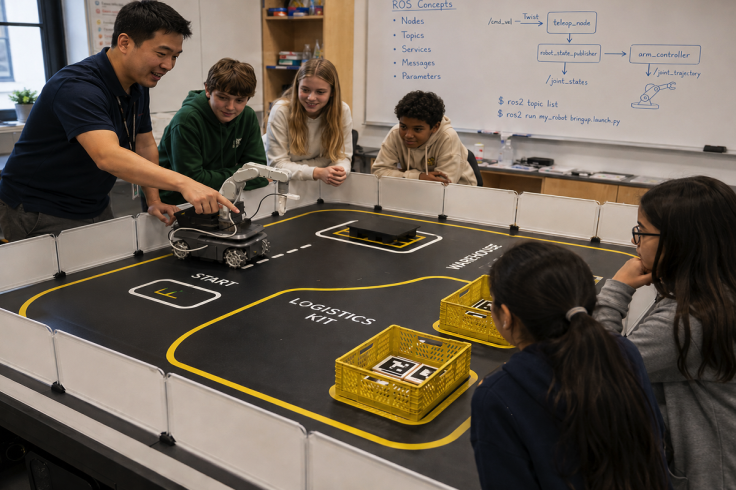
Building a functional robotics lab in a Latin American university often means fighting fragmentation from day one. Procurement teams juggle a robotic arm from one supplier, a vision system from another, and a mobile base from a third-party vendor. Weeks of integration eat into the semester, leaving students debugging drivers instead of training neural networks.
Elephant Robotics, a global innovator with deep roots in robot R&D and the HAX accelerator, offers a different path. The company provides a vertically integrated portfolio designed to collapse the gap between unboxing and education. Rather than selling isolated components, Elephant Robotics delivers a comprehensive solution stack purpose-built for the Americas.
With deployments in over 500 schools and research institutions across 70 countries, the company draws on a broad portfolio spanning educational robots, professional cobots, and innovative robotics solutions. For Latin America, it promotes three key platforms that address the specific pain points of educators and researchers alike. By unifying hardware with open-source software like ROS2 and the proprietary myBlockly environment, institutions prioritize outcomes over setup.
Compound Robot Solution: A Complete Logistics Training Cell
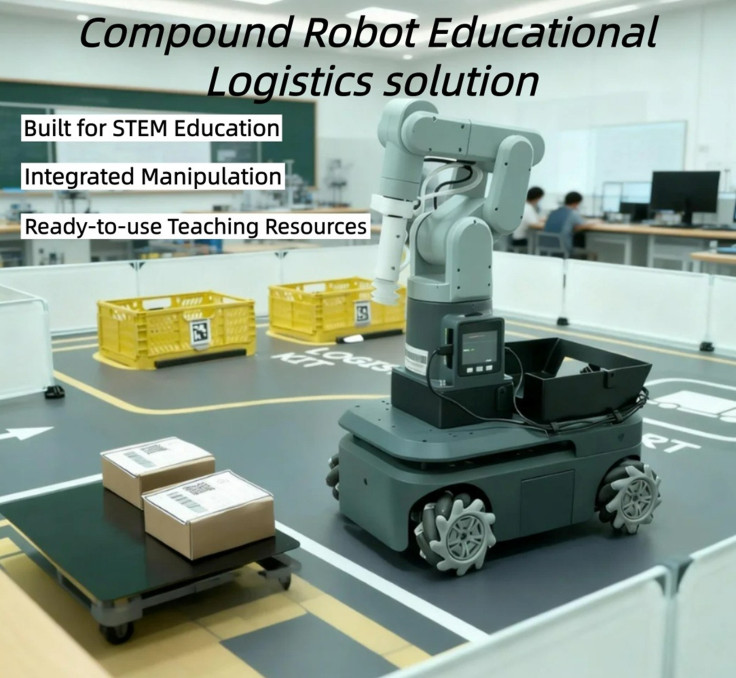
Teaching modern warehouse automation requires more than textbook diagrams and simulation software. The Compound Robot Solution bridges the virtual and physical worlds with a ready-to-run training platform. It combines a 6-DOF collaborative robotic arm with a mobile chassis built on the NVIDIA Jetson Nano, forming a complete mobile manipulation cell.
The key differentiator is the one-click startup and included visual demonstrations. Instructors do not need to spend lab time configuring network settings or calibrating vision systems from scratch. The platform arrives with complete teaching curricula and lab manuals covering robot control, hand-eye calibration, and machine vision, nine structured experiments in total, spanning SLAM mapping, kinematics analysis, and QR/Aruco recognition.
For department heads at technical universities like SENAI in Brazil or SENA in Colombia, this translates to rapid student engagement and a lower total cost of ownership. Students watch SLAM maps build in real time and trigger suction-grip operations based on visual markers. The solution builds practical skills that the region's rapidly expanding logistics and manufacturing sectors actively seek. Latin America's industrial automation market is projected to reach $30.24 billion by 2031, and graduates who have trained on integrated platforms enter that workforce with immediately deployable competencies.
Portable AI Educational Workstation: The Lab That Fits in a Carry-On
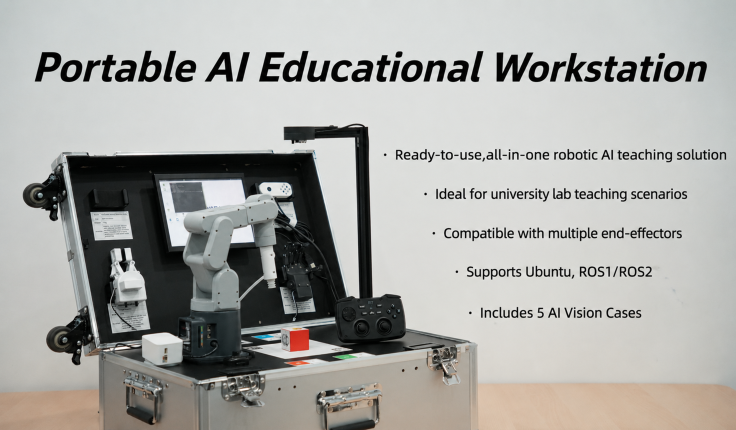
Dedicated lab space is a luxury many Latin American high schools and community colleges cannot afford. Elephant Robotics answers that constraint with the Portable AI Educational Workstation. This truly mobile platform packs a complete 6-DOF robot, a high-resolution touchscreen, and four types of end effectors into a rugged carry-on case weighing just over 11 kilograms.
A teacher rolls the case out of a storage closet and powers up a full AI lab in under three minutes. Portability never means sacrificing depth. The workstation comes pre-configured with Ubuntu and ROS1/ROS2 environments, integrating five major vision algorithms, including YOLOv5 for deep learning object recognition, directly on the onboard compute, eliminating cloud dependency on campuses with intermittent internet.
A structured 15-week curriculum guides students from drag-and-teach programming to complex neural network training. The syllabus covers sensor control, collaborative robotics, and AI fundamentals across three progressive stages. For educational systems stretching tight budgets, this mobile platform multiplies utilization: one workstation can rotate between multiple campuses in a single week, maximizing return on a single purchase. This is especially relevant in underserved regions, research shows that students in Brazil's Federal District and Colombia's Caquetá face systemic barriers to quality STEM education due to limited resources.
Advanced Compound Robot Solutions: Bridging Advanced Research and Real Applications
Graduate research in mobile manipulation demands a platform that does not hide real-world complexity. Elephant Robotics' Advanced Compound Robot Solutions are built on the myAGV Pro mobile robot platform paired with the myCobot Pro 6-axis cobot. This configuration is designed for scientific rigor, not just a classroom demonstration.
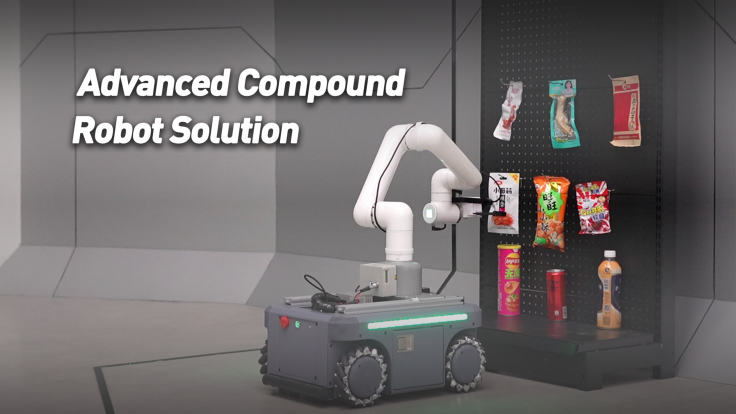
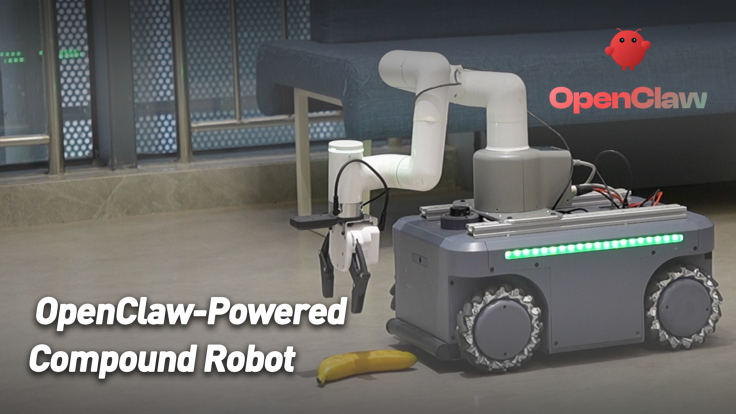
The myAGV Pro is a professional-grade autonomous mobile robot weighing 40 kilograms with a 50-kilogram payload capacity and 5-6 hours of battery life. Equipped with high-precision 360° LiDAR and camera sensors, it delivers 3D mapping, autonomous localization, path planning, and real-time obstacle avoidance in dynamic indoor environments. When paired with the myCobot Pro 630, which features self-developed harmonic joint modules and a 630mm reach—the stack becomes a reliable testbed for human-robot collaboration studies. The arm's fully open control interfaces, supporting USB, EtherNet/IP, RS485, and 24V-I/O, enable seamless connection to external AI models and custom control stacks.
Research groups across Latin America already use this configuration for reinforcement learning data collection. They leverage onboard computing power to move beyond Gazebo simulations into tangible robotics. The native ROS2 Humble ecosystem ensures that custom algorithms transition smoothly from simulation to hardware. That continuity accelerates publication timelines and strengthens grant proposals, which is a decisive advantage for labs competing for funding from agencies like CONACYT in Mexico and ANID in Chile.
Scalable Support for the Americas
Elephant Robotics approaches the Latin American market as a strategic education partner, not merely an equipment vendor. The three-tier portfolio—classroom-ready Compound Robot, mobile AI Workstation, and research-grade Advanced Compound Robot provides a coherent pathway from technical high schools to Ph.D. labs. Institutions scale their hardware without rebuilding their curriculum at each step.
By unifying everything under an open-source ROS2 architecture and the block-based myBlockly interface, students acquire transferable skills that map directly onto the software stacks used by the region's growing automation companies. Automation can increase manufacturing efficiency in Latin America by up to 35%, and a workforce trained on integrated platforms positions the region to capture that gain.
As Industry 4.0 reshapes manufacturing, agriculture, and logistics across Latin America, accessible, integrated robotics education becomes a lever for economic mobility. Elephant Robotics equips universities and technical institutes with the tools to move from theory to practice faster than any fragmented procurement approach can match. To explore configurations purpose-built for the region, visit Elephant Robotics.

© 2025 Latin Times. All rights reserved. Do not reproduce without permission.


