
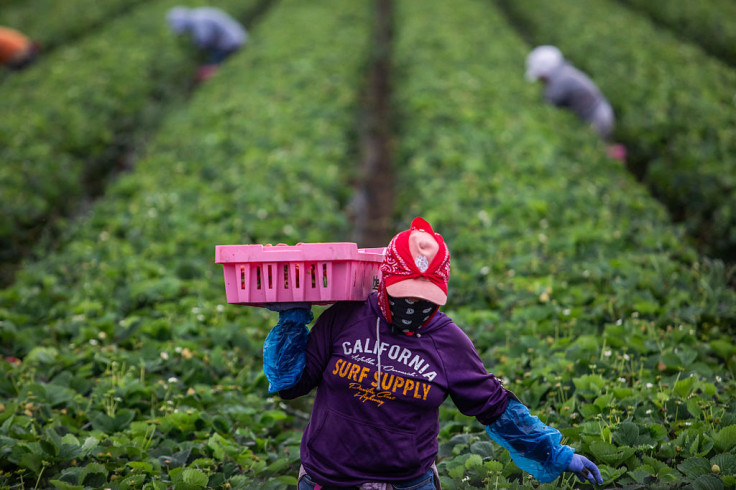
The Trump administration's immigration crackdown is worsening labor shortages across the U.S. agricultural sector, pushing officials to make it cheaper for farmers to hire temporary foreign workers even as enforcement efforts intensify, according to a new report.
Farmers say raids and stricter border policies have tightened an already limited labor pool, leaving crops unharvested and forcing growers to rely more heavily on the H-2A visa program, which allows farms to hire foreign nationals for seasonal agricultural work.
A recent survey by the California Farm Bureau and Michigan State University, cited by The Times, found that only 0.4 percent of California farmers reported losing workers directly to immigration raids, but more than 14 percent said enforcement actions and the climate of fear around them contributed to labor shortages.
Among farms growing labor-intensive crops such as fruits and vegetables, nearly 20 percent reported shortages tied to immigration enforcement.
Federal regulators have acknowledged the strain. In a regulatory filing tied to changes to the H-2A program, the Labor Department warned that the "near total cessation of the inflow of illegal aliens combined with the lack of an available legal work force" threatens agricultural production and could disrupt domestic food supplies.


To address the issue, the administration revised how wages for H-2A workers are calculated back in October, introducing a skill- and occupation-based wage structure that officials say reflects market conditions and lowers labor costs for growers. In some states, hourly wages for guest workers could fall by several dollars, and employers may count housing and certain benefits toward compensation.
Farmers who rely on seasonal labor say the program is essential. Bruce Talbott, who operates a peach orchard and vineyard in Colorado, said his farm hires dozens of H-2A workers each year because local labor is scarce. One season, he said, his orchard lost about 40,000 pounds of fruit while waiting for visas to be approved.
"Are there hard-working Americans? Of course there are," Talbott said. "They're not in seasonal farming." Without guest workers, he added, "we can't farm."
Labor groups, however, opposed the policy shift. The United Farm Workers of America and 18 farmworkers filed a lawsuit seeking to block the wage rule, arguing it will lower pay for both foreign and domestic farmworkers and expand reliance on temporary labor. "These actions are going to displace domestic farmworkers," said Teresa Romero, the union's president, through a statement communicating the suit.
© 2025 Latin Times. All rights reserved. Do not reproduce without permission.


