
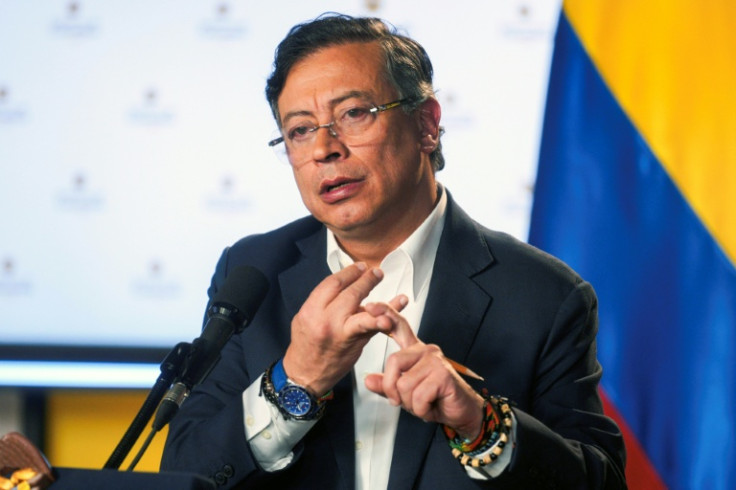
Rep. Mario Diaz-Balart said on Tuesday that recent threats against Colombian presidential candidates Paloma Valencia and Abelardo de la Espriella reflect a worsening political climate under President Gustavo Petro, warning that the situation could affect both Colombia's democratic stability and its relationship with the United States.
Through a post on X, the Florida Republican said he was "very concerned" about what he described as a "dangerous situation" in Colombia under Petro's administration. He said the threats against Valencia and de la Espriella, both figures on the right, point to "a climate that is becoming increasingly violent, as well as the deterioration of democracy and the rule of law."
Me preocupa mucho la peligrosa situación en Colombia bajo la administración de Petro, lo cual está poniendo en riesgo la estrecha relación entre EE.UU. y Colombia.
— Mario Díaz-Balart (@MarioDB) April 14, 2026
Las recientes amenazas contra líderes y candidatos, como Paloma Valencia y Abelardo de la Espriella, reflejan un…
His comments come after both candidates received images on social media showing funeral wreaths bearing their names, part of a wave of intimidation that has intensified concerns over security in Colombia's presidential race. The threats were reported less than 50 days before the first round of voting, renewing debate over whether candidates are receiving sufficient protection.
Colombian authorities have since reinforced security details for presidential and vice presidential hopefuls, including additional police, military support, armored vehicles and intelligence measures. Defense Minister Pedro Sánchez also announced rewards of up to 1 billion pesos for information that could prevent attacks or identify those responsible.
The U.S. State Department also expressed concern, saying the Trump administration was "deeply concerned" by reports of threats against Valencia and de la Espriella and was working with Colombian authorities to support election security, as El Pais reports.
Diaz-Balart's criticism adds to broader scrutiny from other Florida Republicans toward Petro recently. In March, Rep. Carlos Gimenez welcomed reports that U.S. prosecutors were examining possible links between Petro and drug traffickers, saying the Colombian president would have to face consequences for his "illegal actions."
Subsequent reporting indicated that U.S. officials had reassured the Colombian government that Petro did not face criminal charges at that stage, even as two Justice Department investigations remained open in their early phases. Analysts cited in that coverage said Washington appeared focused on maintaining cooperation with Bogotá, particularly on drug enforcement and regional stability, rather than provoking a direct rupture before Colombia's election.


© 2025 Latin Times. All rights reserved. Do not reproduce without permission.


