
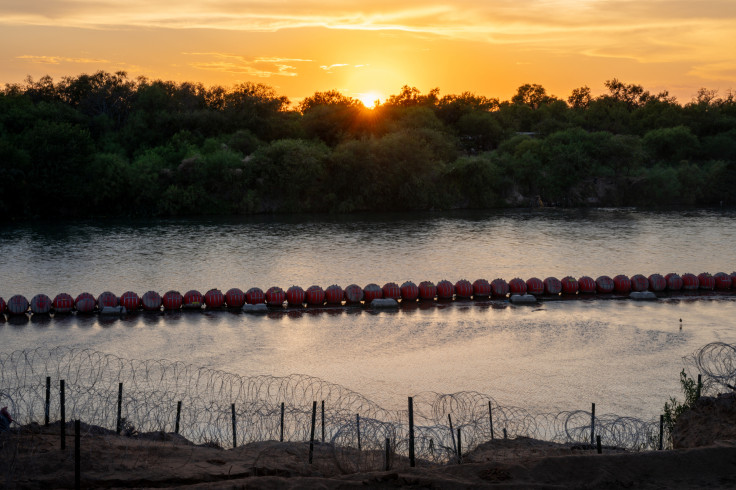
Dozens of people gathered near the southern border to protest buoys deployed in the Rio Grande to prevent migrants from crossing into the U.S.
South Texas Environmental Justice Network official Bekah Hinojosa told Border Report that the buoys are "dangerous" and are "causing an ecological disaster."
The buoys began appearing earlier this month and are part of what the Department of Homeland Security dubbed "Operation River Wall," a U.S. Coast Guard–led initiative intended to deter illegal migration as well as drug and human smuggling.
DHS Secretary Kristi Noem said the project is designed to eventually span about 500 miles of the border.
"These barriers ... are going to save lives," Noem said when presenting the plan, arguing that the system would discourage dangerous river crossings while making it more difficult for smugglers to operate.
The floating barriers are being installed in the Rio Grande Valley Sector, a 260-mile stretch of South Texas borderland.
DHS awarded a $96.2 million contract to Montgomery, Alabama-based BCCG Joint Venture to install 17 miles of buoys in the sector. The company secured seven of 10 contracts awarded last year for border infrastructure projects, totaling $3.1 billion.
According to Border Patrol Chief Michael Banks, the newly installed buoys differ from earlier versions used by Texas, measuring roughly 15 feet long and four to five feet in diameter. The cylindrical design, he said, allows the barriers to roll when climbed and provides improved flotation. Banks said more than 130 miles of buoys are already under contract, with more than 90 percent of the planned system expected to be installed in Texas.
The federal project echoes a similar buoy barrier installed by Texas Gov. Greg Abbott near Eagle Pass, which the Biden administration unsuccessfully challenged in court. Those state-installed buoys were placed in an area that had seen frequent migrant drownings during periods of heightened crossings.


© 2025 Latin Times. All rights reserved. Do not reproduce without permission.


