
Eric Swalwell's implosion has done more than end one of California's most closely watched gubernatorial bids. It has scrambled the 2026 governor's race, opened a fight for his supporters, and created fresh anxiety inside the Democratic Party over whether a crowded field could hand Republicans an even bigger opening in the state's top-two primary.
Swalwell suspended his campaign and resigned from Congress after multiple women accused him of sexual misconduct, including one woman who publicly alleged that he drugged and raped her in 2018. He has denied the allegations. The political fallout was immediate, and the biggest immediate question in Sacramento and across Democratic circles is simple: who benefits?
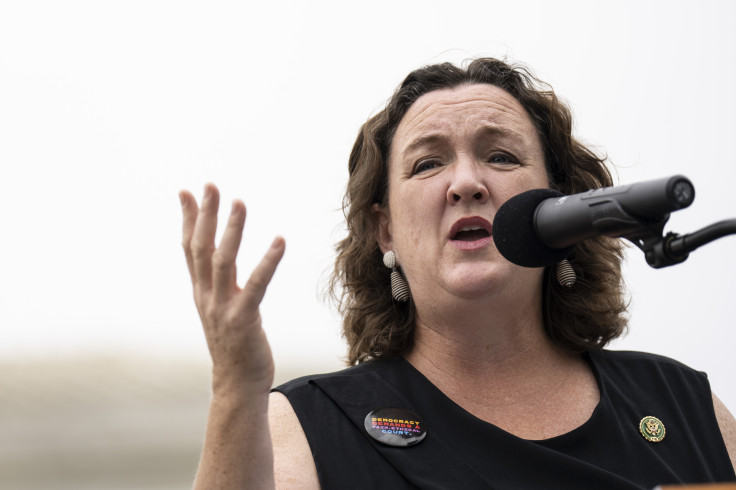
Early reporting suggests former Rep. Katie Porter is the clearest first beneficiary. According to the San Francisco Chronicle, 39% of Swalwell's supporters picked Porter as their second choice, far ahead of other Democratic contenders. Tom Steyer was next at 15%, making him another potential winner as donors, endorsers, and operatives search for a new political home.
That does not mean Porter automatically inherits Swalwell's lane. The race remains crowded, volatile, and unusually fragmented, with more than 50 candidates in the field and no dominant frontrunner. The prominent Democrats still in the contest include Porter, Steyer, and Antonio Villaraigosa, while Republicans remain split primarily between Steve Hilton and Riverside County Sheriff Chad Bianco. Because California advances only the top two finishers regardless of party, Democrats are increasingly worried that a divided center-left vote could create a path for two Republicans to move on to November.
-
Democratic Presidential Hopeful Rahm Emanuel Breaks With Washington on Israel: 'No More U.S. Blood or Blank Checks'

-
Stench and Toxins From Polluted Tijuana River Linked to Health Impacts in San Diego, Including Delirium and Tremors

-
Feds Arrest Cartel Family in California Amid Hunt for El Chapo's Son Iván Archibaldo Guzmán


In that sense, one of the scandal's other winners could be the Republican field itself. Swalwell's collapse did not just remove a well-known Democrat. It exposed a larger Democratic problem that had already been brewing for months: too many candidates, too little consolidation, and no agreement on who should emerge as the party's strongest standard-bearer. Axios reported that San Diego County Democratic Party Chair Will Rodriguez-Kennedy is now openly urging more Democrats to drop out, warning that ego and fragmentation could become gifts to the GOP.
There are also smaller, quieter winners. Xavier Becerra's campaign has claimed new momentum, while San Jose Mayor Matt Mahan has reportedly gained financial backing as donors rethink their options after Swalwell's exit. Labor groups and major endorsers that once lined up behind Swalwell are now reassessing, which means the contest could shift again quickly as money and institutional support migrate elsewhere.
For now, though, Porter appears best positioned to capitalize politically, at least in the short term. She has strong name recognition, a built-in statewide profile and, according to current reporting, the largest share of Swalwell's orphaned support. Steyer may also gain from the reshuffle, particularly among donors and elected officials looking for a candidate with money and organizational reach.
The race has changed, yes, but not in a neat or settled way. Swalwell's fall from grace has not produced a single new frontrunner so much as it has intensified the scramble beneath him. The winners so far look like Porter, Steyer and possibly the Republican candidates hoping Democrats keep splitting their own vote. The losers are easier to identify: Swalwell, obviously, but also a California Democratic Party that suddenly has even less room for chaos.
© 2025 Latin Times. All rights reserved. Do not reproduce without permission.


