
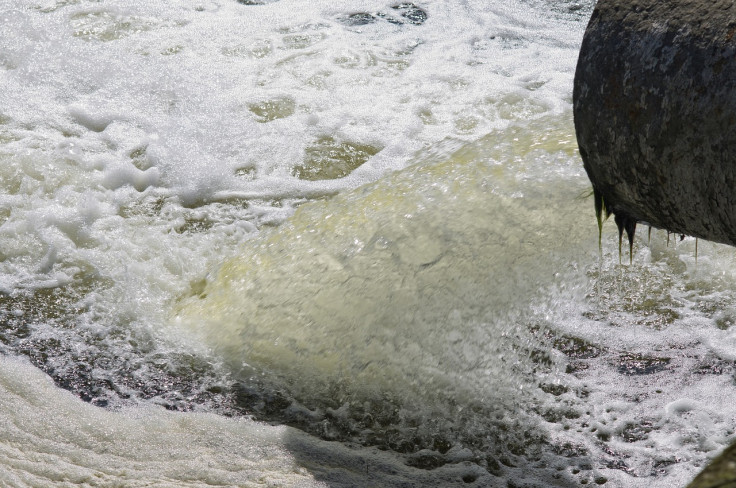
The stench in and around the Tijuana River is nothing new. Nor are the complaints from residents who say the smell disrupts their daily lives, even as they try to sleep.
With billions of gallons of untreated sewage contaminating the river, local and state authorities have attempted multiple measures to address the problem. Last December, the United States and Mexico signed an agreement aimed at curbing the pollution flowing into the Tijuana River, including infrastructure upgrades and other steps to contain the crisis.
But despite the many measures taken by both Mexico and the United States, residents of Tijuana and San Diego continue to report that pollution levels have not dropped.


As reported by The Associated Press, tens of thousands of people continue to be exposed to the sewage and the problems it causes. According to the Centers for Disease Control and Prevention, beyond the overwhelming odor, raw sewage from the Tijuana River releases hydrogen sulfide, a toxic gas that can damage neurons in the nose and trigger asthma attacks. It can also cause headaches, nausea, delirium, tremors, cough, shortness of breath, and, in some cases, death.
"Tijuana River Valley sewage pollution is the most severe public health crisis in the Western Hemisphere, and its impacts are being felt every day by families in San Diego," Paloma Aguirre, San Diego County supervisor, said during a February visit to the area.
Despite lawmakers calling it a public health crisis, raw sewage continues to flow into the river. The Tijuana River carried 10 billion gallons of mostly raw sewage and industrial waste across the U.S. border in January alone, according to International Boundary and Water Commission data.
The smell, and the toxins that come with it, are affecting much of the population in the area. A 2024 sampling by San Diego County and the CDC found that 71% of households near the Tijuana River reported smelling sewage inside their homes, and 69% said at least one member became sick from exposure.
That same year, a study conducted by a chemistry professor at the University of California, San Diego, and a team of researchers found that hydrogen sulfide concentrations were 4,500 times higher than typical urban levels and 150 times higher than California air standards when river flows peaked at night.
Contamination of the Tijuana River has gained national attention in recent months, even reaching President Donald Trump's desk. Last December, he urged Mexico to address its "water and sewage problem," calling it a threat to the United States.
"Mexico must take care of its water and sewage problem, IMMEDIATELY. It is a true Threat to the People of Texas, California, and the United States of America!" Trump said in a post on his social media platform, Truth Social.
Since then, local officials on both sides of the border have taken some steps to address the sewage and the stench. In February, reports indicated that Mexico plans to install a new 450-foot trash boom in the Tijuana River Valley to capture debris before it crosses into the United States.
Similarly, the San Diego Regional Chamber of Commerce released a report last month outlining a binational roadmap to tackle the sewage crisis in the Tijuana River.
The document proposes a "five-pillar framework designed to eliminate dry-weather transboundary sewage flows, while restoring coastal water quality and ensuring accountable, sustainable wastewater management in the region."
The report also highlights that the International Wastewater Treatment Plant, which handles polluted water from the Mexican side of the river, has been underfunded for more than a decade, even as dry-weather sewage events reached record levels.

© 2025 Latin Times. All rights reserved. Do not reproduce without permission.


