
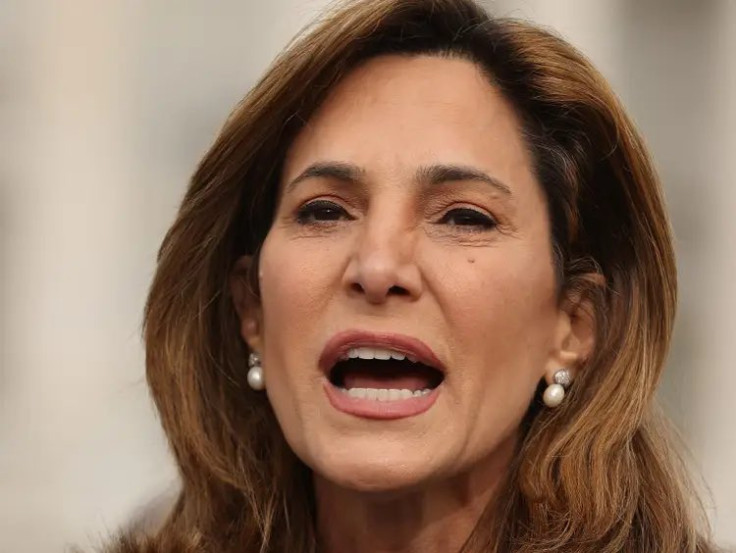
MIAMI—Florida Republican Rep. Maria Elvira Salazar is pressing the Trump administration to restart stalled citizenship and naturalization processes, warning that thousands of Cuban and Venezuelan immigrants remain in legal limbo despite having followed U.S. immigration rules.
In a letter to newly appointed Homeland Security Secretary Markwayne Mullin, Salazar called for the immediate resumption of immigration benefits, naturalization processing, and citizenship ceremonies that have been paused under recent policy changes.
"They did everything right and they deserve the chance to finally become Americans," Salazar wrote publicly, echoing her appeal on social media.

Quienes hicieron todo bien y pasaron cada verificación no pueden quedarse en el limbo.
— Rep. María Elvira Salazar (@RepMariaSalazar) April 1, 2026
Por eso le pedí a @SecMullinDHS reanudar los procesos de ciudadanía y las ceremonias, sin bajar los estándares de seguridad.
The request comes after a series of sweeping immigration policy changes under former DHS Secretary Kristi Noem, whose tenure included efforts to tighten vetting procedures and roll back several legal pathways for migrants.
Under those policies, the Department of Homeland Security paused or slowed certain immigration processes while expanding scrutiny of applicants from countries deemed high-risk. Cuba and Venezuela were among dozens of nations affected after DHS broadened its review to nearly 40 countries earlier this year.
In internal guidance, U.S. Citizenship and Immigration Services said it must ensure individuals from countries with high visa overstay rates or fraud concerns do not pose threats to national security or public safety. The agency added that stricter controls were necessary to "faithfully uphold United States immigration law."
But critics argue those measures have had unintended consequences, particularly in South Florida, where large Cuban and Venezuelan communities depend on legal pathways such as humanitarian parole and Temporary Protected Status.
The Trump administration has already moved to dismantle or scale back several of those programs, putting hundreds of thousands at risk of losing legal status and fueling uncertainty across immigrant-heavy regions like Miami.
Salazar, a Cuban American lawmaker representing Miami, insists she is attempting to strike a balance between enforcement and access.
In her letter, she urged Mullin to maintain enhanced security screenings implemented under Noem while allowing vetted applicants to continue moving through the system. "These are individuals who fled persecution and violence, followed the law, and have already been thoroughly vetted," Salazar wrote. "They have earned the right to become citizens."
She also framed the issue as symbolic, tying it to the nation's upcoming 250th anniversary.
"With our nation's 250th anniversary approaching, there is no better way to honor our founding than by welcoming new citizens and allowing them to take the oath that makes them Americans," she added.
Unbelievably @DHSgov has not been processing naturalization applications for Venezuelans and Cubans, some of whom have been in this country -legally- for decades!
— Luis H Ball (@ball1_ball) March 31, 2026
Kudos to Representative @MaElviraSalazar for calling attention to this issue!! pic.twitter.com/r9W3BBPxjE
Political pressure builds in South Florida
The issue is also deeply tied to Salazar's political future. Cuban American and Venezuelan American voters make up a significant share of her Miami-Dade constituency, many of whom are directly affected by delays in immigration processing and naturalization.
That reality is colliding with a high-profile challenge from Eliott Rodriguez, a longtime South Florida television anchor who has launched a Democratic campaign for Florida's 27th Congressional District. Like Salazar, who built her public profile as a journalist before entering politics, Rodriguez brings decades of media visibility and deep roots in the same community.
Rodriguez has made immigration and the treatment of migrants central to his campaign message, arguing that current policies are leaving families in limbo. His entry into the race is expected to make the district one of the most competitive battlegrounds in the country, increasing pressure on Salazar to deliver tangible results for immigrant communities ahead of November.
Mullin, who was sworn in after Noem's removal in March, has not yet publicly responded to Salazar's request. His early decisions are expected to signal whether the administration will maintain a hardline approach or adjust policies affecting legal immigrants.
For now, thousands of applicants remain stuck in a bureaucratic pause, waiting for interviews, approvals, or the final step of becoming U.S. citizens.


© 2025 Latin Times. All rights reserved. Do not reproduce without permission.


