
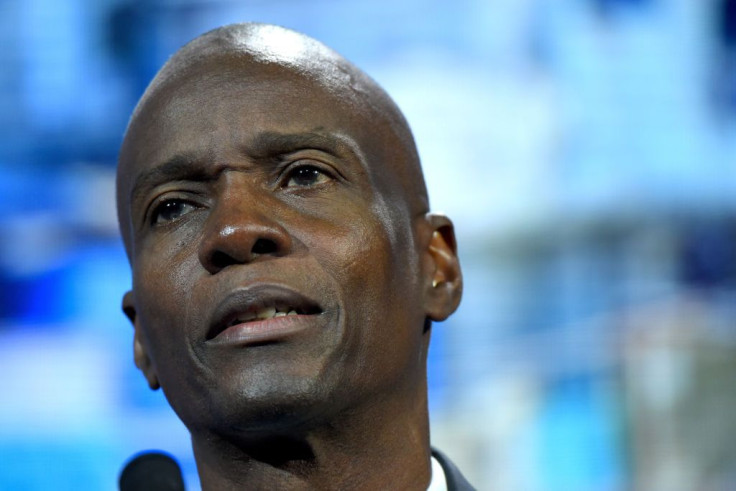
Historically, Haiti has more often than not endured hardship tied to natural disasters, political instability and social conflict. The 2021 assassination of Haitian President Jovenel Moïse dramatically accelerated the Caribbean country's crisis, weakening institutions while violent gangs gained territorial control.
Nearly five years after his assassination, four South Florida men were found guilty by a Miami jury of conspiring to kidnap or kill Moïse after 39 days of testimony in a trial that began in March.
Moïse served as Haiti's 48th president from 2017 until July 7, 2021, when he was assassinated at his home outside Port-au-Prince. Several months before the killing, Moïse said armed assailants had tried to kill him in what he described as a failed coup attempt aimed at forcing him from power.

For nearly five years, the identities of those responsible remained a mystery. According to reporting at the time from The Haitian Times, the gunmen were seen wearing ski masks and were heard speaking Spanish and English.
A detail that matched what authorities later uncovered in the investigation, as prosecutors said the men plotted the assassination in South Florida and hired a squad of former Colombian soldiers to carry out the attack.
Arcángel Pretel Ortiz and Antonio "Tony" Intriago, owners of Counter Terrorist Federal Academy and Counter Terrorist Unit Security in Doral — collectively known as CTU — were tried alongside James Solages, who worked for CTU, and Walter Veintemilla, a Broward-area mortgage broker whom prosecutors said helped finance the plot.
As reported by the Miami Herald, the Miami jury found the four defendants guilty on five counts, including conspiracy to provide material support, a terrorism-related charge, and conspiracy to lead a military expedition against a friendly nation.
U.S. prosecutors gathered more than 8,000 gigabytes of evidence, interviewed more than 40 witnesses and obtained crime scene photos from the Haiti National Police. According to the outlet, the evidence included a 900-page summary of text messages and voice notes showing how the plot evolved, from plans to use gangs, to poisoning Moïse, to detaining him at the airport after he returned from an overseas trip.
In total, Haitian and U.S. authorities have charged more than 50 suspects in cases linked to the assassination of Moïse, including former first lady Martine Moïse.
According to evidence presented in court, members of the Colombian armed group misled others into believing they were acting on behalf of the U.S. government, including the military and the Drug Enforcement Administration.
As noted by the outlet, a retired Colombian Army captain who led one of the commando units testified that the squad entered Moïse's home at the direction of Solages, who had told members of the inner circle behind the plot that the goal of the operation was to kill everyone inside the house.
All four defendants face up to life in prison. A fifth defendant, Christian Emmanuel Sanon, a Haiti-born doctor and pastor who lived in South Florida, will be tried at a later date because of health issues.


© 2025 Latin Times. All rights reserved. Do not reproduce without permission.


