
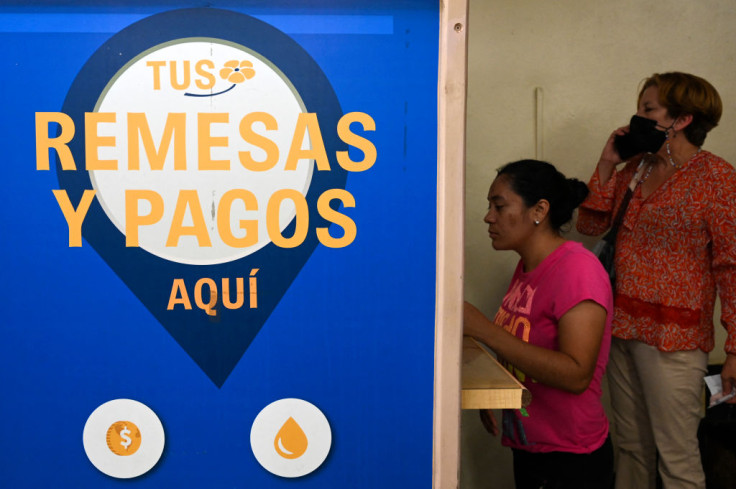
Remittances to Mexico declined for an 11th consecutive month in February, as U.S. immigration enforcement and labor market conditions weighed on money transfers from abroad, according to data from the Banco de México.
Mexico received $4.47 billion in remittances in February, a 0.4% increase from a year earlier but the lowest monthly total since February 2025. The number of transactions fell 3.2% year-over-year to about 11.3 million operations, extending a sustained decline in transfer activity even as the average remittance rose to $395.
For the first two months of 2026, remittance inflows totaled $9.06 billion, down 0.5% compared to the same period last year. The data follows a broader slowdown in 2025, when Mexico received $61.8 billion in remittances, a 4.6% annual decline and the first yearly drop after more than a decade of growth, as EFE reports.
"This is a relevant result considering that immigration raids and other enforcement operations continued," Grupo Financiero Banorte said in a report cited by Mexican site Expansión, referring to measures carried out by U.S. immigration authorities.


Labor market conditions have also contributed. Banorte noted that U.S. nonfarm payrolls fell by 92,000 jobs and the unemployment rate rose to 4.4%. Unemployment among Hispanics and Latinos increased to 5.2%, although the rate for Mexican migrants improved to 5.7%.
The pattern of fewer transfers but higher average amounts has been consistent in recent months. Economists say migrants may be sending larger sums less frequently, reflecting financial constraints and uncertainty about employment and immigration status.
The current trend builds on declines seen throughout 2025. By October, remittances had already fallen for seven consecutive months, with total inflows down more than 5% year-over-year. Analysts consulted by El País in December linked that earlier downturn to slower job creation in the United States and stricter immigration enforcement, including a rise in detentions by Immigration and Customs Enforcement.
"Many people in Mexico who received remittances last year have stopped receiving them in 2025, and the number continues to grow," said Gabriela Siller, an economist at Banco Base, at the time, pointing to the drop in transaction volumes.
Remittances remain a key source of income for Mexico, accounting for about 4% of gross domestic product and supporting millions of households. Mexico is the world's second-largest recipient of remittances after India.
Banorte said volatility in remittance flows could ease in 2026 but warned of risks tied to inflation, labor conditions and continued immigration enforcement in the United States, as well as external factors such as higher energy prices affecting migrants' purchasing power.
-
Former CBP Officials Allege Border Patrol Head Engaged in Sex Tourism: 'I Don't Know How He Became Chief'

-
Cecilia García Ramblas Found Her Brother's Remains, Then Was Killed Searching for Other Victims of Violence in Mexico

-
The Architect of Mexico's U.S. Relationship Just Became Its Future Foreign Minister: Meet Roberto Velasco


© 2025 Latin Times. All rights reserved. Do not reproduce without permission.


