
Costa Rica's leading newspaper, La Nación, says the U.S. State Department revoked the visas of five of its seven board members after years of reporting on sexual harassment allegations involving President Rodrigo Chaves, whose government has grown increasingly aligned with the Trump administration.
The newspaper alleges that most of its executives have been barred from traveling to the United States without an official explanation. In an editorial Monday, La Nación called the move "unprecedented" and said that, absent objective reasons, "only one conclusion can be drawn: Its purpose has been to punish La Nación's editorial stance."
The State Department did not immediately respond to a request for comment, according to The New York Times. A spokesman for Chaves also did not immediately comment.


The visa revocations follow a series of U.S. actions against Costa Rican political figures and citizens, many reportedly linked to unspecified ties to China. But analysts said the targeting of La Nación's board points to a broader pattern involving critics of Chaves, who has repeatedly accused the newspaper of seeking to damage his government.
Back in 2021, La Nación reported that the World Bank had sanctioned Chaves over "sexual insinuations" and a "pattern of unwanted inappropriate behavior" between 2008 and 2013, when he worked for the institution. The report cited a World Bank Administrative Tribunal decision that concluded the conduct amounted to sexual harassment.
Chaves denied the allegations at the time, saying he had "never improperly touched, insulted or intentionally made any woman uncomfortable."
The newspaper's later reporting on the case became part of a broader conflict between Chaves and Costa Rica's press. Despite the World Bank investigation and his demotion, Chaves was elected president in 2022.
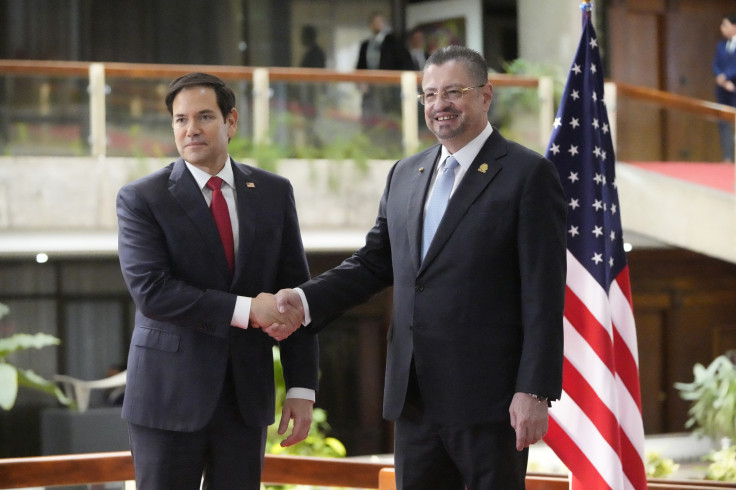
His administration has since moved closer to Washington. Last year, Secretary of State Marco Rubio praised Costa Rica as "a model" for the region after Chaves banned Chinese 5G vendors, including Huawei. Costa Rica also agreed last month to receive foreign-born deportees from the United States and has taken steps aligned with Trump administration priorities on China, Cuba, migration and regional security.
Pedro Abreu, president of La Nación's board, said the revocations would not alter the newspaper's work. "This situation will not change our editorial line or our commitment to freedom of the press," he said.
© 2025 Latin Times. All rights reserved. Do not reproduce without permission.


