
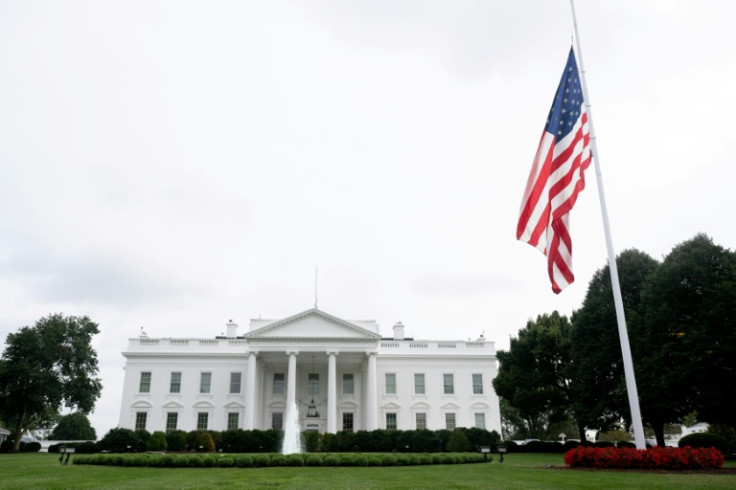
The White House's 2026 National Drug Control Strategy places Mexico at the center of President Donald Trump's fight against fentanyl, mentioning Mexico or Mexican actors more than 30 times in a 195-page document that calls for tougher border enforcement, artificial intelligence surveillance, financial sanctions, and "tangible results" from the Mexican government.
Released by the Office of National Drug Control Policy, the strategy describes the nearly 2,000-mile U.S.-Mexico border as "the principal corridor" for the illicit drugs posing the gravest threat to American lives. It says Mexican cartels are the main producers and traffickers of synthetic drugs, particularly fentanyl and methamphetamine, calling them "the most significant drug-related threat to the United States."
The plan comes as Mexico is already under intense U.S. pressure. In recent days, President Claudia Sheinbaum's government has questioned U.S. allegations against Sinaloa Gov. Rubén Rocha Moya and other Mexican officials accused of cartel ties, saying Washington must provide evidence and follow due process. Sheinbaum said proof was needed after U.S. charges against Rocha, marking a major escalation in U.S. anti-cartel action.
The strategy says cartels operating in Mexico "control vast, sophisticated global networks" that procure precursor chemicals, largely from China and to a lesser extent India, produce drugs in clandestine labs in Mexico and smuggle them into the United States. It also says those groups operate with "a level of impunity in parts of Mexico that directly challenges the sovereignty of the state."
The document is also blunt about what Washington wants from Mexico. Under a section titled "Diplomatic Engagement and Capacity Building with Mexico," it says U.S. assistance will be conditioned on "tangible results," including "appropriate measures to arrest, prosecute, and extradite FTO leaders and to dismantle synthetic drug labs."
That language directly collides with the political and legal reality in Mexico, where Sheinbaum has said cooperation is welcome but foreign intervention is not. Mexico warned the United States that U.S. involvement in an anti-drug operation in Chihuahua must not be repeated after a fatal crash exposed the presence of U.S. personnel in the operation.


On the ground, Mexico has tried to show it can act against cartel structures without allowing U.S. forces to operate freely inside the country. Mexican special forces arrested Audias Flores, known as "El Jardinero," a top commander of the Jalisco New Generation Cartel, in Nayarit, according to Security Minister Omar García Harfuch.
The White House strategy also expands the fight beyond arrests. It says intelligence and seizure data show most illicit opioids, methamphetamine, and cocaine, especially fentanyl, are smuggled through official ports of entry, hidden in passenger vehicles or mixed with legitimate cargo. It also cites more than 230 tunnels discovered since 1990 and says traffickers are increasingly using drones.
The plan calls for Homeland Security Task Forces to coordinate investigations, link border seizures to broader criminal probes and target command structures, transportation cells and distribution networks. It also recognizes southbound firearms trafficking from the United States into Mexico as a "critical border control element."
Technology is another central pillar. The White House fact sheet says the strategy will use advanced technology and artificial intelligence to analyze current and future drug threats, while implementing national wastewater testing for near real-time data on illegal drug use.
At home, the plan pushes prevention, treatment and recovery, including faith-based programs.
The White House says the strategy is "grounded in the healing power of faith" and will partner with faith leaders and organizations to expand prevention and recovery support.
The result is a drug strategy that treats Mexico not as a side issue, but as one of the central battlegrounds in the U.S. fentanyl response. Washington is demanding arrests, extraditions, lab dismantling, intelligence sharing and financial disruption. Mexico is offering cooperation, but within its own laws. That difference may define the next stage of the U.S.-Mexico cartel fight.
© 2025 Latin Times. All rights reserved. Do not reproduce without permission.


