
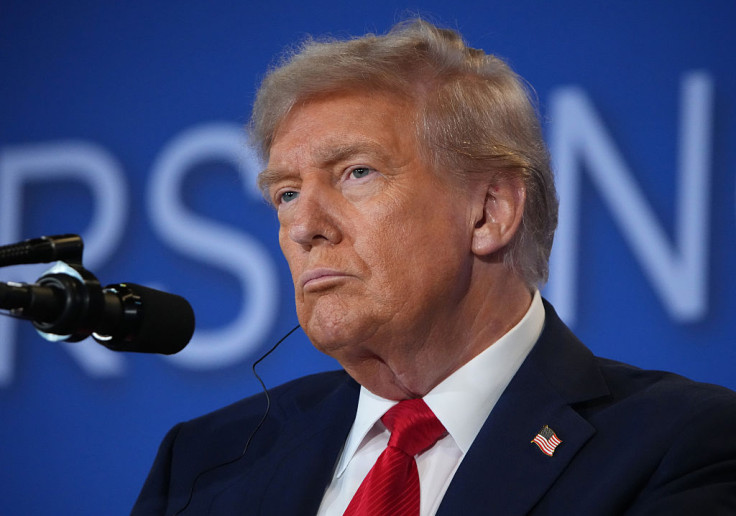
Speaking at the inaugural Americas Counter Cartel Conference in March, top advisers from the Trump administration made clear that Latin America would remain a parallel priority as the conflict with Iran continued to escalate, framing the region as a strategic front tied directly to U.S. national security interests.
White House security adviser Stephen Miller was one of the more vocal officials, saying the United States would "not cede an inch of territory in this hemisphere," describing a doctrine that leans on "hard power, military power, [and] lethal force" to confront criminal networks.
Defense Secretary Pete Hegseth echoed that approach, warning that the U.S. was prepared to "go on the offensive alone" if regional cooperation fell short, an outlook that underscores how Washington is increasingly viewing Latin America through a security and geopolitical lens rather than a purely diplomatic one.
As the halfway point in 2026 approaches, the region is slated to feature several elections that could affect issues such as migration, trade, and security for the U.S. Here are five of the most important ones.
-
1 in 3 Venezuelan Migrants in Latin America Consider Returning Home but Few Plan Immediate Move, Report Finds
-
Nicaraguan President Daniel Ortega Reappears and Calls Trump "Unhinged" After U.S. Sanctions on His Sons

-
Is Nicaragua Next? Marco Rubio's New Sanctions on a Senior Ortega Regime Official Signal a Broader Push After Venezuela and Cuba


Colombia
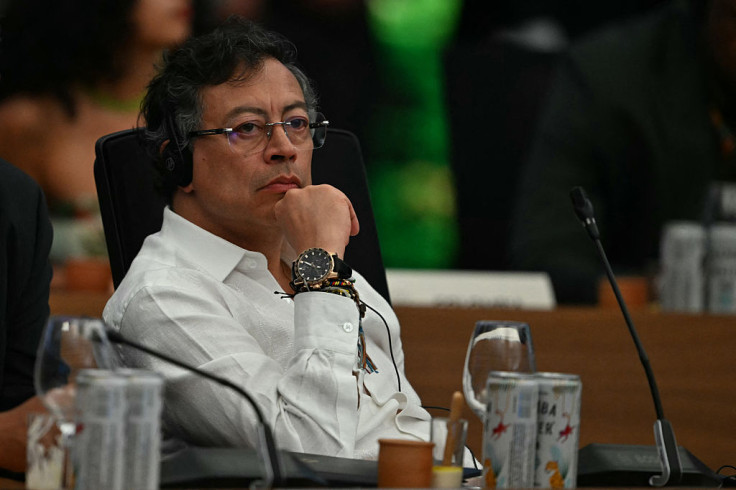
Colombia is heading into a pivotal presidential election on May 31, 2026, with a likely runoff in June if no candidate wins outright. The vote will mark the end of Gustavo Petro's term, the country's first leftist presidency, and is widely seen as a referendum on his reform agenda.
Polling released in late March shows a competitive but structured race, with leftist Iván Cepeda leading consistently at around 34%–36% of voter intention across major surveys and right-leaning candidates Paloma Valencia and Abelardo de la Espriella trailing but within striking distance, while a significant share of undecided voters and blank ballots underscores persistent uncertainty ahead of the vote.
Analysts note that despite his lead, Cepeda's support appears to have plateaued, suggesting the outcome will likely depend on second-round alliances and the ability of other candidates to consolidate the anti-government vote.
Colombia's relationship with the United States has grown more complex in recent months, anchored to Petro and Trump's penchant for social media usage. In January Trump referred to Petro as "a sick man", prompting a diplomatic conflict that was thawed after a White House meeting between the two in early February.
Nevertheless, tensions have since resurfaced. A recent report by El País detailed a leaked audio warning of a plot involving drug traffickers to fabricate or support a case against Petro, with references that raised concerns within the Colombian government about possible external involvement.
Concerns around the electoral process itself have also been raised by U.S. officials, with Rep. Mario Díaz-Balart warning of a "deterioration of democracy" in Colombia and citing alleged threats against political leaders, adding to scrutiny ahead of the vote.
Brazil
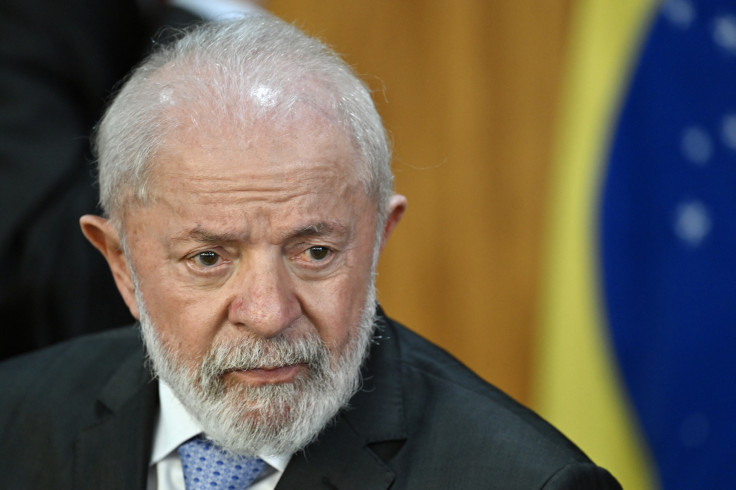
Brazil will hold its next general election on October 4, 2026, with a potential presidential runoff scheduled for October 25, in what is expected to be one of the most consequential votes in the region. The election will determine whether Luiz Inácio Lula da Silva secures another term or if the right regains power after a deeply polarized cycle.
Beyond the presidency, voters will also elect a new Congress and state governors, making the outcome critical for Brazil's economic direction, environmental policy—particularly in the Amazon—and its alignment with global powers, including the United States and China.
Brazil's relationship with the United States has been shaped in large part by tensions between Lula and Trump, as well as Trump's close alignment with former Brazilian president Jair Bolsonaro. In mid-2025, Trump threatened to impose tariffs of up to 50% on Brazilian exports, framing the move as retaliation against what he called a "witch hunt" targeting Bolsonaro over alleged coup plotting.
The dispute briefly raised the prospect of a broader trade conflict, though U.S. officials later signaled potential exemptions on key goods like coffee, easing immediate economic fallout. Still, the episode reinforced a pattern of political interference shaping bilateral ties.
Brazil has also deepened its ties with China, its largest trading partner, as part of a broader push toward a more multipolar foreign policy, with President Luiz Inácio Lula da Silva describing the relationship as "very strategic." Trade between the two countries has surged to roughly $160 billion in recent years, making Brazil a point of strategic interest for Washington.
Haiti
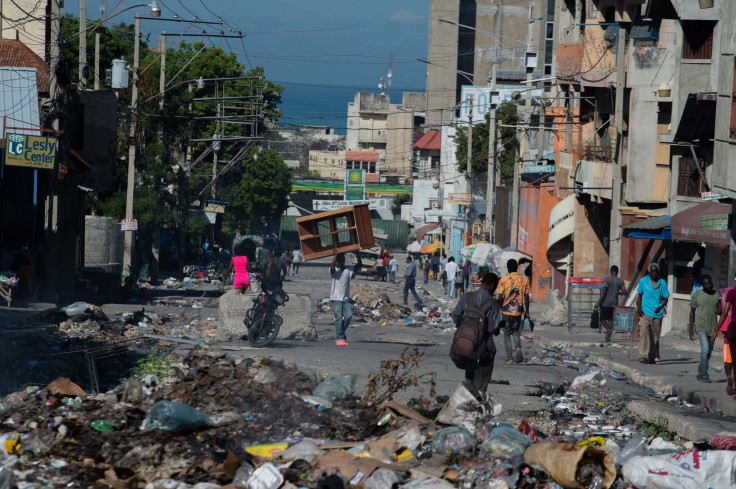
Haiti is expected to hold its first general election in more than a decade in the second half of 2026, though an exact date remains uncertain amid ongoing security concerns. The vote is intended to restore democratic rule after years of institutional collapse following the 2021 assassination of President Jovenel Moïse and the expiration of all elected offices.
The scale of political participation underscores both urgency and fragmentation: a record number of more than 280 political parties have registered to take part, reflecting what observers describe as a system attempting to reset after years of unelected transitional governance. At the same time, the absence of clear frontrunners and the sheer number of actors point to a highly fluid and unpredictable race, with the outcome likely shaped as much by security conditions as by voter preference.
Haiti's trajectory is also closely tied to U.S. policy, which has shifted toward a more assertive security-driven approach. As noted by Americas Quarterly in early April, the Trump administration's regional strategy defines its objective in Haiti in stark terms: "stability," understood as preventing state collapse and large-scale migration to the United States. This has translated into increased support for Haitian security forces and backing for a multinational intervention aimed at dismantling gang control.
The outcome of the 2026 elections is expected to shape the country's political future while also affecting migration flows and U.S. influence in the Caribbean
Venezuela

Venezuela does not yet have a confirmed date for presidential elections in 2026, but pressure is mounting for them to take place soon. Following the January removal of Nicolás Maduro and the installation of an interim government led by Delcy Rodríguez, local authorities have prioritized 'stabilization,' a position broadly aligned with the Trump administration's focus on a phased transition.
For the opposition, led by María Corina Machado, the urgency is clear. She has warned that delaying elections risks unrest, arguing that without a defined timeline, public pressure could "turn anarchic." Machado has pushed for a rapid vote and plans to return to Venezuela to channel that pressure into a democratic process.
The interim leadership, spearheaded by Delcy and her brother Jorge Rodríguez, who lead the country's National Assembly, has taken a more cautious stance, downplaying the need for immediate elections while focusing on consolidating power and managing the transition. Critics argue this approach risks prolonging interim rule without guaranteeing a democratic outcome.
Secretary of State Marco Rubio, in the meantime, said in late March that Venezuela will "ultimately" require a transition phase followed by free elections, reflecting a broader approach by Donald Trump that balances pressure for democracy with concerns over stability, migration, and energy.
© 2025 Latin Times. All rights reserved. Do not reproduce without permission.


