
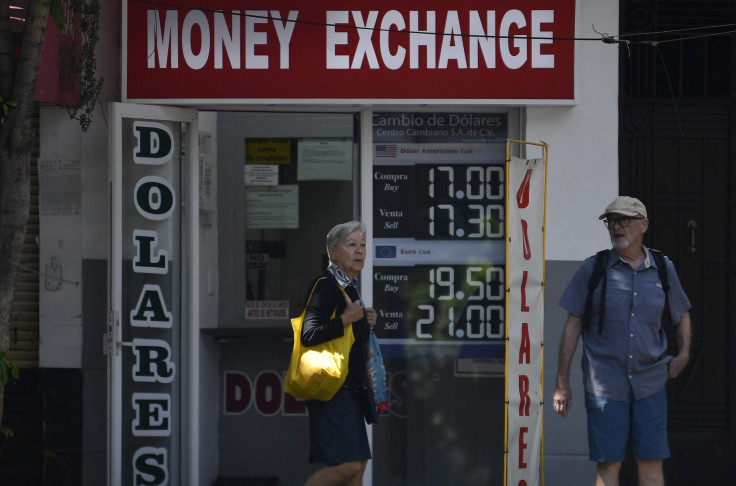
President Donald Trump's executive order titled "Restoring Integrity to America's Financial System" does not explicitly ban remittances, but analysts and economists say several of its provisions could significantly affect how undocumented migrants send money abroad, particularly to Mexico.
The order directs the Treasury Department and federal banking regulators to tighten customer identification and due diligence requirements for financial institutions. While the administration frames the measures as an effort to combat money laundering, fentanyl trafficking and fraud, experts warn the changes could increase scrutiny of immigrants using banks, remittance companies and digital payment services.
Economist Gabriela Siller, director of economic analysis at Grupo Financiero BASE, said the measure "could affect the sending of remittances to Mexico." In posts on X, Siller noted that remittances represent 5% of consumption and 3.5% of Mexico's GDP.
Siller estimated that migrants with irregular status account for nearly 40% of remittances sent to Mexico and warned that if restrictions effectively blocked undocumented migrants from sending money, remittances in dollars could fall between 10% and 20% annually.
En EEUU viven aproximadamente 11.5 millones de mexicanos, de los cuales aproximadamente el 35% tienen estatus migratorio irregular.
— Gabriela Siller Pagaza (@GabySillerP) May 20, 2026
Se estima que estos migrantes son responsables de cerca del 40% de las remesas que llegan a México. De materializarse un bloqueo al envío de… https://t.co/HTM98ZHrbA
Raúl Hinojosa, an economist and professor at UCLA, told Telemundo that the order could lead banks to limit services for immigrants:
"This definitely concerns me. This measure is not something positive. Many banks are going to use this as an excuse not to provide services to immigrants, and that's also clear"
Orson Aguilar, president of LatinoProsperity, echoed Hinojosa's claims, saying banks, credit companies and remittance providers could become more reluctant to work with immigrant customers because of the new compliance risks. He also warned of "more scrutiny" surrounding the use of ITIN numbers and consular identification cards, both commonly used by undocumented migrants to access financial services.
Several analysts, however, argue the practical impact may be more limited than initial reactions suggest. BBVA Research noted that most Mexican-born people living in the United States are either citizens or permanent residents and that many undocumented migrants live in mixed-status households, allowing relatives with legal status to continue processing transfers.
BBVA also pointed to the limited effect of a separate 1% tax on cash remittances implemented earlier this year. Remittances to Mexico rose 1.4% in the first quarter of 2026 compared with the same period last year.
Analysts say the key question now is how aggressively the Treasury Department and financial institutions implement the executive order in the coming months.


© 2025 Latin Times. All rights reserved. Do not reproduce without permission.

