
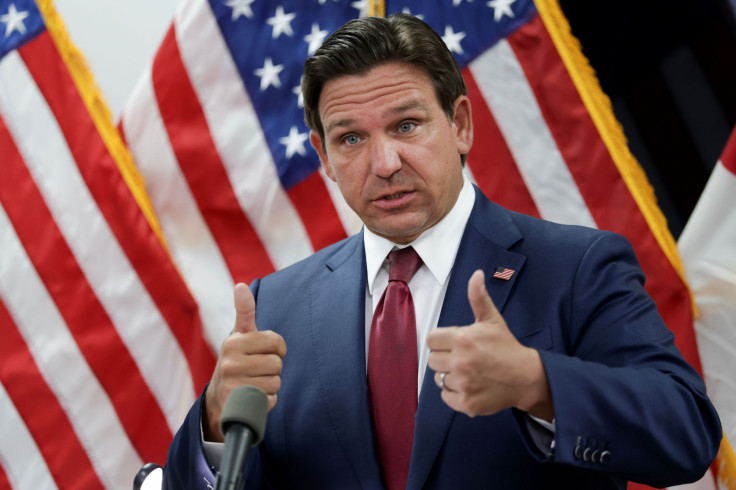
Florida lawmakers approved legislation granting Gov. Ron DeSantis broad authority to designate domestic groups as "terrorist organizations," a move critics say could be used to target campus activists and organizations linked to political protests.
The Florida House passed HB 1471 along party lines Thursday, sending the bill to DeSantis' desk. The measure, proposed by the governor's office, allows the Florida Department of Law Enforcement—an agency that reports to the governor—to classify groups as domestic terrorist organizations if they are deemed to engage in "terrorist activity" and pose an "ongoing threat" to security. Neither the group nor its members must be charged with a crime for the designation.
The legislation also permits the state to keep records behind those determinations confidential under a separate bill approved the same day, though groups could gain access to some materials if they challenge the designation in court.


Supporters say the measure strengthens the state's ability to address security threats. Rep. Hillary Cassel, the Republican sponsor of the bill, told The Miami Herald it is designed to protect constitutional order. "This bill protects the Constitution, protects us from those that want to change us, protects us from those who want Western civilization to fall," Cassel said during debate.
But critics warn the law could be used to punish speech and political activity, particularly on college campuses. The bill includes provisions allowing disciplinary action against students who "promote" terrorist organizations, defined as making statements or taking actions that support or encourage a group's violent activities. Students found in violation could face expulsion and be required to pay out-of-state tuition rates.
Democratic lawmakers argued the measure grants the governor powers typically reserved for the federal government. "This is political repression through and through," said Rep. Angie Nixon, a Democrat from Jacksonville, to The Herald. Rep. Robin Bartleman of Weston also questioned whether lawmakers were enabling potential abuses of executive authority.
Last week a federal judge blocked a December executive order issued by DeSantis that labeled the Council on American-Islamic Relations (CAIR) a terrorist organization and barred it from receiving state benefits. U.S. District Judge Mark Walker ruled the measure violated constitutional protections for speech and association, writing that "the First Amendment bars the Governor from continuing the troubling trend of using an executive office to make a political statement at the expense of others' constitutional rights."
The debate also comes amid scrutiny of political rhetoric on Florida campuses. Messages leaked last week from a chat group linked to conservative student organizations at Florida International University included racist and extremist references, prompting a criminal investigation by the university.
© 2025 Latin Times. All rights reserved. Do not reproduce without permission.


