
Ali Moshiri, a longtime Chevron executive who oversaw the company's operations in Venezuela, warned the CIA that attempting to replace the country's leadership with the democratic opposition could produce instability similar to the aftermath of the Iraq war, according to people familiar with internal U.S. deliberations before the capture of President Nicolás Maduro.
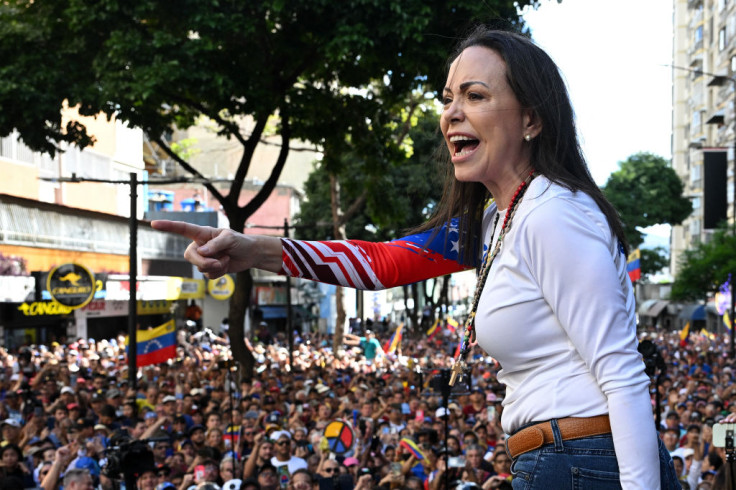
Moshiri advised U.S. officials that opposition leader María Corina Machado lacked the support of the country's security services and control of its oil infrastructure, making a rapid political transition unlikely. Installing the opposition, he argued, could leave Washington with "another quagmire like Iraq."
Moshiri instead suggested maintaining continuity within the existing power structure by working with Delcy Rodríguez, Maduro's longtime deputy and economic manager, according to the Wall Street Journal. His assessment was later reflected in a CIA analysis presented to the White House that concluded regime insiders would be better positioned to stabilize the country after Maduro's removal.
U.S. officials concluded that opposition leaders such as Machado and Edmundo González would struggle to secure cooperation from those institutions in the short term.
The debate reflected broader concerns within the administration about avoiding the dismantling of state structures, a dynamic widely blamed for years of instability following the U.S.-led invasion of Iraq. U.S. intelligence officials also described Rodríguez as a pragmatic negotiator capable of working with Washington on issues including economic stability and counter-narcotics cooperation.
CIA Director John Ratcliffe later traveled to Caracas after Maduro's capture and met Rodríguez, signaling interest in developing a working relationship with the new leadership. According to U.S. officials familiar with the discussions, talks focused on intelligence cooperation, economic recovery and preventing Venezuela from becoming a "safe haven for America's adversaries."


In a statement to WSJ, Chevron said that "between spring of 2025 and the removal of Maduro, Chevron did not authorize anyone working for, or on behalf of, the company to engage with the CIA related to Venezuela's leadership, including assessments of government officials or opposition leaders."
It added that the company had no advance knowledge of Maduro's ouster, and didn't coordinate or advocate for it. Chevron added that it "does not have a business relationship with Ali Moshiri—formal or informal."
The strategic calculations surrounding Venezuela's leadership continue to shape U.S. policy. In a letter to a federal prosecutor last week, the State Department confirmed that Washington formally recognizes Rodríguez as the country's head of state following Maduro's capture in a U.S. operation earlier this year.
© 2025 Latin Times. All rights reserved. Do not reproduce without permission.


