
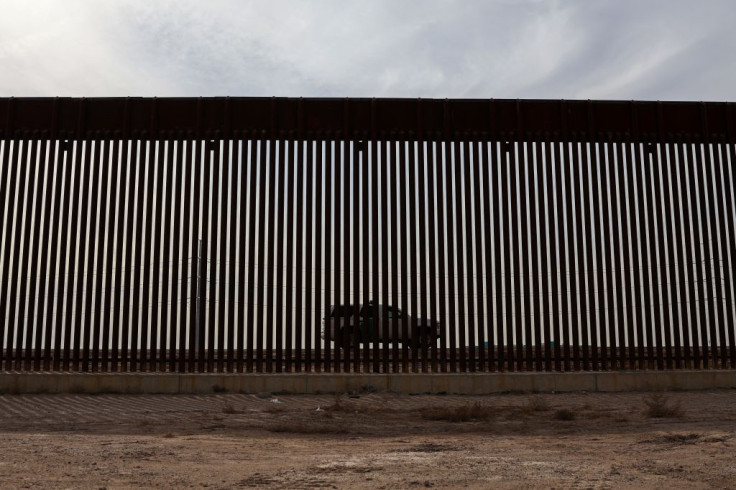
Indigenous leaders along the U.S.-Mexico border say accelerated border wall construction under the Trump administration is damaging sacred lands, cultural landmarks and environmentally sensitive areas, even as some state-funded wall projects begin winding down in Texas, as a new ABC News report reveals.
In California, members of the Kumeyaay Nation say federal contractors have used explosives and heavy machinery on Kuuchamaa Mountain, a site considered sacred by Indigenous communities on both sides of the border. The construction is part of a broader expansion of border barriers and surveillance infrastructure following waivers issued by the Department of Homeland Security that bypassed environmental and cultural protection laws.
"This is sacred to us like a church for you all," Kumeyaay leader Norma Meza Calles told ABC News. "The mountain is our healer, our psychologist."
Emily Burgueno, chair of the Kumeyaay Diegueño Land Conservancy, said tribal communities were never consulted about the use of explosives on the mountain. "No one ever consented or supported the use of dynamite on the mountain," she said.
The concerns extend across the southern border. In Arizona, tribal leaders accused contractors of destroying part of the 1,000-year-old Las Playas Intaglio geoglyph despite prior warnings about the archaeological site. In New Mexico, the Catholic Diocese of Las Cruces is fighting federal efforts to seize land near Mount Cristo Rey, a longstanding pilgrimage site where authorities plan additional border infrastructure.
"The erection of a border wall through or along this holy site could irreparably damage its religious and cultural sanctity," the diocese said in court filings earlier this month.


Texas officials recently acknowledged that state-funded wall construction is nearing its end after building roughly 82 miles of barrier — far short of the more than 800 miles originally envisioned. William McKerrall, interim executive director of the Texas Facilities Commission, said the state was "right at the end of this journey."
However, federal border infrastructure projects continue elsewhere, including DHS's "Operation River Wall," a buoy barrier system being installed in the Rio Grande. Environmental experts cited by The Texas Tribune and Inside Climate News warned the floating barriers could alter river flow, worsen flooding and disrupt ecosystems.
For many tribal leaders, the issue goes beyond environmental damage. "Tribes along the border are all experiencing the same tragic desecration of our cultural and sacred sites," Burgueno said. "This is a great example of the federal government not following federal laws."
© 2025 Latin Times. All rights reserved. Do not reproduce without permission.


