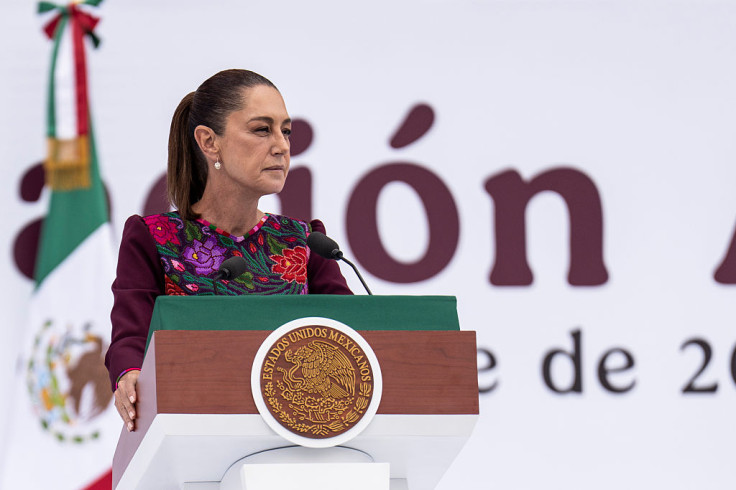
Mexican authorities insist the country is ready to host the World Cup despite a wave of cartel violence following the killing of Nemesio Oseguera Cervantes, alias 'El Mencho', on February 22.
Oseguera Cervantes was the founder and leader of the Cartel Jalisco Nueva Generacion (CJNG) and had been named by the DEA as one of the most wanted drug traffickers in the world. His killing triggered violent reprisals across the city of Guadalajara, including shootouts and attacks on public spaces, such as stores, markets, and roads.
The incident came just months before Guadalajara is due to host four group-stage games at the FIFA World Cup 2026, creating concern about whether local authorities can guarantee the safety of thousands of visitors from around the world.
Security Protocols Under Pressure
While the situation in Jalisco remains tense, authorities insist that the roadmap is in good shape.
"We are under the microscope. FIFA doesn't just ask for beautiful stadiums; they ask for life guarantees. We have had to explain in detail how our security plan is working and how the death of high-priority targets is part of a strategy to weaken structures that threaten peace," Miguel Andrés Hernández, the Undersecretary of Tourism for the State of Jalisco, told Latin Times.
Videos published after 'El Mencho's' death at the Guadalajara airport dominated the conversation across the world. The images showed people running, hiding, and even crying following a false report of a shooting.
Video from Guadalajara International Airport in Jalisco, Mexico amid ongoing security operations.
— AZ Intel (@AZ_Intel_) February 22, 2026
pic.twitter.com/vHLcsbmZh8
"What we saw at the airport was a symptom of the speed of social media, which sparked collective panic. However, it served as a real-time drill of our response capacity. In a few minutes, we regained control and proved that our protocols actually work," said the Jalisco government representative.
He also shared details about security measures taken in recent weeks: "We are not sitting around waiting for the storm to pass. We are doubling the number of surveillance cameras connected to roads between the stadium and hotels."
According to local media, the Jalisco government invested around 3.5 billion Mexican pesos (approximately USD$180 million) in improving infrastructure for the games and for tourists arriving during the World Cup season.
Hernández added that the government is implementing "more patrols, more technology, and unprecedented coordination with U.S. and Canadian intelligence agencies."
Could cartel violence threaten the event?
Since its creation in 2010, the CJNG has been connected to increases in murders, missing people, and the discovery of multiple mass graves in Jalisco state.
In addition, the criminal group has been linked to attacks against political leaders, including Luis Carlos Nájera, the former Security Secretary of Jalisco in 2018, and Omar García Harfuch, the former Mexico City Security Secretary in 2020, among others.
Now, with the death of CJNG leader Nemesio Oseguera, whose followers bid him farewell in a gold-plated coffin, the group's next steps remain a mystery.
"We can't ignore that an event of this magnitude causes reactions, but the deployment of the national guard and the army in strategic points of the metropolitan area allowed Guadalajara to keep moving normally. No civilian injuries have been recorded," pointed out the undersecretary.
He also compared the death of 'El Mencho' with other countries like Colombia, which have successfully fought against drug cartels, arguing that it represents a victory for Jalisco's security challenges.
Is Mexico a safe bet for football lovers?
Beyond Guadalajara, another threat lingers to the safety of tourists visiting Mexico for the World Cup season. While the government focuses on high-tech surveillance and military deployments, another reality can be seen plastering the city's streets: dozens of missing person posters.
The 2025 National Report on Missing Persons by Red Lupa (IMDHD) reveals that disappearances in Mexico are widespread and systematic. After reaching 100,000 cases in 2022, the cases increased by 7.3% in 2023, 6.3% in 2024, and 12% in 2025. To this day, reports of missing persons continue to climb nationwide.
Despite this situation, officials stand firm on the security measures they have implemented.
"Our strategy is based on a firm hand and total coordination between federal, state, and local governments to provide life guarantees for everyone involved in this event. We are expecting millions of tourists in 2026," Jaime Rascón Mendizábal, Director of Brand Promotion and Protection for tourism in Mexico City, told Latin Times.
He also emphasized that this is not the first time the country has hosted the tournament: "Mexico City will make history as the first city in the world to host three World Cups."
Mexico currently faces a dual challenge. As the country continues to promote the arrival of thousands of tourists to its host cities and surrounding regions, the shadow of a complex security landscape remains. These tensions create a mix of global doubt and high expectations, all of which will only be truly tested after the final whistle.
"The conditions are set. FIFA has already visited and validated our progress. We are prepared to show that Mexico is a safe and world-class host, focusing on a governance strategy that ensures a successful event," Rascón concluded.


© 2025 Latin Times. All rights reserved. Do not reproduce without permission.


