
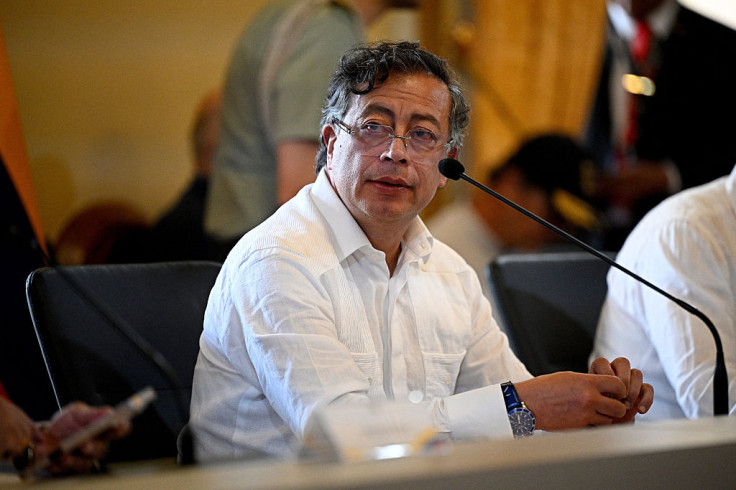
Bolivia expelled Colombia's ambassador, Elizabeth García, on Wednesday after accusing Colombian President Gustavo Petro of interfering in its internal affairs with comments about the country's political crisis and the legal situation of former President Evo Morales.
Bolivia's Foreign Ministry said García had been declared persona non grata and ordered to end her diplomatic functions in the country. The ministry said the decision was taken "in exercise of its sovereign powers" and in accordance with international law and the 1961 Vienna Convention on Diplomatic Relations.
The Bolivian government said the measure responded to Petro's "constant interference" and alleged support for what it described as a "destabilizing movement" affecting Bolivia's democracy. In its statement, the ministry said any external assessment of Bolivia's internal situation should be made with "responsibility, diplomatic prudence and full respect" for the country's constitutional order.
The ministry added that Bolivia's political and social disputes must be resolved through democratic and institutional mechanisms, "without external interference that could alter institutional stability or deepen polarization." It said the expulsion did not amount to a rupture in diplomatic relations with Colombia.
#MUNDO | La Cancillería boliviana confirmó la expulsión de la embajadora colombiana, Elizabeth García Carrillo, tras declararla persona no grata. Según el Gobierno de Bolivia, la decisión responde a una presunta injerencia del presidente Gustavo Petro en asuntos internos y a un… pic.twitter.com/gF85d83rX5
— ÚltimaHoraCaracol (@UltimaHoraCR) May 20, 2026
Petro responded in an interview with Caracol Radio by saying his government had only offered to help mediate dialogue. "The only comment I made was that we are willing to serve as intermediaries for a dialogue," Petro said.
He argued that Bolivia's government faces a choice between repression and negotiation. "What we know so far is that there is a people in the streets, that is being repressed, and a government that is being questioned by that people," Petro said. "That government can decide to unleash violence against the mobilized population, as happened in Colombia in the past, or it can open a dialogue, which is what I consider necessary."


Petro added that if the ambassador's expulsion was a response to Colombia's offer to facilitate talks, Bolivia was adopting "extreme positions" that could lead to a difficult situation. "Bolivia, in the current situation, needs a great national dialogue, otherwise the consequence could be a massacre against the population, something no one should want," he said.
The diplomatic dispute followed Petro's posts on X describing the protests in Bolivia as a "popular insurrection" and warning the United States not to "attack" Evo Morales. Morales, who remains influential among coca growers, Indigenous groups and labor sectors, is currently wanted in Bolivia after being declared in rebellion by a court in Tarija in a case involving alleged trafficking of minors.
Le solicito al gobierno de EEUU no atacar al expresidente Evo Morales. No confundir la lucha social de campesinos cultivadores de hoja ese Coca con narcotrafico. Esperar la conclusión del panel de expertos de la comisión sobre drogas de la ONU.
— Gustavo Petro (@petrogustavo) May 19, 2026
Un ataque a un expresidente… https://t.co/VtjpZOsEG6
© 2025 Latin Times. All rights reserved. Do not reproduce without permission.


