

Alfonso Herrera does not try to soften Esteban Trueba. He knows the man he plays in Prime Video's La Casa de los Espíritus can be called evil. He knows he is cruel. He knows he wounds the women around him, builds power through possession, and becomes one of the forces that turn Isabel Allende's story's family history into political history.
What Herrera also knows is that Esteban cannot be played as a monster from a distance. He had to be inhabited, and he masterfully did in a powerful, nuanced, and deeply vulnerable performance that carries the series from the first episode to the last.
"It was the most complex thing I have done in my life, in my career, let's put it in the right drawer," Herrera said in an interview with this reporter. "It was a great challenge to play a character who can be cataloged as a villain, but at the same time, it is also a challenge to find a little luminosity in this character."
@aliciacivita_ Poncho Herrera y su Esteban Trueba en #lacasadelosespiritus #ponchoherrera #alfonsoherrera #isabelallende #primevideo
♬ original sound - Alicia Civita
The eight-episode series premieres globally on Prime Video today, April 29, 2026. It is the first Spanish-language television adaptation of Allende's 1982 novel, a landmark of Latin American literature that follows Trueba, his bride, and his family across generations, mixing magical realism, patriarchy, class violence, memory, and the political trauma of a country that is never named but is widely understood through Chile's 20th-century history.
For Herrera, that history is the bloodstream of the role. It's a story that makes teary eyed during the interview, that propelled him (a very private man) to talk about his children and his dreams for them.
"This novel was written by Isabel Allende in exile in Venezuela," Herrera said. "And this story also speaks about exile." He connected that wound not only to Chile but to the broader region. "We share many pains; we share many scars from the Chilean dictatorship, the Argentine dictatorship, the dictatorship in Brazil," he said.

Allende began what became The House of the Spirits while living in Caracas, after the 1973 military coup in Chile and the rise of Augusto Pinochet, whose dictatorship lasted 17 years. The author has said the book began as a letter to her dying grandfather, a personal act that became a sweeping novel about memory, loss, and power.
Herrera, born in Mexico City, has built a career defined by reinvention. Many viewers first met him as Miguel Arango in Rebelde, the telenovela that turned RBD into a global pop phenomenon. Through his roles in English-language productions, he has moved into darker, more international territory with roles in Sense8, The Exorcist, Ozark, and in unexpected and rich films in Spanish such as Dance of the 41 and "¡Que viva México!"
-
Matt Bomer on 'Outcome', Hollywood absurdity, and the Miami honor that brought him to Florida

-
Manolo Cardona Reveals the Brutal Reality of a Week in a Coffin for 'Los Encantos del Sinvergüenza' - INTERVIEW

-
EXCLUSIVE - The Hidden Story Behind Sebastián Rulli's Charro Suits in 'Mi Rival' and It's Surprising Connection with Legendary Jorge Negrete
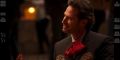


In La casa de los espíritus, he faces another kind of challenge: a character who ages and hardens, breaks, softens, hardens again to only break again in a million pieces, and carries the damage of a family and the part of a country that refuses to change, to share, inside his body.
"The use of prosthetics, the physicality, the energy, and trying to make that energy very well grounded and supported at the right moment," Herrera said, describing the technical demands of the part. The production did not shoot chronologically, which meant he could film Esteban in one decade one day and as an older man the next. "Today we are filming the '40s, and tomorrow we are with the old man, with all the prosthetics, and not losing yourself in this generational map, which was very complex."
That complexity is one reason Herrera described the project as unlike anything he had done before. Esteban is not just a patriarch. He is a man shaped by the lack of, absence, rage and the hunger to own what he loves. In modern terms the character is what happens with toxic masculinity when that toxicity destroys everything that man loves.
"He is a cruel man, who loves, but who loves and has to possess what he loves," Herrera said. "But at the same time he is a family father who worries about his family, who gives them an education, who cares for them in his own way and manner."
That contradiction sits at the center of Allende's novel and Prime Video's adaptation. Esteban Trueba is both intimate and historical. His home becomes a battlefield before the country does. His private violence echoes the larger violence outside the walls.
The series arrives at a moment when Latin American stories are being reintroduced to global audiences through streaming, but this adaptation carries particular weight. The series, with Nicolle Wallace and Dolores Fonsi sharing the magical and powerful feminine role of Clara del Valle and Fernanda Castillo as Ferula Trueba, was filmed in Chile with a Latin American cast and creative team, and Allende, now 83, served as an executive producer while giving the creators freedom to expand the story for television.
Herrera credited that creative team with helping him navigate Esteban's contradictions. He named showrunners and directors Rodrigo Bazaes, Manuel Claro, Andrés Wood, Francisca Alegría and Fernanda Urrejola, as well as Prime Video executive Javiera Balmaceda, saying the production had "a brutal creative team" behind it.

But for Herrera, the political meaning of the series extends far beyond Chile. When asked about the pain of seeing the abuses of the 1970s echo in today's Latin America, he spoke directly about Venezuela, migration, and children crossing dangerous routes alone.
"I see millions of Venezuelans around Latin America who, unfortunately, have had to flee their homes and have had to seek a space not only for themselves to be in better conditions, but for their families," Herrera said. "This is also about these pains that are still present and how we have to go to the past so as not to repeat mistakes in the future and to understand our present."
He also spoke about his humanitarian work with refugees and migrants.
"I have seen caravans in Central America of children the age of my children in caravans. Others who have had to cross the Darién, five and nine years old," he said. "I would ask them, 'Why are you alone? Who are you coming with?' And they would tell me they were coming alone."
That experience, Herrera said, changed how he thinks about fatherhood and presence. Presence, in contrast to the absence, made Esteban Trueba into an empty vessel filled with anger.
"There is nothing more valuable than presence, than being present," he said. "If we have the possibility of having our children there, enjoying them, loving them, cuddling them, and at the same time creating solid foundations, a little bit of love and a little bit of cold and a little bit of hunger, well calibrated, does no harm."
In La casa de los espíritus, Esteban Trueba serves as a warning about what happens when love is confused with control, when masculinity is built on conquest and dominance, and when pain is passed from one generation to the next rather than being named. The spirits that visit Clara, the art that she and Esteban's daughter, Blanca, create, and the righteous fight for social justice for their granddaughter, Alba, are the opposite of the ones that drive Esteban, and he shows them so well.

Herrera does not ask audiences to forgive Esteban. He asks them to look at him long enough to understand the machinery of damage. "There were many, many, many layers to be able to fill this form," he said.
There are also many layers in the series. There is magical realism, humor, drama, political thriller, music (thank you, Mon Laferte), and a very Latin American kind of artistry and sensitivity.
And perhaps that is why La Casa de los Espíritus still feels alive and very current more than four decades after Allende published it. It is not only a story about ghosts. It is about the wounds families inherit, the countries that refuse to bury their dead properly, and the dangerous men history keeps producing when nobody stops to ask who taught them to love like ownership.
© 2025 Latin Times. All rights reserved. Do not reproduce without permission.


