

A U.S.-based attorney has registered to represent Venezuela's interim president Delcy Rodríguez on legal matters and policy engagement with U.S. officials, according to a foreign agent registration filing submitted to the Justice Department on April 14 and reported by FARA Monitor, a registration database.
The filing states that Jihad M. Smaili, a California-based lawyer, will provide legal representation related to ongoing and future disputes, including matters tied to PDVSA and Citgo, as well as creditor claims linked to FARC-related cases.
It also indicates that Smaili will offer "day-to-day advice" to Rodríguez on issues involving the U.S. State Department and the White House, with a focus on "strengthening and advancing the current relationship for the benefit of the Venezuelan people."
The document further outlines potential involvement in political and economic matters, including support for what it describes as Rodríguez's "future political campaign" and a stated objective of "working on removing the sanctions." The filing notes that the agreement, dated April 11, is currently structured as an oral arrangement, with written formalization expected.
Newsy item in this morning's FARA Monitor: acting Venezuelan president Delcy Rodriguez has a new US attorney and lobbyist conducting White House and State Department outreach—and laying the groundwork for Rodriguez's "future political campaign" pic.twitter.com/1dPrnR6i0p
— FARA Monitor (@faramonitor) April 15, 2026
The disclosure comes as Washington and Caracas navigate a shifting relationship following the January 3 removal of Nicolás Maduro and Rodríguez's rise to power. President Trump has publicly expressed confidence in Rodríguez's leadership, saying she's "essentially willing to do what we think is necessary to make Venezuela great again," signaling the administration's preference to work with her as part of a broader transition framework.
Since taking office, Rodríguez has moved to consolidate control over key institutions while signaling openness to cooperation with the United States. Officials in Caracas have emphasized economic recovery as a priority, particularly through attracting foreign investment and restoring access to international financial systems.
-
Laura Loomer Changes Tune on Venezuela's Machado, Urges 'Immediate Free Elections' After Rubio Meeting

-
Former State Department Official Urges Machado to 'Get Back to Venezuela as Quickly as Possible' as Rodríguez Consolidates Power
-
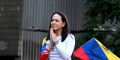
Venezuelan Protesters Clash With Police as Repression Persists Under US-Backed Leadership: 'They Showed Their True Face'

-
U.S. Lifts Sanctions on Venezuela's Delcy Rodríguez: What It Means for Washington, Caracas and Oil


Recent U.S. actions have reflected that evolving approach. On Tuesday, the Treasury Department issued licenses easing certain financial sanctions on Venezuela, allowing limited transactions with state-controlled banks, including the central bank. The move was widely interpreted as an effort to support economic stabilization while maintaining broader sanctions in place.
Rodríguez has called for a more comprehensive lifting of restrictions, arguing that existing measures continue to constrain investment and financial activity. "We insist that sanctions be lifted so that all investments can develop fully," she said following the announcement.
© 2025 Latin Times. All rights reserved. Do not reproduce without permission.


