
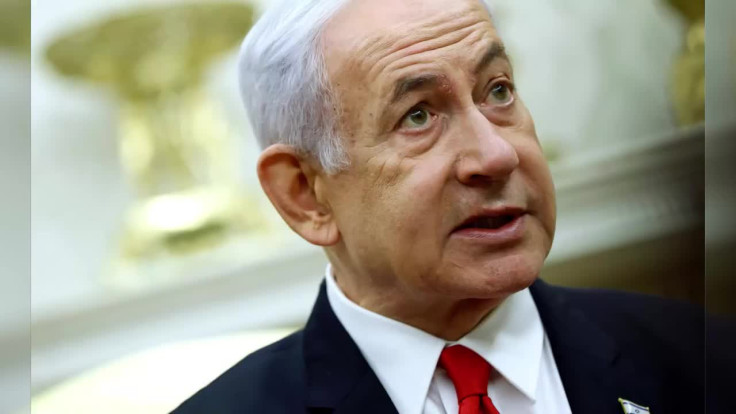
Israeli Prime Minister Benjamin Netanyahu disclosed Friday that he underwent treatment for early-stage prostate cancer, revealing a private medical battle he said he kept from the public for two months because Israel was at war with Iran.
In a statement posted after the release of his annual medical report, Netanyahu, 76, said doctors found a tiny malignant tumor in his prostate during routine monitoring after a December 2024 procedure for benign prostate enlargement. He said the lesion was less than a centimeter, had not spread, and was treated successfully.
"Thank God, I am healthy," Netanyahu said, according to translations of his post. "I am in excellent physical condition."
היום התפרסם הדו״ח הרפואי השנתי שלי.
— Benjamin Netanyahu - בנימין נתניהו (@netanyahu) April 24, 2026
ביקשתי לעכב את פרסומו בחודשיים כדי שהוא לא יפורסם בשיא המלחמה על מנת שלא לאפשר למשטר הטרור באיראן להפיץ עוד תעמולת כזב נגד ישראל.
אני מבקש לשתף אתכם בשלושה דברים:
1 - ברוך השם, אני בריא.
2 - אני בכושר גופני מצויין.
3 - הייתה לי בעיה…
The disclosure adds a deeply personal chapter to one of the most consequential periods of Netanyahu's political career, as he manages the war with Iran, continuing conflict-related pressure at home and abroad, and questions over how much the public has a right to know about the health of a sitting prime minister.
According to the medical report published by the Prime Minister's Office, and reproduced by CNN, Netanyahu underwent surgery on Dec. 29, 2024, to treat benign prostatic hyperplasia. A later MRI found a suspicious lesion, and further testing confirmed early prostate cancer with no evidence of metastasis.
-
Air defenses activated in Tehran as Iran reports 'hostile targets' amid rising regional tensions

-
Jerusalem Court Cancels Benjamin Netanyahu Testimony in Corruption Trial Over Security Concerns

-
Israeli Army Confirms Photo of Soldier Damaging Jesus in the Cross Statue in Southern Lebanon is real, investigation underway


Professor Aharon Popovzer of Hadassah Medical Center said the finding was a 0.9-centimeter adenocarcinoma, discovered during routine follow-up, and that Netanyahu chose targeted radiation therapy rather than monitoring alone. Popovzer said subsequent imaging and blood tests showed no evidence of disease.
Netanyahu framed the choice in political language, saying that when he receives early warning of a danger, "I want to address it immediately," whether on the national level or the personal one.
The prime minister also acknowledged that he asked for the medical report's publication to be delayed by two months so it would not come out "at the height of the war," saying he wanted to prevent Iran from using his health as propaganda.
The disclosure comes after months of rumors about Netanyahu's health. In 2024, a group that included Oct. 7 survivors, medical professionals, scientists and a Knesset member asked the High Court to compel Netanyahu to release a detailed health report and name a replacement in case he became incapacitated.
Under Israeli law, the central legal question is not whether a prime minister must disclose every serious medical or mental health condition, but whether the condition makes the prime minister unable to perform the duties of office. Israel's 2023 "incapacitation law" allows a prime minister to be deemed unfit only for physical or mental health reasons, and gives that power to the prime minister or the government, not the attorney general.
That means a serious mental health issue could trigger legal consequences if it left a prime minister unable to serve, but I found no verified source establishing a broad criminal requirement that a sitting Israeli prime minister must publicly disclose every serious mental health condition if he remains capable of functioning. The law centers on incapacity, not general transparency.
Immediate political reaction was still limited Friday, but the revelation is likely to revive scrutiny over Netanyahu's health disclosures, particularly because his office previously described the 2024 prostate procedure as benign and noncancerous. Israeli media noted that doctors at the time said there was no suspicion of malignancy or cancer.
Netanyahu ended his message with a public health appeal, urging Israelis to get checked and follow doctors' instructions.
© 2025 Latin Times. All rights reserved. Do not reproduce without permission.


