
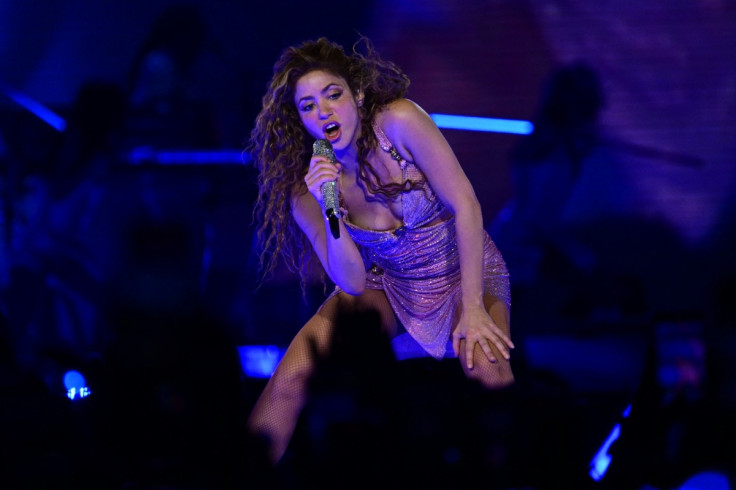
When Shakira announced a free concert at Mexico City's Zócalo, the headline quickly shifted from music to money. Long before the Colombian superstar took the stage before an estimated 400,000 people, the question dominating political debate and social media was simple and loaded: who was paying for it?

The controversy erupted after local officials and commentators began speculating about the cost of mounting a show by one of the world's most expensive touring artists in the country's most symbolic public square, particularly a after the violence that came after the killing of Nemesio Oseguera Cervantes, known as "El Mencho."
.Estimates circulating in Mexican media suggested the total bill for a Shakira concert, including artist fees, large scale production, and security could reach between $1.75 and $2.3 million.
That figure alone was enough to ignite criticism in a city where public spending is routinely scrutinized.
Opposition voices questioned whether taxpayer money should be used for a pop spectacle, particularly at a time when Mexico City faces infrastructure, security, and social challenges. The debate intensified when Alessandra Rojo de la Vega, mayor of the Cuauhtémoc borough that includes the Zócalo, publicly raised concerns about the potential cost of the event and demanded transparency over its funding.
Clara Brugada Molina, celebró el concierto gratuito de Shakira en el Zócalo capitalino, evento que congregará a miles de personas en el corazón de la ciudad como parte de los festejos por el 100 aniversario de Grupo Modelo.#Shakira #Zócalo #CDMX https://t.co/1lR668XdyE
— Ángel Metropolitano (@angelmetropoli) March 2, 2026
City officials moved quickly to contain the fallout. Mexico City's government clarified that no public funds were used to pay Shakira or produce the concert, insisting that the administration's role was limited to logistics, security, and permitting. According to officials, the financial burden of the show was assumed entirely by the private sector.
At the center of that explanation was Grupo Modelo, through its flagship beer brand Corona. The company sponsored the concert as part of its 100th anniversary celebrations, covering the artist's fee and production costs. The Mexico City government framed the arrangement as a public private collaboration, with the city providing the space and coordination, and the sponsor paying for the event itself.
Que Grupo Modelo pagó millones de dólares para traer a Shakira, para celebrar sus 100 años, ¡100 años! No es poca cosa y ni un solo logo de la empresa en el escenario o al menos a un ladito para que todo mundo se enterara que ellos fueron los que pagaron.pic.twitter.com/Ani8gNvyfK
— F (@ferfisfer) March 2, 2026
#CDMX 📢 Shakira y la política del espectáculo. El Gobierno capitalino se cuelga la medalla por un evento patrocinado por la iniciativa privada. ¿Transparencia o promoción política a costa de las marcas? Lee: 👇💻https://t.co/RWujNZFmqj pic.twitter.com/YUNLP5vY6k
— Periodistas Unidos (@PeriodistasU) February 23, 2026
That clarification did little to quiet the conversation online. Critics argued that even if Shakira's fee was privately covered, the city still incurred indirect costs, including security deployment, street closures, sanitation and emergency services for a crowd of hundreds of thousands. Supporters countered that those expenses are standard for large public gatherings and are often offset by the economic activity such events generate.
Business groups entered the discussion with numbers of their own. Mexico City's National Chamber of Commerce estimated the concert could generate more than 400 million pesos in economic spillover, driven by hotel occupancy, restaurant traffic, transportation and tourism. For supporters of the event, that figure reframed the concert not as an expense but as an investment that benefited the city's economy.
The political temperature rose further because of the Zócalo's symbolism. The square is not just a concert venue. It is the stage for presidential speeches, protests and national celebrations. Any major event there inevitably carries political weight, especially in a country where public space and public money are closely linked in the public imagination.
Notably, there was no direct public intervention from Mexico's federal government or from Claudia Sheinbaum regarding the concert's financing. Reporting and official statements focused squarely on the Mexico City government and the private sponsor, leaving the controversy to play out at the local level.
However, Mexico's president did addressed the show on her daily morning press conferences.
Desde su conferencia matutina, la presidenta Claudia Sheinbaum agradeció a la cantante Shakira por su concierto en el Zócalo de la Ciudad de México.
— La Crónica de Hoy (@LaCronicaDeHoy) March 2, 2026
La mandataria destacó el comportamiento de los asistentes y su alegría en la presentación la artista colombiana.
📹 Gobierno de… pic.twitter.com/vbGvDIHQ47
"What did you think of yesterday's concert? The broadcast was good too, really beautiful, honestly. I didn't watch it all, I saw part of the transmission. Of course, from above you could hear everything, and then for a little while from the window so no one would see me, hiding a bit... no, I didn't go that far."
She added that, in her opinion and that of her team, it was a high-level spectacle, with the singer delivering a concert that managed to draw an extraordinary number of attendees, stretching all the way to the Monument to the Revolution.
"The people were first-rate. We saw the Zócalo, but today we were told there were also people in the Alameda and at the Monument to the Revolution. Honestly, it was a great spectacle, very beautiful."
It was the president herself who confirmed the number of people who attended the event, in which the singer surpassed other famous artists such as Paul McCartney, the legendary international music star.
"Exactly 400,000 people. Shakira is very beloved by Mexican families," she went on. "That is Mexico, the love, the warmth and the love for life."
Still, the episode left a mark. The backlash underscored how quickly cultural events in Mexico City can become political flashpoints, particularly when they involve global stars, public space and unanswered questions about money. It also highlighted a growing tension around privately sponsored events held in civic spaces, where the line between public benefit and public responsibility remains contested.


© 2025 Latin Times. All rights reserved. Do not reproduce without permission.


