
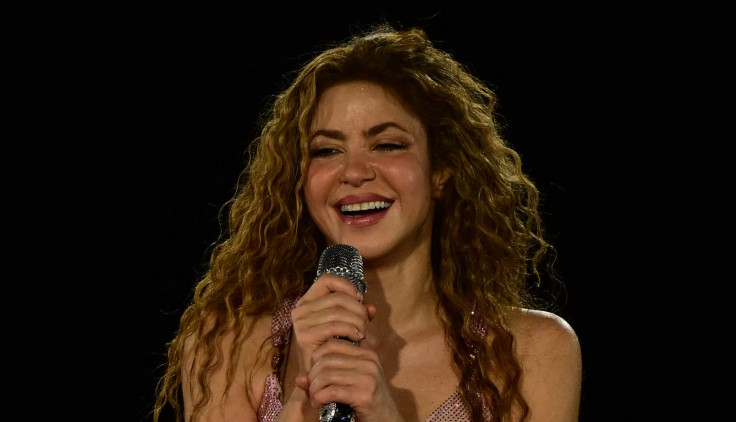
The original plan for Shakira's epic Las Mujeres Ya No Lloran Tour was shows in medium-sized arenas. After fast sold-out shows, it was transformed into a powerful stadium tour that broke several records, not only for Latin music but also for global female artists. However, nobody could have predicted that La Loba, as the Colombian singer-songwriter calls herself, would have more than 400,000 people, in capacity, filled Mexico City's Zócalo howling with her.

A year after she moved to Mexico to prepare her tour, and three years after she moved to Miamo to lick the wounds inflicted by her traumatic separation from Gerard Piqué, Shakira Shakira delivered a free concert that now stands as the largest and most consequential live music events ever held in the capital.
She called, and the Shakifans responded.
El Zócalo show came after 31 sold-out stadium shows in Mexico alone. But the public wanted more. By mid-afternoon, the square was already at capacity. Fans had begun lining up hours, and in some cases days, earlier, camping out around the Centro Histórico to secure a view of the stage. City officials closed surrounding streets well ahead of the 8 p.m. start time and installed more than 20 giant screens across the area, effectively turning downtown Mexico City into an open-air concert venue.
The scale mattered because the Zócalo carries history. It is not just Mexico's main public square, but a space traditionally reserved for political acts, national celebrations and a small number of landmark concerts. Over the past two decades, only a handful of international artists have been granted that stage, among them Paul McCartney, Justin Bieber and Los Fabulosos Cadillacs. Shakira herself last performed there in 2007, drawing an estimated 210,000 people. Saturday's crowd nearly doubled that figure.
Tengo una mezcla de emoción y nostalgia por este cierre de mi gira en mi casa, México.
— Shakira (@shakira) March 1, 2026
Veo que están acampando desde hace dos días en el Zócalo y estoy viendo en vivo cómo empiezan ya a ocupar la plaza. Me siento tan agradecida por todo lo que hacen por mí.
Esta noche prometo… pic.twitter.com/8Hlo2vhqjV
The show was built for flow rather than spectacle. Shakira moved through more than 30 songs spanning her career, from early catalog staples such as Estoy Aquí, Antología and Ojos Así to crossover hits like Hips Don't Lie, La Tortura and Whenever, Wherever. Recent material from her current era was fully integrated rather than treated as a separate act, including TQG, Monotonía, Te Felicito and BZRP Music Sessions #53.
One of the night's defining moments came with the live debut of Algo Tú, an unreleased collaboration with Colombian artist Beéle, who joined her onstage midway through the set. The song had been teased days earlier but had not yet been released commercially. Its first public performance at the Zócalo positioned Mexico City as the launch point for Shakira's next musical chapter, not simply a stop celebrating past success.
🎉 El concierto de @shakira fue todo un éxito. 🐺 400 mil personas se reunieron en el Zócalo para cantar y bailar junto a una artista de talla internacional, en una noche que quedará en la memoria de la #CapitalDeLaTransformación. 🌙🎶
— Gobierno de la Ciudad de México (@GobCDMX) March 2, 2026
México siempre te recibirá con los brazos… pic.twitter.com/nJGypMtGFn
Vocally, the performance was steady throughout, even during choreography-heavy sections. Costume changes were frequent but efficient, designed to keep the pace tight rather than interrupt the show. There were no extended speeches, but Shakira did pause to acknowledge the significance of the moment, reminding the crowd that she had not performed in the Zócalo since 2007 and thanking fans for turning the square into what she described as an unforgettable night.
Shakira, hermana, ya eres mexicana 🐺🇲🇽
— TV Azteca Querétaro (@AztecaQueretaro) March 2, 2026
La Loba ama a México y México ama a la Loba Mayor. Shakira no solo hizo historia en el Zócalo; escribió una página de oro en la tierra azteca con más de 13 fechas de SOLD OUT total.
Fue una fiesta interminable donde se gritó, se cantó y,… pic.twitter.com/lUUOT046MH
The concert also carried weight beyond the music. Since relocating to Miami in 2023 following her highly publicized split from Gerard Piqué, Shakira has experienced one of the most commercially successful runs of her career. She has broken streaming records, topped global charts and sold out stadiums across multiple continents. The Zócalo show functioned as a public marker of that resurgence, translating digital dominance and ticket sales into a physical, communal event.
What made the night historic was not only attendance, but execution. Managing a crowd of this size in a politically sensitive and architecturally complex space is rare. The concert unfolded without major disruptions, reinforcing the Zócalo's status as a viable stage for large-scale cultural events when carefully planned.
Shakira's calendar suggests the momentum will continue. She is scheduled to headline a free concert at Copacabana Beach in Rio de Janeiro later this year, followed by a high-profile performance near the Pyramids of Giza in Egypt. Together, the locations signal a strategy centered on symbolic, globally recognizable stages.
In Mexico City, the result was immediate. The Zócalo concert now joins a short list of defining moments in the square's modern cultural history. For Shakira, it was not framed as a farewell or a victory lap, but as confirmation. Four hundred thousand people showed up, sang back every word and turned the country's most important plaza into a record-setting stage.


© 2025 Latin Times. All rights reserved. Do not reproduce without permission.


