
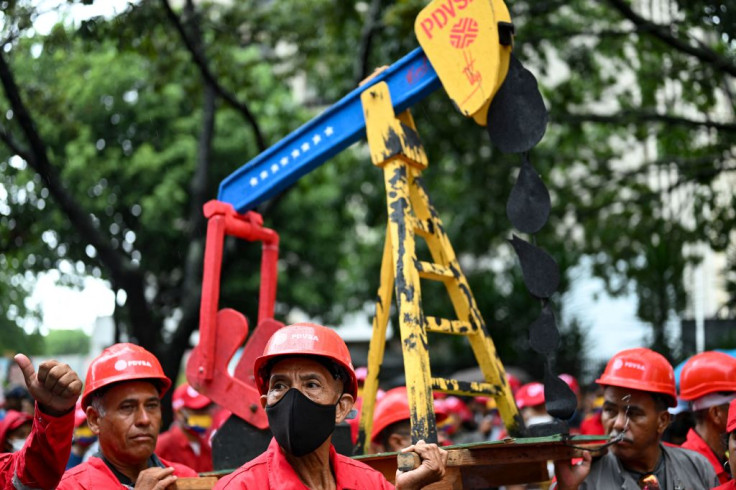
Energy analysts say increased oil production from Venezuela cannot compensate for the massive supply disruptions caused by the effective closure of the Strait of Hormuz resulting from the Iran conflict, according to a new report.
The passage normally carries about one-fifth of global supply, a volume far beyond what Venezuela or other producers can quickly replace.
"It's a math problem," Fernando Ferreira, director of the geopolitical risk service at Rapidan Energy Group, told Fortune. "Hormuz flows about 20 million barrels a day. Venezuela is currently producing about 1 million."
The crisis, now in its third week, has prompted discussions about whether Venezuelan crude could help stabilize global markets. Analysts say the scale of the disruption makes that unlikely in the near term.
-
U.S. Eases Sanctions and Lets Companies Do Business With Venezuelan State-Owned Oil Company As Global Prices Surge Due To Iran War

-
Tanker Believed To Carry Russian Oil Resumes Navigation To Cuba Weeks After Diverting Course

-
Rick Scott Says He Wants Oil Prices To Come Down But It's More Important To Dismantle The Iranian Regime: 'I Don't Want To Die'


Francisco Monaldi, director of the Latin America Energy Program at Rice University's Baker Institute for Public Policy, told the news site that Venezuela might increase production only modestly over the next few years:
"I'm expecting less than 250,000 barrels added over the whole year, if at all. That is of course significant for a country that produces just 1 million, but it's nothing for the world market. It's less than 0.3%. In particular, it's very insignificant compared to the disrupted market"
Even partial solutions elsewhere have had limited effect. Saudi Arabia and the United Arab Emirates have rerouted some exports through pipelines that bypass Hormuz, but analysts estimate about 14 million barrels per day remain blocked. Emergency releases of strategic reserves coordinated by the International Energy Agency may add 400 million barrels to markets over several months, though the oil will take time to reach buyers.
Higher prices resulting from the disruption could nevertheless benefit Venezuela financially. Energy specialist Víctor Álvarez Rodríguez wrote last week in a piece for El País that geopolitical conflicts in the Middle East have historically boosted Venezuelan oil revenues. "Every time a war breaks out in the Middle East, Venezuela receives the sinister privilege of a considerable increase in its oil revenues," he wrote.
Economist Alejandro Grisanti of Ecoanalítica added that each one-dollar increase in oil prices could add about $400 million to Venezuela's annual income. Continued price increases could raise the country's revenue by several billion dollars.
Despite renewed interest in Venezuelan production, the country's oil industry faces structural challenges after years of decline. Output has fallen sharply since the early 2000s following underinvestment and political upheaval at the state company Petróleos de Venezuela SA. Analysts say rebuilding the sector could require more than $100 billion in investment.
© 2025 Latin Times. All rights reserved. Do not reproduce without permission.


