
Last September, President Donald Trump signed an executive action that imposed a $100,000 application fee for H-1B visas, a work visa valid for three years that allows U.S. companies to hire highly educated foreign professionals to temporarily work in "specialty occupations" such as civil engineers, software developers and others.
"We need great workers, and this pretty much ensures that that's what's going to happen," Trump said in the Oval Office when announcing his executive decision.
But according to a new Axios report, although getting an H-1B visa has become considerably harder, the move has benefited other sectors.


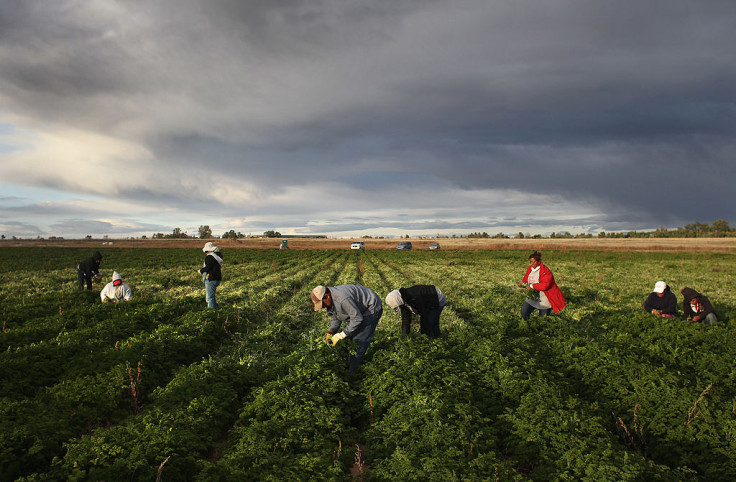
As highlighted by the outlet, tech workers, researchers and health care professionals are having a harder time landing visas compared to farm workers.
With a $100,000 fee per visa, combined with stricter and higher salary rules for foreign professionals working in the U.S., Axios reports it has become less attractive for American companies to bring in highly skilled workers.
On the other hand, the Trump administration has lowered wage requirements for farm workers while also streamlining the application process for their visas. In recent months, the Department of Labor has cut hourly wages for seasonal workers by $1 to $3 depending on the state, and created a new "one-stop shop" to process visas.
However, these changes have come at a cost. Lower wages have enraged the United Farm Workers, which says the policy undercuts U.S. agricultural workers and risks expanding the H-2A agricultural guest worker program, which had nearly 400,000 foreign workers in 2024 alone, according to the union.
The H-2A program has issued roughly 420,000 visas annually since 2023, covering about half of all agricultural jobs. Under the expanded program, the government expects to issue an additional 119,000 visas
In response, UFW filed a lawsuit in November 2025 seeking to reverse the wage cut rule, arguing the changes would make it "financially easier to hire foreign H-2A guest workers over U.S. citizens and legal permanent residents."
"There is nothing 'America First' about expanding exploitative guest worker programs that undercut and displace American workers," UFW President Teresa Romero said in a statement on the lawsuit, adding that the changes allow "big agricultural corporations to exploit cheap foreign labor."
This month, a Trump administration attorney conceded that "there aren't enough Americans" to take seasonal farm jobs while defending the policy that would cut wages for immigrant laborers during a federal court hearing in the UFW lawsuit.
As reported by CalMatters, U.S. District Judge Kirk Sherriff said he plans to issue a written ruling soon that would either uphold or suspend the Trump administration policy.

© 2025 Latin Times. All rights reserved. Do not reproduce without permission.


