
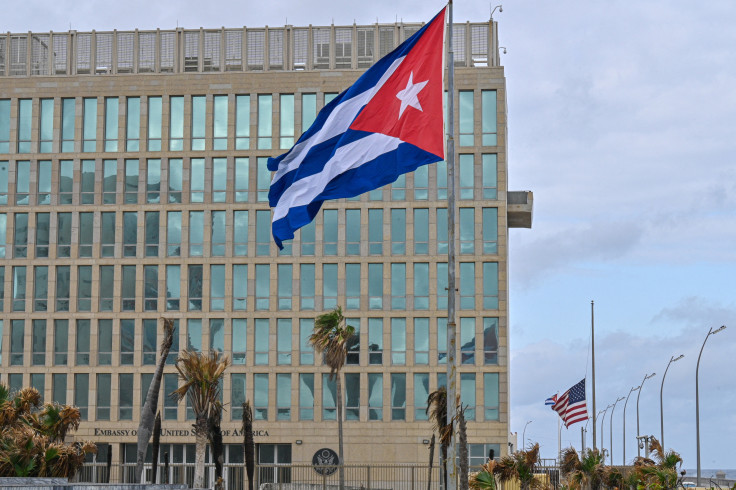
Cuba's ambassador to the United Nations has dismissed the idea that U.S. pressure could force leadership changes in Havana, stating that attempts at "regime change" are "completely out of any dialogue" and signaling that the current government will remain in place despite escalating tensions.
Speaking to Bloomberg, envoy Ernesto Soberón Guzmán rejected calls from U.S. officials to replace President Miguel Díaz-Canel as a condition for improved relations. "Friendly takeover, regime change, the removal of the president... are completely out of any dialogue," he said. Soberón Guzmán added:
"If someone tries to invade Cuba or if someone tries to make an aggression to Cuba, they will find a whole people — 10 million people — ready to defend our sovereignty, our independence, without taking into account the cost"
The comments come amid a series of increasingly public exchanges between Washington and Havana, as the outlet. Earlier this week, Secretary of State Marco Rubio said negotiations would not advance unless Cuba puts "new people in charge," while President Trump has warned that the island's leadership could face consequences similar to those imposed on Venezuela.
Cuban officials have responded forcefully. On Wednesday, Díaz-Canel accused the United States of attempting to "forcefully topple its constitutional order," adding that U.S. policy amounts to "a fierce economic war... as a form of collective punishment on all the people." He warned that "any foreign aggressor will crash against an impregnable resistance."
-
U.S. Seeks To Prevent Cuba From Getting Russian Oil Despite Lifting Restrictions To Reduce Energy Prices Amid Iran War

-
Mexican President Sheinbaum Says She's 'Looking Into Different Possibilities' To Resume Fuel Shipments To Cuba

-
Top U.S. General Says There Are No Plans For a Forceful Takeover Of Cuba


At the same time, conflicting signals have emerged within the U.S. government. Reports citing officials familiar with ongoing discussions suggested that some in the administration favor Díaz-Canel's removal as part of broader economic reforms. However, Rubio publicly rejected those claims, calling them "fake stories" based on unreliable sources.
That denial prompted a direct response from The New York Times, which stood by its reporting, stating it was "based on conversation with four people familiar with the U.S. talks with Cuba" and that no factual inaccuracies had been identified by the State Department.
Despite the dispute, both sides have acknowledged ongoing talks. Cuban officials have signaled limited economic adjustments, including allowing greater participation from nationals living abroad and expressing openness to commercial ties with U.S. companies.
Deputy Prime Minister Oscar Pérez-Oliva Fraga said Cuba is "open to having a fluid commercial relationship" with U.S. entities, while continuing to blame U.S. policy for the island's economic crisis.
Still, Cuban officials maintain that external pressure will not lead to political concessions. "I lost the count of how many presidents of the U.S. tried to change the government in Cuba," Soberón Guzmán said. "And we are still here."
© 2025 Latin Times. All rights reserved. Do not reproduce without permission.


