
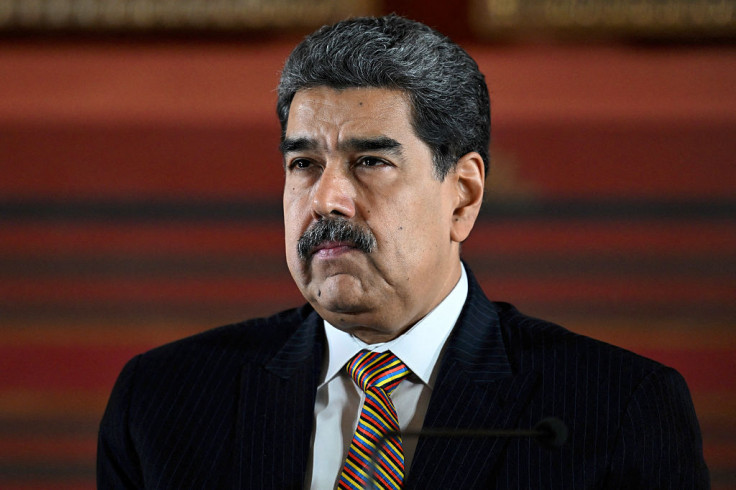
A U.S. Drug Enforcement Administration (DEA) report alleges that Nicolás Maduro helped Iran move funds through Venezuela using a network designed to evade international sanctions, while also expanding military and logistical cooperation between the two governments.
According to the report, reviewed by Infobae, the Iran-Venezuela alliance enabled Tehran to bypass sanctions through "an opaque financial architecture" involving binational funds, trust accounts and correspondent banks in jurisdictions including Uruguay, Panama, Dubai and Hong Kong.
The network "channels significant resources to key Iranian state companies" in sectors such as energy and shipbuilding, while helping finance "hostile activities in the Middle East and the Americas," the document states.
The dossier, based on roughly 3,000 official documents analyzed by the DEA, also describes Venezuela as a platform for sanctioned groups, alleging that it facilitated money laundering, arms and drug trafficking, and the issuance of fraudulent passports linked to organizations such as Hezbollah and Hamas, as Infobae published over the weekend.
Beyond financial flows, the report outlines broader cooperation, including the transfer of drone technology and anti-ship missiles from Iran to Venezuela, as well as joint industrial and energy projects. It also alleges that Iran explored uranium deposits in southern Venezuela and acquired nuclear-related technology through third countries, though such claims have not been independently verified.
These findings align with previously reported allegations of a long-running partnership between Caracas and Tehran. Documents reviewed by Spain's ABC in December, before Maduro's capture, described a financial structure through which billions of dollars in Venezuelan oil revenues and state funds were redirected to Iran.
Investigators cited in that report estimated that as much as $7.8 billion may have reached Iranian state entities directly or indirectly through Venezuelan channels, including funds tied to Chinese credit lines.


The reported financial mechanisms included loans and joint projects that did not function as conventional investments, but instead allowed funds to be rerouted within a triangular framework involving China, Venezuela and Iran. According to those findings, Venezuelan institutions and public companies played a central role in sustaining Iran's sanctioned economic and military networks.
U.S. officials have repeatedly pointed to Iran's presence in Venezuela as a security concern. In January, Secretary of State Marco Rubio said the United States would not allow the Western Hemisphere "to be a base of operation for adversaries," adding that the administration sought to end "Iran, Hezbollah presence there" and the use of Venezuela's oil sector to benefit foreign actors.
The DEA report is expected to be used as evidence in ongoing U.S. legal proceedings against Maduro.
© 2025 Latin Times. All rights reserved. Do not reproduce without permission.


