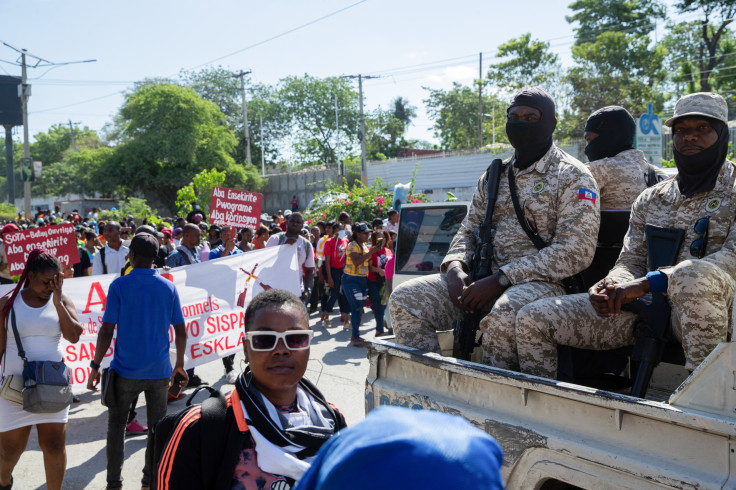
As Haiti celebrates its 223rd Flag Day on May 18, honoring the symbol of independence and resilience first adopted in 1803, the nation confronts a stark and sobering reality: a relentless wave of gang violence that has claimed at least 78 lives in recent days and forced thousands from their homes.
The United Nations Office in Haiti (BINUH) reported Thursday that violent confrontations between rival gangs in the Cité Soleil and Croix-des-Bouquets areas on the outskirts of Port-au-Prince have resulted in at least 78 deaths and 66 injuries since May 9. Among the dead were 10 civilians, including five men, four women, and a young girl—innocent victims caught in the crossfire of Haiti's escalating security crisis.
The violence has displaced approximately 5,300 people with the UN's Office for the Coordination of Humanitarian Affairs warning that numerous families remain trapped in affected areas. The crisis has also crippled essential services, forcing a hospital and a Doctors Without Borders facility to evacuate staff and patients. Before evacuating, MSF reported treating 40 gunshot victims in fewer than 12 hours.
In the Cul-de-Sac Plain, located east of Port-au-Prince, residents fled their homes under cover of darkness as gang warfare paralyzed the region. The area has become a focal point in an expanding territorial struggle, with formerly rival gangs now collaborating to seize control ahead of still-unscheduled elections.
These neighborhoods experienced similar violent outbreaks in March and April, displacing nearly 8,000 people according to UN reports. Between March 5 and May 11, France 24 reports that at least 305 people lost their lives and 277 sustained injuries in Cité Soleil and Croix-des-Bouquets alone, with 63 being local residents, including 17 women and 13 children.
The Caribbean nation's most impoverished, Haiti has been engulfed in worsening gang violence over the past two years. Since the assassination of President Jovenel Moïse at his residence in July 2021, armed gangs have tightened their grip on the capital. Police reports indicate these groups now control approximately 70 percent of Port-au-Prince, extending their criminal activities—including looting, kidnapping, and sexual violence—into rural regions. Haiti has been without a president since Moïse's death.
Haiti's Prime Minister Alix Didier Fils-Aimé
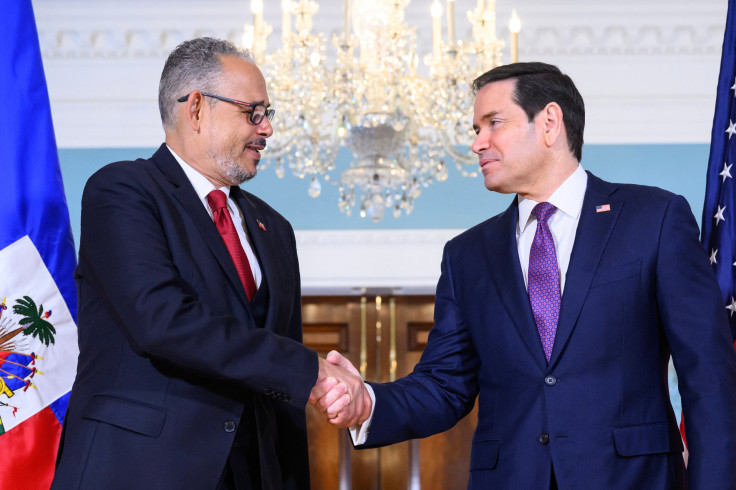
Prime Minister Alix Didier Fils-Aimé has emerged as the face of Haiti's fragile transitional leadership at a moment of intense national crisis. Since taking office in November 2024 and later assuming expanded executive authority after the transitional council's mandate expired, Fils-Aimé has been tasked with restoring basic security, rebuilding political trust and preparing the country for elections in the midst of gang violence and institutional collapse. In recent public remarks, he has stressed cautious optimism and the need for action over rhetoric, while his government continues to face pressure from both Haitians and international partners to show concrete progress on security, governance and economic recovery.
Recently, demonstrators in Cité Soleil gathered to call for government intervention following the recent escalation, reporting witnessing killings over the preceding days. However, Haitian officials have yet to provide comprehensive details regarding casualty figures.
The ongoing crisis has devastated Haiti's already fragile healthcare infrastructure. Médecins Sans Frontières (Doctors Without Borders) announced Monday that it had evacuated its hospital in Cité Soleil due to violent clashes that erupted over the weekend. The Centre Hospital de Font, another medical facility in the region, declared last Tuesday it had halted operations and evacuated all patients, including 11 newborns, because of the violence.
A report released earlier this year by the International Organization for Migration revealed the staggering human toll: over 1.4 million Haitians have been displaced by gang conflicts, with approximately 200,000 currently residing in overcrowded and under-resourced sites within the capital.
Against this backdrop, the international community has begun deploying support. A multinational anti-gang force is being assembled to succeed the inadequately equipped and funded Haitian National Police. Last September, the UN Security Council approved a plan for a mission consisting of 5,550 personnel, though the complete unit has yet to be deployed.
Currently, only a contingent of 400 Chadian troops has arrived in Port-au-Prince, with Chad committing to send 1,500 soldiers total. On Thursday, the newly formed Gang Suppression Force announced the arrival of its commander, Mongolian General Sühbaatar Batsuuri, signaling the mission's gradual operationalization.
As Haitians worldwide commemorate Flag Day—a celebration of the blue and red banner created when revolutionary leader Jean-Jacques Dessalines tore the white band from the French tricolor to symbolize freedom from colonial oppression—the contrast between the flag's historic promise and Haiti's current suffering is painfully apparent.
The flag, stitched together in 1803 to represent the unity of all Haitians in their fight for independence, remains a powerful symbol of resilience and liberation. Yet 223 years later, that same resilience is being tested as never before, as ordinary Haitians struggle to survive amid economic devastation, political turmoil, and the daily terror of gang violence that has transformed their neighborhoods into war zones.
For many Haitians observing Flag Day this year, the celebration serves as both a reminder of their ancestors' triumph over oppression and a plea for the international community to help restore the security and dignity that the flag was meant to represent.


© 2025 Latin Times. All rights reserved. Do not reproduce without permission.


