
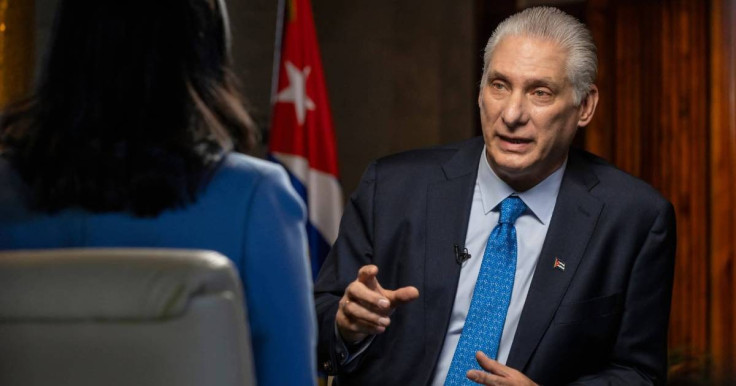
"If we need to die, we'll die, because as our national anthem says, 'dying for the homeland is to live.'"
With that line, Cuban President Miguel Díaz-Canel used an already tense NBC interview into a warning, express a nationalist message aligned with classic revolution slogans, and deliver a rebuttal to Washington all at once. Speaking on NBC News' Meet the Press, Díaz-Canel said Cuba would resist any US attempt to attack the island or force him from power, arguing that there would be "no justification" for "military aggression," a "surgical operation" or even "the kidnapping of a president."
The extended interview, his first on American television, landed at a moment of unusually high tension between Havana and the Trump administration. Díaz-Canel used it to reject one of the central ideas now circulating around Cuba policy in Washington, that he could or should step aside in exchange for relief. "Stepping down" or resigning, he said, is simply "not part of our vocabulary," insisting that Cuba's political future will not be decided under US pressure.


His defiant tone follows weeks of increasingly aggressive rhetoric from President Donald Trump, who in March said he expected to have the "honor" of "taking Cuba in some form" and later suggested any takeover "may or may not be" friendly. Trump also said he could do "anything I want" with Cuba, comments that alarmed officials in Havana and helped frame Díaz-Canel's NBC appearance as both a defensive interview and a message to Cubans watching from afar.
The interview was posted in the Cuban government official Youtube account.
At the same time, Díaz-Canel tried to keep the door open, at least rhetorically, to diplomacy. Reuters reported that he urged the United States to engage in dialogue without conditions and without demands that Cuba change its political system. He argued that Washington has "no moral" authority to dictate internal change in Cuba while refusing the same scrutiny of its own system. That balancing act, defiance paired with an invitation to talk, has become the core of Havana's current message.
The interview also threw a spotlight on the island's worsening energy crisis. Díaz-Canel blamed US pressure on oil shipments, especially after Venezuela, once a critical supplier, stopped sending crude following the January US intervention that removed Nicolás Maduro. Reuters and AP both reported that Cuba received a delayed Russian oil shipment in March, with promises of more support from Moscow as the island struggles through blackouts, shortages and mounting economic pain.
While Díaz-Canel was not speaking from a position of strength, his comments seem to give context to the demands inside the U.S., including from visiting Democrats, urgingTrump to "bring the rhetoric down," warning that the administration's hardline approach is worsening humanitarian conditions and could trigger new migration pressures.


© 2025 Latin Times. All rights reserved. Do not reproduce without permission.


