
The judge in charge of the case against Venezuela's former authoritarian President Nicolas Maduro rejected on Thursday tossing out his case, according to a new report.
Venezuelan outlet El Nacional noted that judge Alvin Hellerstein voiced his decision during a hearing on Thursday, but has to confirm it in an official manner.
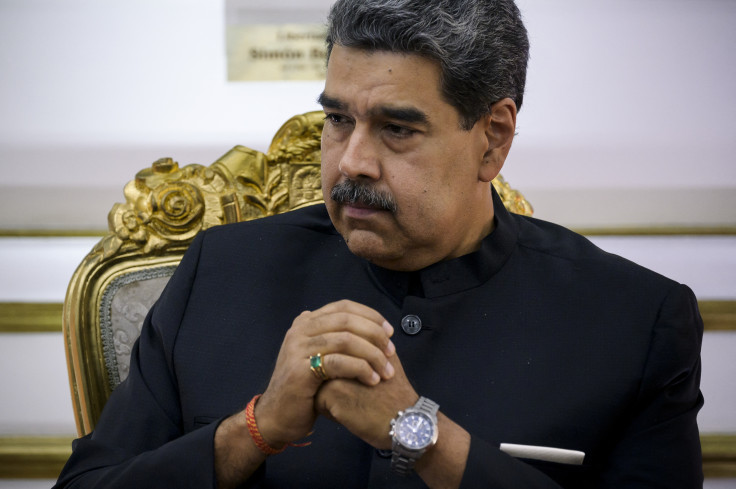
It went on to detail that Maduro's hair was grayer than before and appeared to be more thin and serious than in his first hearing, which took place in January.
Maduro's defense has requested for the trial against him be tossed out due to not being able to use state funds to pay for the legal team he and his wife Cilia Flores want to hire.
Maduro's current team claimed this month that the U.S. prosecutor's office acknowledged that under Venezuelan law they are entitled to use state funds to pay for their defense.
At Thursday's hearing, his attorney, Barry Pollack argued that U.S. sanctions are preventing Maduro from accessing Venezuelan government funds to pay for his defense.
Pollack told the court that assigning public defenders would strain resources meant for defendants who cannot afford legal representation, adding that it "doesn't make sense in a case where you have someone other than the U.S. taxpayer standing ready, willing and able to fund that defense," according to the Associated Press.
Prosecutors countered that allowing access to those funds would undermine sanctions policy. Assistant U.S. Attorney Kyle Wirshba said the restrictions are tied to national security interests, arguing that permitting their use "would undermine the sanctions" imposed on Venezuelan officials.
OFAC has blocked the use of such funds, preventing Maduro and his wife to hire the legal team they want. The measure, Maduro's team says, also violates the U.S.'s Sixth Amendment, which grants defendants the right to choose a lawyer. They are now being represented by a public defender. As a result, the defense argued, the case should be dismissed.
Maduro has pleaded not guilty to the charges against him and previously described himself as a "prisoner of war" following his January arrest, which took place as a result of a U.S. military operation in Caracas. The case is a rare instance of a former head of state being prosecuted in U.S. courts and raises unresolved legal questions about jurisdiction and the circumstances of his capture.
In the meantime, new details have emerged about his detention under strict isolation measures in a high-security unit in Brooklyn. According to CBS News, the former Venezuelan leader is being held under "special administrative measures" at the Metropolitan Detention Center, a designation reserved for inmates whose communications are deemed a potential risk.
Law enforcement sources described the unit as a "jail inside of a jail," where Maduro remains largely isolated, under 24-hour surveillance, and allowed out of his cell only for limited activities such as legal visits, showers or one hour of solo recreation.
Officials added that Maduro is escorted by multiple officers whenever he moves within the facility, and all access to the unit requires authorization.


© 2025 Latin Times. All rights reserved. Do not reproduce without permission.


