
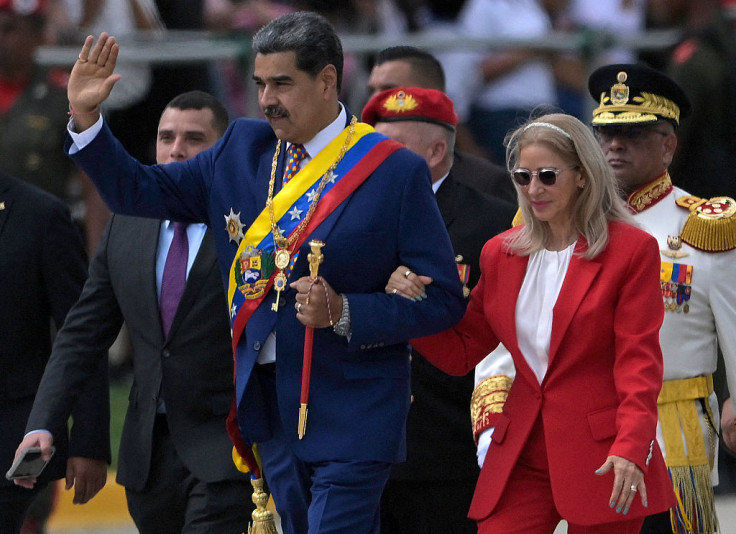
The United States has agreed to ease sanctions on Venezuela to allow the government to pay the legal fees of Nicolás Maduro and his wife, Cilia Flores, in their high-profile criminal case in New York, according to court filings and multiple reports.
The decision marks a significant shift in a legal battle that had threatened to derail the prosecution after Maduro's defense argued that U.S. sanctions were preventing him from paying his lawyer and violating his constitutional rights.
Attorney Barry Pollack, who represents Maduro, had asked Manhattan federal judge Alvin Hellerstein in February to dismiss the case. CNN reported that he had argued that restrictions imposed by the Treasury Department's Office of Foreign Assets Control, known as OFAC, blocked Venezuela from covering legal fees, effectively denying Maduro his right to counsel under the Sixth Amendment.
At the center of the dispute were U.S. sanctions that classify the Venezuelan government as a blocked entity, making it illegal for American lawyers to receive payments from Caracas without a special license.
The conditions for the Venezuelan funds are strict
In response, the Treasury Department issued amended licenses allowing Maduro's legal team to receive payment from the Venezuelan government under strict conditions. According to court documents, the funds must come from approved sources and comply with specific regulatory limits.
The reversal follows months of legal wrangling. Earlier this year, OFAC briefly granted permission for payments, only to revoke it hours later, prompting a constitutional challenge from the defense.
Judge Hellerstein had previously raised concerns about the fairness of blocking payment, suggesting the restrictions could undermine Maduro's ability to mount a proper defense.
-
U.S. Soldier Charged With Using Classified Information to Profit From Maduro Operation

-
Venezuela's Maduro Pays Tribute to Pope Francis From Jail: 'Always Called for Peace, Dialogue and the Defense of Human Dignity'

-
Trial Reveals Former Florida Lawmaker Advised Venezuelan Businessman to Mislead Herald About Meeting With Vice President Pence


The case itself is one of the most consequential prosecutions involving a foreign head of state in recent U.S. history. Maduro and Flores face charges including narcoterrorism conspiracy, drug trafficking, and weapons-related offenses. Both have pleaded not guilty and remain in federal custody in New York.
Legal experts say the decision highlights a fundamental tension between U.S. sanctions policy and constitutional protections. While sanctions are designed to isolate foreign governments, U.S. courts are obligated to ensure defendants can access legal representation.
The Maduro defense's winning argument
Pollack argued that without access to Venezuelan state funds, Maduro could not afford adequate counsel, a claim that gained traction as the court weighed the implications for due process.
The Treasury's move effectively removes one of the defense's strongest arguments for dismissing the case, clearing the way for the trial to proceed.
At the same time, the decision underscores how far-reaching U.S. sanctions can be, extending into courtroom dynamics and forcing the government to balance foreign policy objectives with constitutional guarantees.
For now, the case against Maduro and Flores will continue in federal court, with prosecutors pressing forward and the defense now able to operate with funding from Venezuela under the newly authorized framework.
© 2025 Latin Times. All rights reserved. Do not reproduce without permission.


