
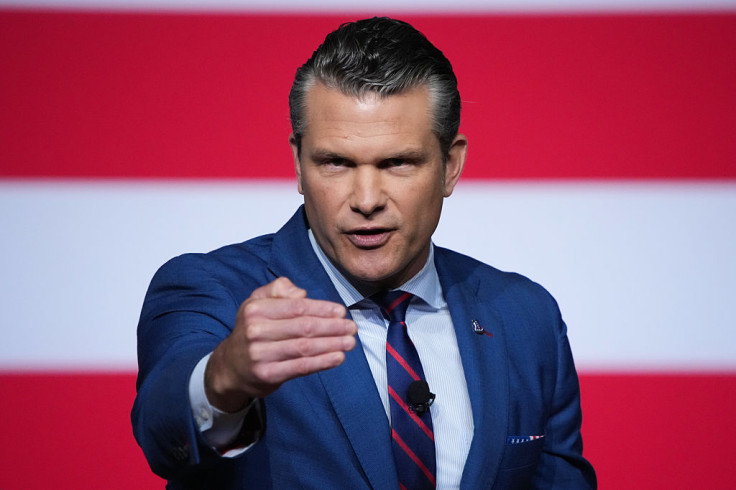
Pentagon officials and European allies were caught off guard by Defense Secretary Pete Hegseth's decision to halt the planned deployment of 4,000 U.S. troops to Poland, according to multiple U.S. officials consulted by Politico, a move that has intensified uncertainty about the Trump administration's military posture in Europe.
"We had no idea this was coming," one U.S. official said, describing a scramble among American and European officials over the last 24 hours to understand the decision and determine whether additional troop reductions could follow.
The canceled deployment involved Texas-based troops preparing for a previously scheduled nine-month rotation to Poland for training exercises with NATO allies. According to officials familiar with the matter, some troops and equipment had already begun arriving in Europe before the order was issued, as Politico explains.
The decision came just weeks after the Pentagon announced plans to withdraw 5,000 troops from Germany, fueling broader concerns among NATO allies that the Trump administration is accelerating efforts to reduce the U.S. military footprint in Europe amid tensions over the Iran war and repeated demands that European countries assume greater responsibility for regional defense.
-
Weapons Shortage Concerns Grow as Pentagon Holds Off on New Munitions Deals: 'There Just Aren't Going to Be Enough Missiles to Go Around'

-
Defense Secretary Pete Hegseth Slowly Losing GOP Support in Senate, Report Says

-
Trump and Hegseth's Religious Messaging Face Widespread Rejection Across Party Lines, Poll Shows


Neither the Pentagon nor the White House publicly explained why the Poland deployment was halted. Acting Pentagon press secretary Joel Valdez rejected descriptions of the move as abrupt, saying the decision followed "a comprehensive, multilayered process" and "was not an unexpected, last-minute decision."
But lawmakers and allied officials indicated they had not been informed in advance. Democratic Sen. Jeanne Shaheen, a member of the Senate Armed Services Committee, said Congress had not received notice "as far as I know," while Polish officials acknowledged they were blindsided by the development.
Polish Defense Minister Władysław Kosiniak-Kamysz sought to reassure the public Friday, saying the U.S.-Poland alliance remained "durable and lasting" and insisting the move would not undermine Poland's security. Prime Minister Donald Tusk said he had received assurances from Washington that the decision was "of a logistical nature" and would not affect deterrence capabilities.
The cancellation has drawn particular attention because Poland has consistently aligned itself closely with Washington on defense policy and currently spends nearly 5% of its GDP on defense, the highest level within NATO. Hegseth himself previously described Poland as a "model ally."
"This is a major challenge to Europe's security and a severely disrupting way of shifting responsibility to Europeans," former Finnish official Joel Linnainmäki told Politico.
© 2025 Latin Times. All rights reserved. Do not reproduce without permission.


