
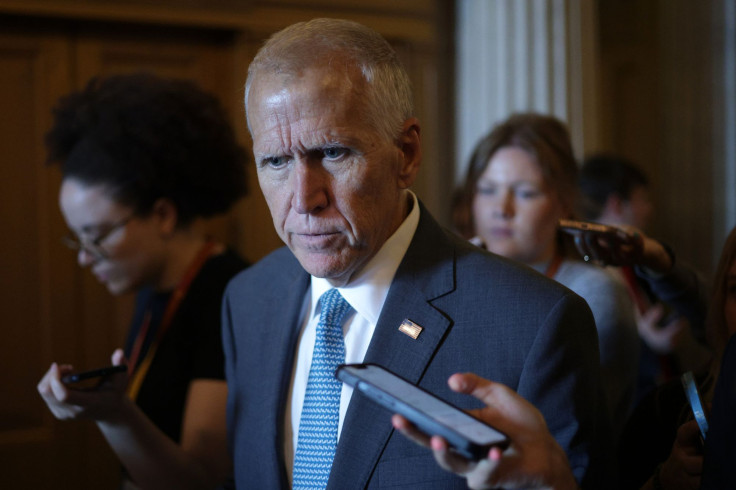
Republican Senator Thom Tillis said he doesn't know what President Donald Trump's main goal in the Iran war is, and must spell it out if he is to support the Pentagon's request for additional funds for it.
Speaking to ABC News, Tillis was asked what the war's "primary objective" is. "I don't know, and I think it's a real problem," said Tillis, who has been critical of Trump on different issues, sometimes breaking with the party's broad support for most of the president's remarks and policies.
"I generally support what the president's doing in Iran, but if we're going to get anything close to the $200 billion supplemental request, we got to get 60 votes, and we're going to have to figure out how to accomplish that," Tillis added.
The war continues in the meantime. The latest headline-grabbing developments include Trump postponing a deadline to strike Iranian energy facilities if Iran doesn't open up the Strait of Hormuz, citing productive conversations between the countries over the past two days.
However, after stocks surged and the price of oil dropped, Tehran rejected any such conversations were taking place, claiming Trump's remarks were aimed at tampering with oil prices and "buying time" for future military action. Iran has said it will target energy facilities across the region if the U.S. targets its own.
As the war gets close to the four-week mark, Trump officials have also begun initial discussions of what peace talks could look like, according to another report.
Axios detailed during the weekend that, in such a scenario, the U.S. would demand an agreement requiring Iran curtail its nuclear and missile programs, as well as its support for regional proxies.
It would also include decommissioning three nuclear facilities bombed by Israel and the U.S. last year, strict observation protocol for any technology that could advance a nuclear weapons program, and arms control treaties with regional countries.
The outlet added that there has been no direct contact between the countries, but they have sent each other messages through intermediaries including Egypt, Qatar and the U.K.
The first two said Tehran is open to negotiations, but with extremely tough terms including a ceasefire, guarantees that the war won't resume in the future and compensation. Tehran has continuously rejected most of the terms listed by the U.S. above.


© 2025 Latin Times. All rights reserved. Do not reproduce without permission.


