
With less than two months to go before North America hosts the 2026 World Cup, the United States, Mexico, and Canada are taking extensive security measures to ensure the safety of millions of attendees across the 16 host cities.
The state of Texas, which will host 16 matches, is going a step further with Operation Red Card, a three-month crime reduction initiative that brings together federal, state and local agencies through mid-June, when the tournament kicks off.
According to CBS News, the operation began in mid-March and will run through the start of the tournament. Officials say it targets violent offenders, human traffickers and drug traffickers.
"Since March 14, together with our federal, state and local partners, we have removed more than 70 kilos of methamphetamine from our streets, more than 31 kilos of cocaine and more than 15 kilos of fentanyl, and seized 81 firearms," said Ryan Raybould, U.S. attorney for the Northern District of Texas.


Federal officials say more than 130 people have been federally charged in the Northern District of Texas, while nearly 40 people have been arrested in the Eastern District.
Along with California, which will host matches in Los Angeles and San Francisco, Texas is the only other state with multiple host cities. Six of Texas' matches will take place during the knockout rounds, including a semifinal in Arlington.
Authorities expect a large influx of visitors during this summer's tournament. The Kay Bailey Hutchison Convention Center in Dallas will serve as the international broadcast hub, while Saudi Arabia, the Democratic Republic of Congo and the Czech Republic will establish base camps in the state.
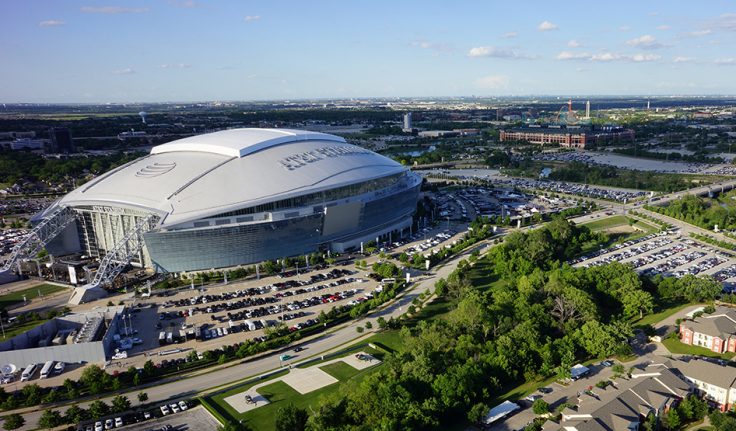
Security measures will extend beyond traditional policing. Officials say temporary airspace restrictions will be in place during all nine matches at AT&T Stadium in Arlington, effectively designating the area as a no-fly zone.
Law enforcement agencies, in coordination with the Federal Bureau of Investigation, say they have technology to detect, track and disable unauthorized drones that could pose a threat.
The Mexican government has taken similar steps.
In March, just weeks after the reported death of Jalisco New Generation Cartel leader Nemesio "El Mencho" Oseguera Cervantes, officials said roughly 100,000 security personnel would be deployed to help maintain order during the World Cup.
El Mencho's death triggered retaliatory attacks by cartel members across multiple states, including roadblocks, arson targeting businesses and vehicles, and other acts of violence — disruptions authorities are aiming to prevent this summer.
Gen. Román Villalvazo, who will oversee World Cup security operations, said personnel will be drawn from the military, the country's security ministry and private firms, with the largest deployments in Mexico City, Guadalajara and Monterrey, the host cities.
Mexico also plans to deploy more than 2,000 military vehicles, 24 aircraft and 33 drones, along with checkpoints at key locations such as airports and stadiums.
"We are under the microscope. FIFA doesn't just ask for beautiful stadiums; they ask for guarantees of safety," Miguel Andrés Hernández, undersecretary of tourism for the state of Jalisco, told The Latin Times in March. "We have had to explain in detail how our security plan is working and how the targeting of high-priority figures is part of a broader strategy to weaken groups that threaten public safety."

© 2025 Latin Times. All rights reserved. Do not reproduce without permission.


