
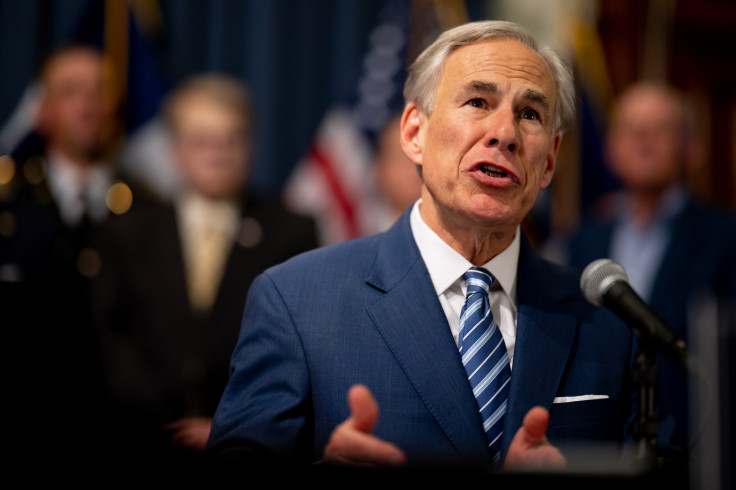
As part of efforts to complement President Donald Trump's and Gov. Greg Abbott's campaigns to crack down on illegal immigration, Texas lawmakers have enacted several laws and changes in the past few months that have impacted the lives of undocumented immigrants and noncitizens in the state.
In the past year alone, Texas has limited who can obtain an occupational license and who can buy and register a car, required hospitals to disclose the legal status of patients, and added new requirements for who can qualify for in-state tuition at colleges and universities.
In a state with nearly 2 million undocumented immigrants, refugees, and individuals with temporary protected status, these changes have led to widespread fear and uncertainty, according to immigration attorneys and advocates who spoke to The Texas Tribune.
"These all represent a broader and more coordinated shift ... to create a pipeline of exclusion that stretches from limiting access to K-12 education, all the way into participation in the workforce and basic mobility through the state," Corinne Kentor with the Presidents' Alliance on Higher Education and Immigration told the outlet.


In late March, the Texas Commission of Licensing and Regulation approved the latest change, requiring individuals seeking a professional license to provide documents proving their immigration status.
In the past, contractors, health care professionals, real estate agents, and individuals offering services such as barbers or makeup artists were able to apply for a license to legally work in the state. But as of March 24, commissioners unanimously approved a change that officials say will help identify fraud, labor exploitation, and human trafficking.
As noted by The Texas Tribune, changes such as the licensing requirement are happening outside the typical legislative process, as many Republican lawmakers in the state move to roll back benefits and services that made Texas a destination for noncitizens.
In the 10 months since the regular legislative session concluded, Texas officials and lawmakers have been working to eliminate other services and benefits for noncitizens.
In September of last year, Abbott directed the Texas Department of Public Safety to strictly enforce a federal English proficiency requirement for truck drivers and ordered the agency to stop issuing commercial driver's licenses to non-English speakers. DPS said it "took enforcement action" against more than 400 drivers, most of whom were licensed in Mexico.
Similarly, the agency said it would no longer issue or renew commercial driver's licenses for people in the Deferred Action for Childhood Arrivals program, refugees, and people with asylum claims.
During that time, the Department of Motor Vehicles added stricter photo identification requirements for registering and purchasing a car, after Republican lawmakers argued undocumented drivers had driven up car insurance premiums and made roads more dangerous.
For Gloria Leal, general counsel for the League of United Latin American Citizens and a former lawyer for Texas agencies, this new set of rules and changes appears to be "self-generated."
"There's a legislative process to make sure that whatever comes out meets the will of the people, and the representatives who represent us," she told The Texas Tribune. "This just eliminates that, and you have to wonder, why? What's the urgency?"
As noted by the outlet, any proposed changes within an agency must be approved by Abbott before they are made public, under a directive he issued in 2018 that gave him greater oversight of executive branch entities.
Since 2018, Abbott has been able to consolidate power, which has helped the changes now taking shape move forward. As highlighted in the report, six of the seven members on the commission that approved the occupational licensing change were initially appointed by Abbott. Similarly, all nine members of the board that approved the car registration rule were also appointed by him.
"Apparently whoever's in power gets to abuse that power," Jim Harrington, a longtime constitutional law professor and founder of the left-leaning Texas Civil Rights Project, told The Texas Tribune. "We're not gonna abide by the way our government is structured or the way that it has operated in the past. If we have the power, we're gonna do it the way we want to do it."


© 2025 Latin Times. All rights reserved. Do not reproduce without permission.


