
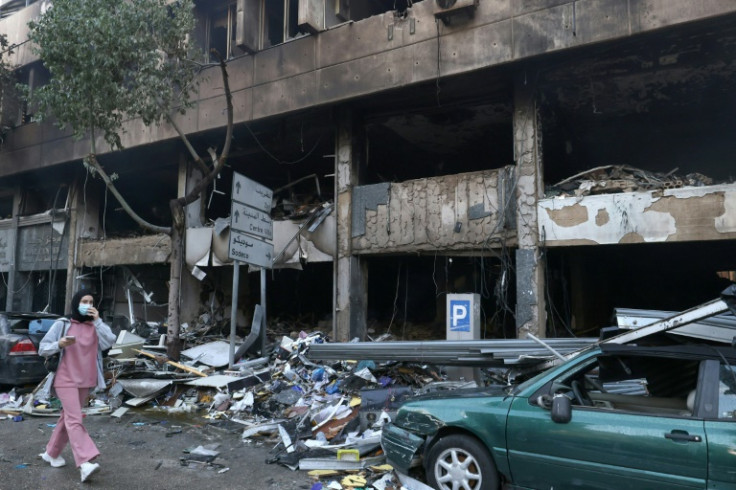
Israel launched an airstrike on Beirut's southern suburbs on Wednesday, marking the first attack on the Lebanese capital since a ceasefire with Hezbollah took effect last month, in a major escalation that threatens to unravel the fragile truce between the two sides.
The Israeli military said the strike targeted a commander of Hezbollah's elite Radwan Force in the Dahiyeh district, a Hezbollah stronghold in southern Beirut, reported ABC. Israeli Prime Minister Benjamin Netanyahu said the targeted operative was linked to attacks against Israeli civilians and soldiers along the northern border.
"Radwan terrorists are responsible for shooting at Israeli settlements and harming IDF soldiers. No terrorist has immunity," Netanyahu said in a statement released alongside Defense Minister Israel Katz.
הנחיתי יחד עם שר הביטחון ישראל כ"ץ לתקוף כעת בביירות את מפקד כוח רדואן בארגון הטרור חיזבאללה כדי להביא לסיכולו.
— Benjamin Netanyahu - בנימין נתניהו (@netanyahu) May 6, 2026
מחבלי רדואן אחראים לירי לעבר יישובים ישראלים ופגיעה בחיילי צה"ל.
לאף מחבל אין חסינות - ידה הארוכה של ישראל תשיג כל אויב ומרצח.
הבטחנו להביא ביטחון לתושבי הצפון - כך…


Israeli media reported that the Hezbollah commander may have been killed, though neither Hezbollah nor the Israeli military immediately confirmed the outcome of the operation.
The strike hit the Haret Hreik area in Beirut's southern suburbs, where emergency crews were seen searching through damaged buildings after the explosion. Lebanese television stations aired footage of smoke rising over residential neighborhoods shortly after the attack.
The bombing was the first Israeli strike on Beirut since a U.S.-brokered ceasefire between Israel and Hezbollah went into effect on April 17 after weeks of heavy fighting linked to the broader regional conflict involving Iran.
Despite the ceasefire, violence has continued in southern Lebanon, where Hezbollah fighters have launched rockets and drones at Israeli positions, and the Israeli military has carried out retaliatory airstrikes.
The Radwan Force is Hezbollah's elite military unit, trained for cross-border operations and considered one of the group's most capable combat formations. Israeli officials have repeatedly accused the unit of planning attacks on communities in northern Israel.
Lebanese Prime Minister Nawaf Salam condemned the renewed escalation and warned that continued strikes on Beirut could jeopardize diplomatic efforts aimed at stabilizing the border.
The latest attack comes as the United States has been pressing both Israel and Lebanon to preserve the ceasefire amid wider regional tensions involving Iran, Gaza and maritime security in the Strait of Hormuz. Since fighting resumed earlier this year, Lebanese health officials say more than 2,700 people have been killed in Lebanon, while Israeli authorities report at least 20 deaths, including civilians and soldiers, from Hezbollah attacks.
© 2025 Latin Times. All rights reserved. Do not reproduce without permission.


