
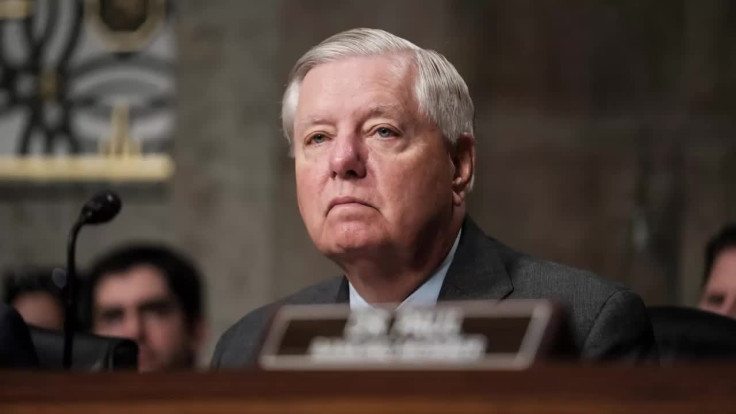
Sen. Lindsey Graham, one of President Donald Trump's most reliable Republican allies, is showing signs of a rare public break after sharply criticizing the administration's posture on a potential conflict with Iran and asking for Congress' approval of any deal, a shift that is raising eyebrows across Washington.
The break wasn't strong, but it was forceful enough to raise the tension inside the GOP, with many Congress members worried about the effect of the Iran war on their political campaigns ahead of the November midterm elections.
The hairline fracture on what has been unwavering support for the president came following Trump's recent comments and strategy signals around Iran, which have drawn scrutiny from both parties, and is particularly notable coming from Graham, who has long been one of Trump's most vocal defenders on foreign policy.


Speaking to reporters and in media appearances this week, Graham expressed concern that the current approach risks sending mixed signals at a moment of heightened geopolitical instability. While he stopped short of a full rebuke, his tone marked a clear departure from his usual unwavering support.
"I want to make sure we are clear about our objectives and our commitment," Graham said, emphasizing the need for a consistent and forceful stance toward Tehran. He warned that ambiguity could embolden adversaries or create confusion among allies in the region.
The comments came after Trump suggested a more unpredictable or flexible approach to the escalating situation, including rhetoric that critics argue lacks clarity on whether the U.S. seeks de-escalation or is prepared for broader military engagement.
Then he took to social media to urge the White House to do "the right deal" with Iran, hinting that there were talks about "the wrong" one.
I have all the confidence in the world that @POTUS understands who he’s talking to in Iran and earnestly seeks a diplomatic solution. But it has to be the right deal.
— Lindsey Graham (@LindseyGrahamSC) April 7, 2026
President Trump – better than anyone I know – understands how to deal with the toughest of people.
For Graham, a longtime hawk on Iran who has repeatedly called for a hardline strategy against the Iranian government, the issue appears less about opposing Trump outright and more about ensuring the U.S. maintains a credible deterrent.
Today, the senator went back to express his full support for Trump and his team, but insisted in the importance of an approval from congress if a diplomatic permanent solution is achieved.
"That's why a congressional review process like the one the Senate followed to test the Obama Iranian deal is a sound way forward," the senator wrote. "Fair and challenging questions with a full opportunity to explain, and a healthy dose of sunlight are generally the right formula to understand any matter."
I have tremendous confidence in @POTUS that he will put an end to Iran’s reign of terror once and for all, hopefully through diplomacy.
— Lindsey Graham (@LindseyGrahamSC) April 8, 2026
He has been saying since day one that when this is over Iran will no longer be the largest state sponsor of terrorism, they will not be… pic.twitter.com/cy4Gb6m9qZ
The optics are striking. Graham has historically stood by Trump through controversies ranging from domestic political battles to international crises. His willingness to publicly question the administration's direction, even in measured terms, suggests growing unease within parts of the Republican establishment.
Political analysts note that Graham's criticism reflects a broader concern among some GOP lawmakers who fear that inconsistent messaging on Iran could complicate both military strategy and diplomatic efforts.
"This is not a clean break, but it is a signal," said one Washington-based foreign policy expert. "When someone like Lindsey Graham starts raising concerns publicly, it means there are deeper conversations happening behind the scenes."
The Iran issue has become a flashpoint in recent days, with escalating rhetoric, military posturing, and international pressure converging into a volatile moment. Trump has defended his approach as strategic and necessary, arguing that unpredictability can be an asset in dealing with adversaries.


However, that argument appears to be where Graham is drawing a line. His comments suggest he believes the stakes are too high for ambiguity, particularly given Iran's regional influence and the potential for rapid escalation.
The episode also highlights a familiar pattern in Graham's political trajectory. Once a fierce critic of Trump during the 2016 campaign, he later became one of his closest allies in the Senate. Now, his latest comments suggest a recalibration, at least on foreign policy.
Whether this moment represents a temporary divergence or the beginning of a more sustained shift remains unclear. What is evident is that even Trump's strongest allies are beginning to navigate the complexities of aligning with a foreign policy approach that some see as unpredictable at a critical time.
© 2025 Latin Times. All rights reserved. Do not reproduce without permission.


