
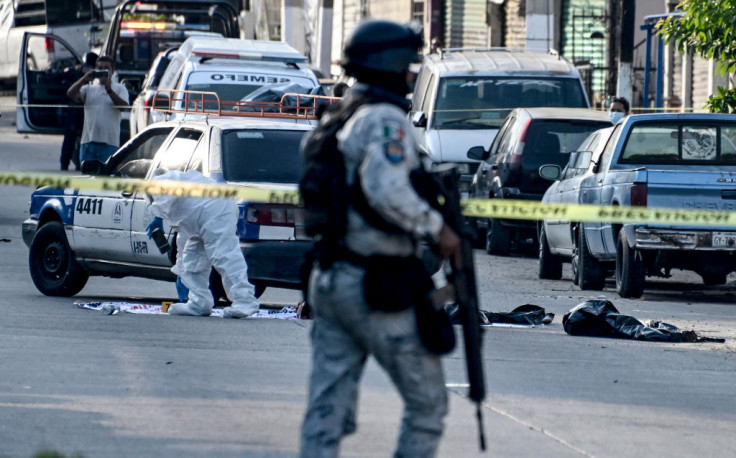
Mexico recorded a 22.7% drop in homicides over the past year, but a new report warns that disappearances, extortion and the fragmentation of criminal groups continue to pose major challenges for the country's security institutions, according to the 2026 Peace Index, published Tuesday by the Institute for Economics and Peace (IEP).
According to findings, Mexico improved its overall peace levels by 5.1%, marking one of the country's most significant reductions in lethal violence in recent years. The report aligns with data repeatedly highlighted by President Claudia Sheinbaum's administration, which has pointed to falling homicide rates as evidence that its security strategy is producing results.
But the report also warned that "structural risks threatening the sustainability of these advances persist," arguing that Mexico is entering "a transition stage in the dynamics of violence and criminality."
According to the IEP, while killings have declined, violence is increasingly taking other forms. The report cited a rise in disappearances, the spread of firearms in everyday crimes and the consolidation of domestic violence as the country's most common offense.
Researchers said the increase in disappearances reflects both "the persistence of criminal structures" and institutional limitations in investigating such cases.
The report also linked the diversification of criminal activity to the fragmentation of major cartels into smaller groups competing for control of local economies. That shift, it said, has contributed to rising extortion and localized conflicts in several regions, including Sinaloa, where violence escalated after the internal split within the Sinaloa Cartel following the capture of Ismael "El Mayo" Zambada.


Official government figures released in April showed Mexico averaging 51.4 homicides per day in March, the lowest level for that month since 2016. The Sheinbaum administration says homicides have fallen 41% since she took office in October 2024, partly due to a strategy focused on intelligence operations, targeted arrests and dismantling criminal networks.
The decline follows years of high violence under former President Andrés Manuel López Obrador, whose "hugs, not bullets" approach avoided direct confrontation with cartels. Homicide rates peaked between 2018 and 2020 before beginning a gradual decline.
Despite the recent improvements, the IEP warned that institutional weaknesses continue to undermine long-term stability. Mexico's prison population has reached a record high of more than 256,000 inmates, while the report cited a "historic deficit" in investigative and judicial capacity due to staff shortages and backlogs in criminal proceedings.
© 2025 Latin Times. All rights reserved. Do not reproduce without permission.


