

President Donald Trump is heading to China this week with a smaller-than-expected group of U.S. corporate executives, hoping to turn a tense summit with Chinese President Xi Jinping into a show of economic strength, trade progress, and diplomatic control at a moment when Beijing may have more leverage than Washington wants to admit.
Trump is scheduled to visit Beijing from May 14 to 15 for high-level talks with Xi, the first U.S. presidential visit to China in nearly nine years and Trump's first trip there since his 2017 state visit. The summit is expected to focus on trade, rare earth minerals, artificial intelligence, Taiwan, Iran, nuclear weapons, and China's ties to Russia.
The business side of the trip is one of the biggest clues to what Trump wants: deals. The delegation is expected to be far smaller than the 29 executives who joined Trump during his first China visit in 2017.
According to Reuters, the group includes Elon Musk, Apple's Tim Cook, GE Aerospace's Larry Culp, and Boeing's Kelly Ortberg. Meta's Dina Powell McCormick, BlackRock's Larry Fink, Blackstone's Stephen Schwarzman, Micron's Sanjay Mehrotra, Mastercard's Michael Miebach, Qualcomm's Cristiano Amon, and Visa's Ryan McInerney are also part of the delegation.

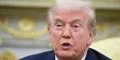

But the trip is not only about business. It comes as the U.S. and China are trying to stabilize a relationship strained by tariffs, export controls, technology restrictions, Taiwan tensions, and competition over critical minerals. A rare earth minerals deal struck last fall remains a key item because those materials are vital to U.S. technology and defense supply chains, accordingly.
While the visit was announced before the Iran War, the conflict is expected to dominate the talks. AP reported that the situation in the Middle East could make this China visit colder than Trump's first-term trip because China is a major buyer of Iranian oil and has influence with Tehran. Trump has hoped China would help with efforts involving the Strait of Hormuz, where instability threatens global energy markets.
The agenda also includes Taiwan, one of the most sensitive issues in U.S.-China relations. The Guardian reported that Taiwan, trade, and Tehran are expected to be among the major hazards facing Trump at the summit, with allies watching closely for any sign that Washington softens its position to secure economic concessions from Beijing.
Trump also needs momentum at home.
Brookings analysts wrote that both leaders are likely to announce Chinese purchases of U.S. products, including Boeing aircraft and agricultural goods, and could discuss a bilateral trade mechanism to identify areas for purchase commitments and limited tariff adjustments.
Still, expectations are limited, as analysts consider that given the situation in the Middle East, Xi may see a chance to extract concessions. The Council on Foreign Relations argued that China enters the summit with leverage because of its control over critical minerals and because the Iran war has increased global instability.
For Trump, the best-case scenario is clear: a major Boeing announcement, new agricultural purchases, progress on rare earths, a calmer trade truce, and a photo-op with Xi that signals control. For China, the goal is also clear: reduce U.S. pressure on technology, avoid new tariffs, shape Washington's Taiwan posture, and show the world that Beijing can manage its relationship with Trump on its own terms.
© 2025 Latin Times. All rights reserved. Do not reproduce without permission.


