
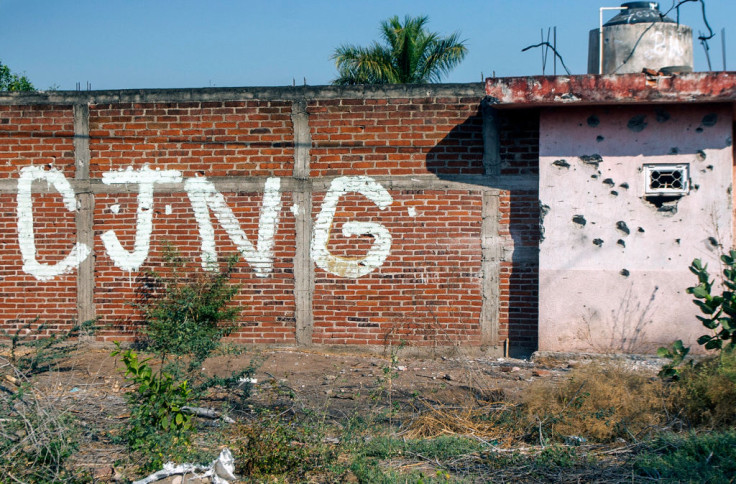
Erick Valencia Salazar, better known as 'El 85,' pleaded guilty Tuesday in federal court in Washington to conspiring to distribute cocaine for unlawful importation into the United States, a major courtroom turn for a man U.S. authorities describe as one of the founders of the Jalisco New Generation Cartel, or CJNG. His sentencing is scheduled for July 31, and he now faces a mandatory minimum of 10 years in prison and a maximum sentence of life.
"I plead guilty because I'm guilty," El 85 said.
The plea, informed by the Treasury Department, marks the latest chapter in a long and violent cartel trajectory that began well before CJNG became one of Mexico's most feared criminal organizations. According to the U.S. Department of Justice, Valencia Salazar was first part of the Milenio Cartel, where he helped arm gunmen with rifles, including AK-47s and AR-15s. Prosecutors say he later co-founded CJNG and helped it expand by recruiting members, targeting rival groups and moving thousands of kilograms of cocaine toward the U.S. market.

The case also revives attention on his historic break with Nemesio Oseguera Cervantes, known as 'El Mencho.' Associated Press reported that Valencia Salazar later split from Oseguera and went on to form La Nueva Plaza, a rival cartel that emerged after an internal rupture. That fracture turned one of the original alliances behind CJNG into open conflict, adding another layer to the bloody fragmentation that has shaped organized crime in western Mexico.
U.S. prosecutors have framed the plea as more than a routine narcotics case. In its announcement, the Justice Department said Valencia Salazar helped build one of the most violent drug trafficking organizations in Mexico, while senior officials argued that CJNG's operations fueled violence in Mexico and drug flows into the United States. DEA Administrator Terrance Cole said the cartel has trafficked cocaine, methamphetamine and fentanyl while spreading fear and instability on both sides of the border.
Valencia Salazar's path to this plea took years and crossed multiple jurisdictions. A grand jury indicted him in 2018. Mexican authorities later transferred him to the United States in February 2025 as part of a high-profile handover of 29 defendants wanted by U.S. authorities. The DOJ's February 2025 announcement listed Valencia Salazar among the men taken into U.S. custody, with the District of Columbia handling his case and the potential penalty listed as up to life imprisonment.
His legal history in Mexico was already lengthy before that transfer. AP reported that he was first arrested in 2012 near Guadalajara, then released in 2017 after a judge cited procedural flaws. He was recaptured in 2022 in Tapalpa, Jalisco. The U.S. State Department had also offered a reward of up to $5 million for information leading to his arrest or conviction, reflecting how seriously Washington had long viewed his role inside the cartel world.


The timing of the plea is also notable because it comes after major changes in the broader CJNG story. 'El Mencho' was killed by Mexican forces in February 2026, an event that jolted Mexico's security landscape but did not erase the cartel's operational depth. In that context, the guilty plea by one of CJNG's original architects is symbolically important, even if it does not by itself dismantle the organization's remaining structure.
What the plea could mean for Valencia Salazar personally is less clear. Pleading guilty often allows defendants to seek credit for accepting responsibility under federal sentencing guidelines, but any reduction is ultimately up to the judge and depends on the terms of the case. The one fact already established in court is that the statutory exposure remains severe, with a floor of 10 years and the possibility of life.
© 2025 Latin Times. All rights reserved. Do not reproduce without permission.


