
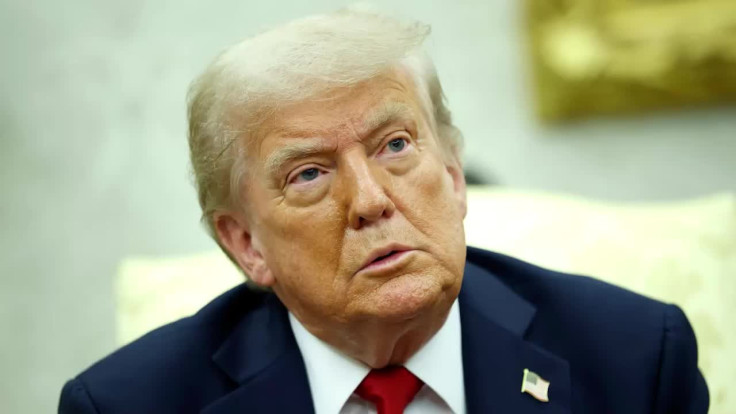
President Donald Trump said Tuesday he would suspend planned U.S. bombing and attack operations against Iran for two weeks after talks with Pakistani Prime Minister Shehbaz Sharif and Field Marshal Asim Munir, a surprise announcement that abruptly shifted the tone of a crisis that had been spiraling toward a possible wider regional war.
Trump said the pause was tied to Iran agreeing to the "complete, immediate, and safe opening" of the Strait of Hormuz, one of the world's most strategically important waterways.
In a social media post, Trump framed the move as a "double-sided ceasefire" and said Pakistan's leaders had asked him to hold off on what he described as "the destructive force" that was set to be sent against Iran that night. He also claimed the United States had already "met and exceeded" its military objectives and said Washington had received a 10-point proposal from Iran that could serve as the basis for a broader agreement.
🚨 President Donald J. Trump makes a statement on Iran: pic.twitter.com/9mqTayL0Q3
— The White House (@WhiteHouse) April 7, 2026
Trump made the announcement just ahead of his own deadline for Iran to reopen the Strait of Hormuz.
According to Israeli media, the country is also joining the two-week cease-fire as well.
-
Can JD Vance Be Excommunicated? What the US Bishops Said About the White House Latest Threat Against Iran as Pope Leo Urges Americans to Call Representatives

-
Megyn Kelly Says She'd Back Trump 'Even If He Dropped a Nuke' as Iran War Divides Conservative Voices

-
President Trump Calls Tucker Carlson 'Low IQ Person' in Latest Attack Over Iran Criticism


The pivot came after Pakistan formally appealed for a two-week ceasefire and urged Trump to extend his deadline, arguing that diplomacy still had a chance. Reuters reported that Sharif's government asked both sides to use the pause to reduce tensions and pressed Iran to temporarily reopen the strait as a goodwill measure. That request placed Pakistan at the center of one of the most volatile diplomatic efforts in the world, a role it has increasingly embraced as the U.S.-Iran conflict deepened.
Just hours earlier, the atmosphere had looked very different.
Trump had threatened catastrophic consequences if Iran did not comply, including rhetoric about destroying key infrastructure and language that triggered outrage from Democrats, international observers and legal experts.The conflict, now in its sixth week, has already inflicted major civilian and economic damage while raising fears of a broader war stretching across the Middle East.
For all the dramatic language around the ceasefire, the deal remains fragile. Reuters reported Monday that Iran had rejected a temporary ceasefire proposal in favor of a permanent end to hostilities, while insisting on broader conditions that would go beyond a short tactical pause. According to that report, Tehran's response included 10 clauses and emphasized a lasting framework rather than a brief interruption that could simply reset the battlefield. That means Trump's announcement may be less a final breakthrough than a hurried attempt to create space for a negotiation that is still very much unresolved.


The Strait of Hormuz remains the key pressure point. Roughly one-fifth of the world's oil passes through the waterway, making any disruption there a global economic threat. The Associated Press reported Tuesday that a U.N. Security Council resolution aimed at reopening the strait failed after Russia and China vetoed it, leaving bilateral diplomacy, regional mediation and military pressure as the main tools still in play.
© 2025 Latin Times. All rights reserved. Do not reproduce without permission.


