
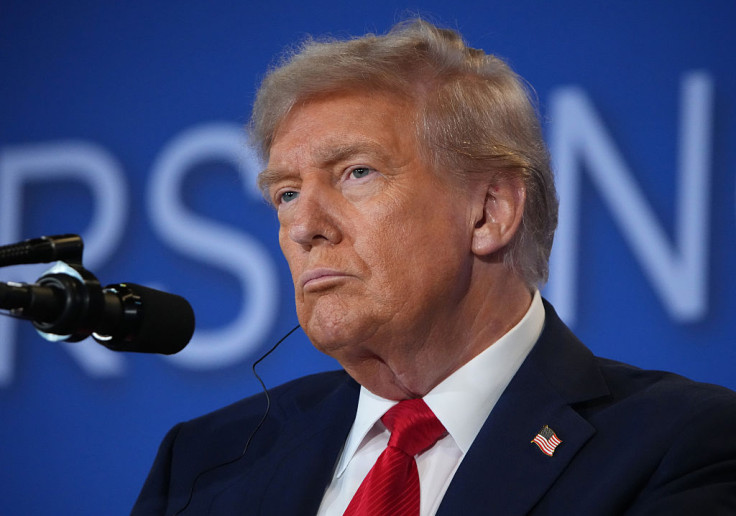
A federal judge on Monday dismissed President Donald Trump's $10 billion defamation lawsuit against The Wall Street Journal and its owner, Rupert Murdoch, dealing a setback to Trump's effort to punish the paper over its reporting on his past ties to Jeffrey Epstein. The ruling, issued by U.S. District Judge Darrin P. Gayles in Florida, found that Trump had not sufficiently shown the article was published with the kind of intentional or reckless falsehood required to sustain a defamation case brought by a public figure.
The case centered on a Wall Street Journal report about a birthday album prepared for Epstein's 50th birthday, which included a letter the paper said bore Trump's name. Trump denied writing the letter, called the story false and defamatory, and sued the Journal, Murdoch and others in July 2025, seeking $10 billion in damages.
NEW: A federal judge in Florida dismissed Donald Trump’s $10 billion defamation lawsuit against Rupert Murdoch and The Wall Street Journal over the Epstein birthday letter story.
— Republicans against Trump (@RpsAgainstTrump) April 13, 2026
The judge ruled Trump failed to plausibly show “actual malice,” dismissing the case. pic.twitter.com/oLZSNsypnp
In dismissing the complaint, Gayles did not rule on whether the article itself was true. Instead, he focused on the legal standard that governs defamation claims involving public officials and public figures.
According to the ruling, Trump failed, at least for now, to plausibly allege that the Journal acted with actual malice, meaning that it knew the reporting was false or published it with reckless disregard for the truth. Reuters reported that the judge pointed in part to the fact that the newspaper sought Trump's response before publication and included his denial in the story.


Under U.S. defamation law, it is not enough for a public figure to say a report hurt his reputation. He must also clear the much higher bar of proving the publisher either knew it was false or seriously doubted it and ran it anyway. Gayles wrote that Trump's complaint did not meet that threshold, though he gave the president an opportunity to amend and refile. Reuters said Trump has until April 27 to submit a revised complaint.
The WSJhas defended its reporting throughout the legal fight. In arguments seeking dismissal, the paper warned that Trump's lawsuit threatened press freedom and attempted to punish journalism he did not like. The judge's ruling is likely to be read as an early legal victory for Dow Jones and Murdoch, even though the door remains open for Trump's lawyers to try again with a stronger filing.

The dismissal also lands in the middle of continuing political and media scrutiny over Epstein and the many prominent figures whose names have surfaced in connection with him over the years.
© 2025 Latin Times. All rights reserved. Do not reproduce without permission.


