
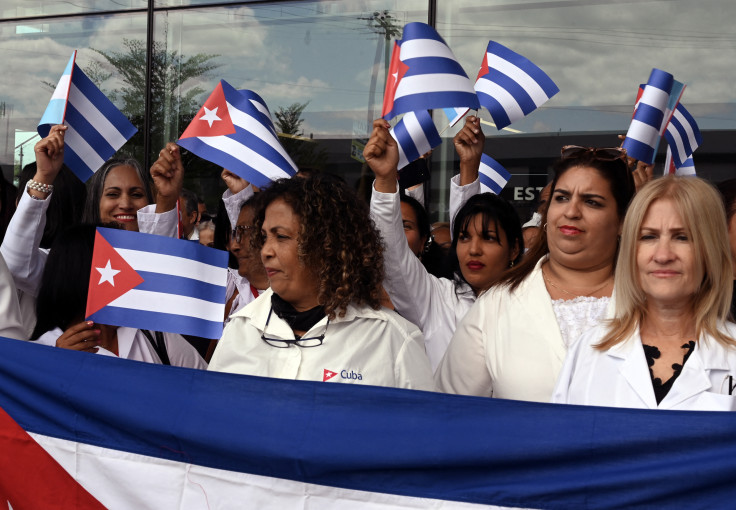
A U.S.-backed push to dismantle Cuba's overseas medical missions is leaving gaps in healthcare systems across Latin America and the Caribbean, with experts warning that underserved communities will bear the brunt, as a new sprawling report from The Guardian has revealed.
In Jamaica, the sudden withdrawal of Cuban doctors has already disrupted care, forcing patients like 73-year-old Novlyn Ebanks to delay critical procedures after her scheduled eye surgery was canceled when specialists left the country.
Governments across the region, including Jamaica, Guatemala, and Honduras, have moved to end or scale back long-standing agreements with Cuba following pressure from Washington, which argues the program constitutes "forced labor."
A U.S. State Department spokesperson told The Guardian that the scheme "deprives ordinary Cubans of medical care and medical professionals of their human rights and fundamental freedoms," urging countries to treat doctors "as individuals and not as commodities to be traded by the regime."


The policy shift comes as U.S. officials intensify scrutiny of Cuba's labor export system, which deploys tens of thousands of workers abroad each year, most of them medical professionals.
According to a statement by the State Department back on January 20 of last year, the government earns billions of dollars annually from the program, while reports from former participants cite restrictions on movement, confiscation of passports, and threats against families. A complaint filed by more than 1,000 workers alleged coercion, lack of contracts, and punitive measures for those who leave assignments.
Human rights bodies have echoed those concerns. The Inter-American Commission on Human Rights recently said it had received "detailed information" suggesting conditions that could amount to forced labor or human trafficking, including "absence of fair remuneration" and "control and surveillance of private life." Cuba has consistently denied the allegations, describing the missions as voluntary and a form of international solidarity.
In Guatemala, officials have announced the gradual withdrawal of about 400 Cuban doctors, raising concerns among aid groups that Indigenous communities will face reduced access to care. Similar concerns have emerged in Jamaica, where Health Minister Christopher Tufton acknowledged that the departure of Cuban specialists has created "gaps" that are difficult to fill due to a lack of local equivalents.
Mexico has resisted U.S. pressure, with President Claudia Sheinbaum defending the presence of Cuban doctors as essential in rural areas. "It's hard to get Mexican doctors... to go out to many rural areas," she said, adding that the program helps address longstanding shortages.
© 2025 Latin Times. All rights reserved. Do not reproduce without permission.


