
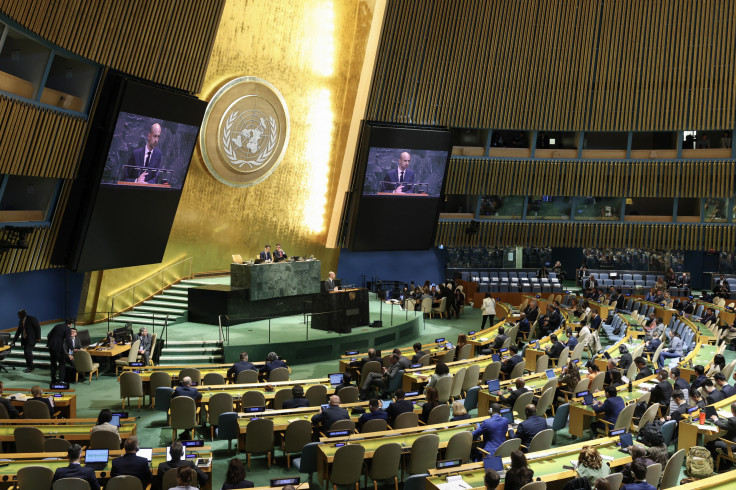
The United Nations is warning that democracies across Latin America and the Caribbean are facing a "gradual erosion," citing growing political polarization, distrust in institutions, corruption and violence as some of the biggest threats confronting the region.
In a new regional assessment released this week, the Democracy and Development report from the United Nations Program for Development (UNPD), officials said many countries in Latin America are experiencing weakening democratic systems despite decades of elections and constitutional rule following the military dictatorships that marked much of the 20th century.
The report warned that democratic deterioration often does not happen through abrupt coups or open authoritarian takeovers but instead through a slow weakening of public trust, judicial independence, transparency, and electoral legitimacy.
According to the United Nations, frustration over inequality, insecurity, and economic instability has left millions of citizens increasingly skeptical about whether democratic governments can solve everyday problems.
The concerns come at a politically tense moment across the region.
Several Latin American countries have experienced disputed elections, protests, institutional clashes or controversial constitutional reforms in recent years. Venezuela remains under intense international scrutiny after opposition leaders and multiple foreign governments challenged the legitimacy of Nicolás Maduro's latest electoral victory.
-
What the end of Venezuela's amnesty law means for hundreds of political prisoners still behind bars

-
Analysts Say U.S. Strikes in the Caribbean Are Driving Drug Routes to New, Harder-to-Track Corridors

-
Trump's Friendship Isn't Enough For Investors: His Closest Allies Run Some Of Latin America's Riskiest Countries


In El Salvador, President Nayib Bukele has faced criticism from human rights groups and international observers over his aggressive anti-gang crackdown and concentration of power, even as his popularity remains high domestically.
Mexico has also seen growing tensions surrounding judicial reforms, cartel violence and attacks on journalists, while countries including Peru, Haiti and Bolivia have faced prolonged political instability and institutional crises.
The U.N. report emphasized that democratic fatigue is not limited to any one ideology or government. Instead, officials described it as a regional phenomenon affecting both left-leaning and conservative administrations.
One of the central concerns highlighted in the report is the growing loss of confidence in public institutions.
Latin America consistently ranks among the regions with the lowest levels of trust in political parties, legislatures and judicial systems, according to surveys by organizations such as Latinobarómetro. Analysts have warned that this distrust can create fertile ground for populist leaders, political extremism and disinformation campaigns.
The United Nations also pointed to rising violence against journalists, activists, and political candidates as another indicator of democratic fragility.
Countries including Mexico, Colombia, and Honduras continue to rank among the most dangerous places in the world for reporters and human rights defenders.
Economic pressures have further intensified tensions.
After the COVID-19 pandemic, many countries in the region struggled with inflation, weak growth, migration crises, and increasing public debt. International organizations including the World Bank and the International Monetary Fund have repeatedly warned that economic frustration is fueling political anger and institutional distrust.
The U.N. urged governments in the region to strengthen judicial independence, protect press freedom, combat corruption, and expand citizen participation in democratic processes.
Officials also stressed the importance of addressing inequality and public insecurity, arguing that democracy cannot remain stable if large parts of the population feel excluded from economic opportunity or state protection.
The warning from the United Nations arrives as Latin America enters another major electoral cycle, with key presidential and legislative races expected over the next two years across several countries in the hemisphere.
© 2025 Latin Times. All rights reserved. Do not reproduce without permission.


